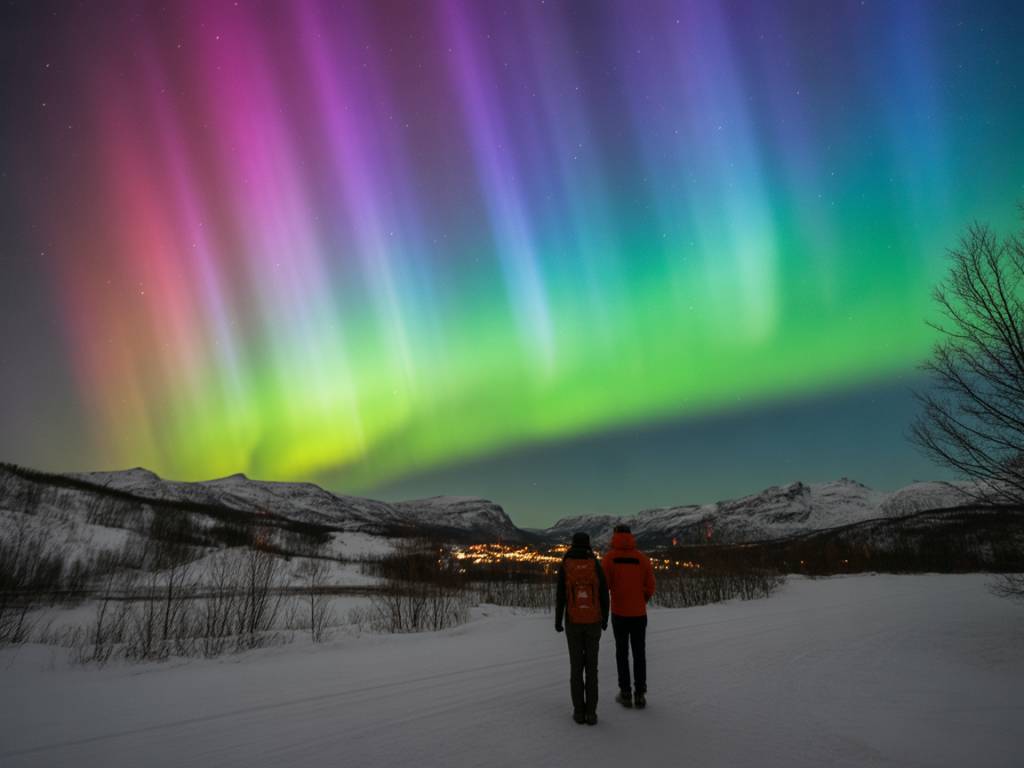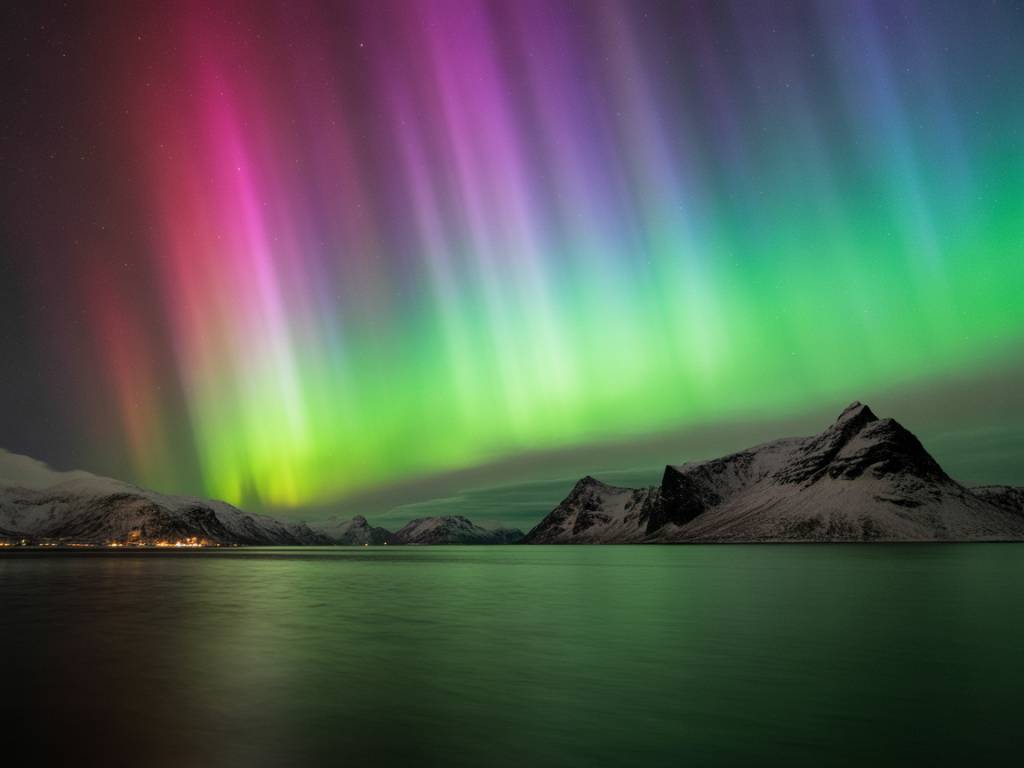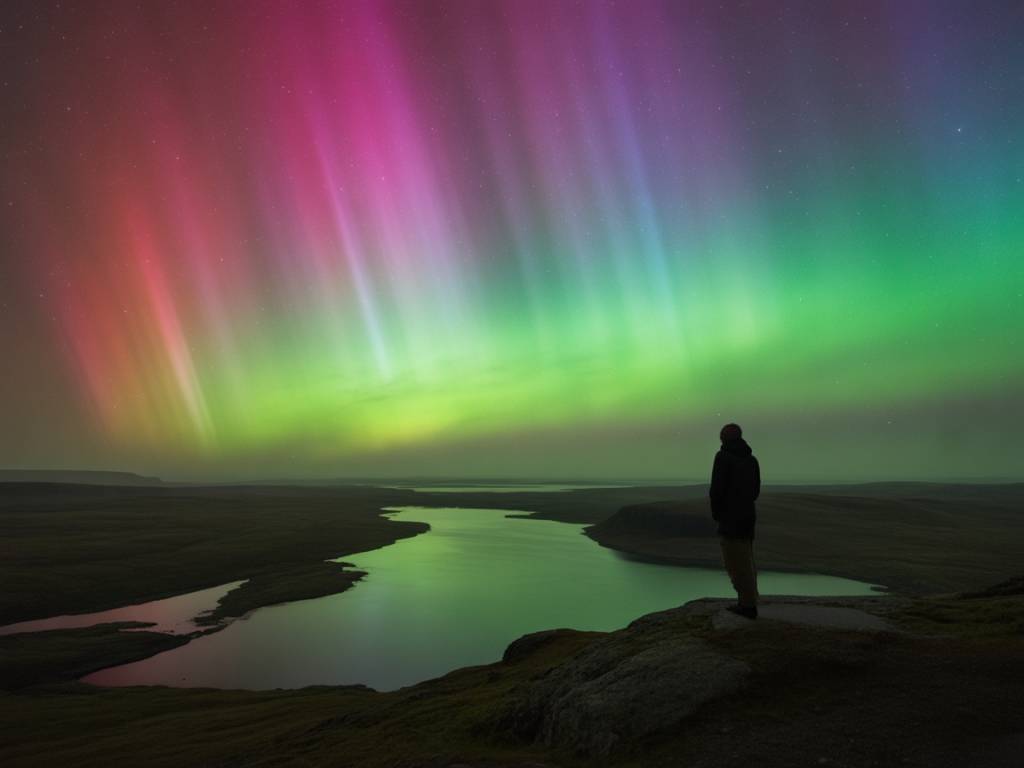

If you’re reading a northern lights blog, chances are you’ve already seen the same advice everywhere: “Get away from the city, drive two hours into the dark, find a lonely road, wait.” That’s fine if you have a car, time, and clear roads.
But what if you’re in town, with an active aurora forecast coming, and you simply can’t (or don’t want to) leave the city? You still have options. The trick is to treat your own city like a mini field expedition and know exactly where to go when the KP jumps.
What “near your city without leaving town” really means
Staying in town doesn’t mean standing under the brightest streetlamp on the main square and hoping for the best. In practice, it usually means:
- Moving 2–8 km away from the city center
- Staying just inside the urban area, or on its dark fringe
- Reducing light pollution as much as possible without needing a car or a long drive
- Getting a clear, low view to the northern horizon (or southern in the Southern Hemisphere)
If you’re at latitude 60–70°N (Tromsø, Fairbanks, Rovaniemi, Reykjavik), you can often see auroras even from inside the city, as long as the sky is reasonably dark. At 55–60°N (Oslo, Stockholm, Edinburgh, Calgary), you need an active night (KP 5–7) and a careful choice of location. Lower than that and you’re hoping for a rare storm (KP 7+), so picking the right in-town spot becomes critical.
How to decide if it’s worth going out in your city
Before we talk locations, you need a quick filter. Otherwise, you’ll waste nights staring at a hazy northern glow that never turns into anything.
For urban aurora watching, I use a simple three-step check:
- KP index and latitude:
- High latitude (65–70°N): KP 2–3 can be enough.
- Mid latitude (55–60°N): Aim for KP 4–5+
- Lower latitude (<55°N): Realistic chances start at KP 6–7+
- Cloud cover forecast: You want <50% cloud cover overhead, <30% toward your aurora-facing horizon. A thin broken layer can still work; a thick overcast is game over.
- Local time and darkness: You need real night, not twilight. Check what time the astronomical dusk ends. In spring and autumn, that often falls between 20:00–23:00. In midsummer, some northern cities simply never get dark enough.
Once those three look acceptable, then it’s time to choose the right spot inside your city.
Key principles for picking an in-town aurora spot
No matter where you live, the good city locations almost always share the same features:
- Low light pollution in your immediate surroundings: Darkness next to you matters more than distant glows. You can see auroras above a lit city, but not if your own eyes are dazzled by nearby lamps.
- Open sky, especially to the north: Large gap in buildings, trees, or hills. Parking lots, rivers, and hilltops win over narrow streets every time.
- Safe, accessible, familiar: Places you can reach quickly, even at 23:30 in winter, without getting lost or worried about walking back.
- Known escape routes: If clouds move in from the west, where can you shift 1–2 km to a clearer patch sky? Think in terms of “backup balcony” and “backup park.”
Let’s break this down into actual types of locations you can use in almost any city.
Rivers, lakes and waterfronts: your best urban compromise
Waterfronts are often the easiest “no-car” aurora spots inside a city. Why?
- They naturally open the sky in one direction.
- Light pollution is often weaker over water.
- There are usually paths, benches, and open patches without tall buildings.
What to look for:
- Long, straight stretches of riverbank with a northern view. Stand where the opposite bank is low and dark, not filled with tall office towers.
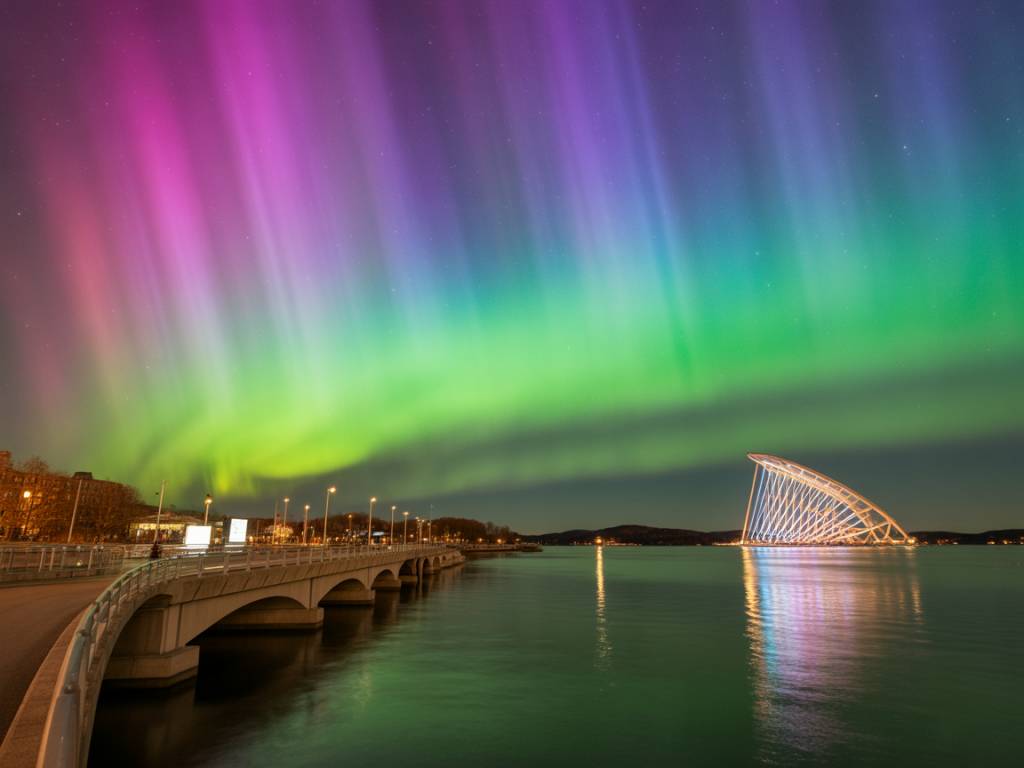
- Small lakes or ponds in parks near the city edge. Even if the horizon isn’t perfect, reflections can make the aurora more visible and photogenic.
- Sea promenades facing roughly north or northwest
Field example: In Tromsø, I often tell people staying in the city center and stuck without a car to walk to the south side of the island and look north across the water. The city lights are behind you, and the sky opens over the sound. It’s not “perfectly dark,” but on an active night it’s more than enough.
Parks and sports fields: fast access, decent skies
If you only have 10–15 minutes to react when the aurora suddenly spikes, a nearby park can save your night.
Parks work well when they have:
- Large open lawns or sports fields without tall trees blocking the north
- Limited floodlighting (or lights that switch off after 22:00–23:00)
- Multiple access points so you can move to the darker corner if one side is too bright
Things to avoid:
- Playgrounds with intense, white LED lighting aimed at eye level
- Enclosed gardens or courtyards with trees on all sides
- Parks with constant car traffic along every edge
Field example: In Rovaniemi, I’ve watched good auroras from the darker edges of city parks, especially when I didn’t have time to cross the river or leave town. It’s rarely pitch black, but if you shield your eyes from nearby lamps and give your vision five minutes to adapt, you’d be surprised at what shows up.
City hills, viewpoints and lookouts
Anything that raises you above the average building height increases your chances, even in a bright city.
Look for:
- Public viewpoints or scenic overlooks already known for city panoramas
- Small hills with a clear march of sky above the horizon
- Residential edges where the last row of houses drops off toward a valley or industrial area
Advantages:
- You gain a cleaner horizon, so you’ll see low aurora arcs that remain hidden from street level.
- You can sometimes place city lights in front of you and keep the sky above dark enough.
Drawbacks:
- Wind exposure: hills are colder, and wind chill will shorten your patience.
- Popular lookouts may be busy or feel less safe late at night.
Field example: In Oslo, I often recommend small hills in residential neighborhoods rather than the very top tourist viewpoints. They’re quieter, darker, and you’re still within walking distance of public transport.
Edge-of-city car parks and industrial zones
If you or a friend do have a car but don’t want to fully “leave town,” aim for the dimmest edge of the urban area.
Useful places include:
- Park-and-ride car parks at the outer ends of tram, metro or bus lines
- Quiet industrial estates that go dark after business hours
- Large supermarket or DIY store parking lots on the city fringe (lights usually dim late at night)
How to use them:
- Arrive 20–30 minutes before the best forecast window.
- Park with a clear view north (or with the brightest lights behind your car).
- Use the car as a warm base. Step out for 5–10 minutes whenever the KP spikes or the aurora alert triggers.
Safety note: Stay away from completely abandoned, unlit industrial plots you don’t know well. You want quiet, not “invisible.”
Rooftops, balconies, and courtyards
In dense cities where you can’t access dark parks or waterfronts, sometimes your best option is simply above your own front door.
- Flat rooftops and terraces: If your building has safe, legal access to the roof, check whether the northern side offers a gap above neighboring roofs. You may see more than you expect.
- Balconies: North-facing balconies with minimal direct lighting are surprisingly good. Turn off indoor lights, step outside, and give your eyes time to adjust.
- Courtyards: Some inner courtyards are shielded from direct streetlights and open to a slice of sky. It’s not ideal, but during a strong storm, even a slice can be enough.
To make these work:
- Kill as many indoor lights as possible to avoid reflections on windows and balcony doors.
- Block any nearby lamp glare using a coat, hood, or the building structure itself.
- Use your phone only sparingly; brightness ruins night adaptation quickly.
Field example: During the big storms of 2023–2024, I saw countless photos of northern lights taken from regular apartment balconies in cities like Hamburg, Dublin, and even Paris outskirts, simply because people knew to look north and shield their eyes from building lights.
How to pre-scout aurora spots in your own city
The time to pick your spot is not five minutes after you see a social media alert screaming “KP 7 now!” Do your homework on a cloudy day, once, and you’ll be ready for the next clear and active night.
Here’s a practical scouting routine:
- Check a light pollution map (for example: “light pollution map + your country”). Identify slightly darker zones still inside the urban boundary.
- Open satellite view in Google Maps:
- Search for big dark patches = parks, forests, lakes, sports fields.
- Look for open waterfronts, piers, or beaches facing north.
- Visit your top 3–5 candidates at night:
- Go on a normal evening walk.
- Check how many streetlights you see directly in your eyes.
- Confirm that you feel safe and know exactly how to get there and back.
- Mark exact spots in your map app (or a small notebook). Name them clearly, like:
- “Riverside north bench – dark”
- “Hilltop viewpoint – good horizon”
- “Stadium car park – lights off after 22:30”
When the next active night is coming, you won’t be guessing. You’ll simply choose based on cloud direction, wind, and how much time you have.
City-specific scenarios: how this looks on the ground
To make this more concrete, here are some typical “in-city” strategies I’ve either used myself or recommended to readers.
Reykjavik (high latitude, bright but compact city)
- Walk from the center toward the coastline away from the brightest downtown strip.
- Use small headlands and coastal paths with open views north over the sea.
- If that’s too far, aim for neighborhood parks slightly uphill from the center.
Fairbanks (very aurora-active, spread-out lights)
- Even from motel car parks on the city edge, you can see strong auroras overhead.
- Pick a west- or north-facing lot beyond the bright core, with streetlights behind you.
- Use the car interior to warm up during quiet phases.
Edinburgh (mid latitude, needs higher KP but has hills)
- Avoid the very center. Aim for modest hills in residential areas or coastal stretches along the Firth of Forth with open northern views.
- Sports fields and parks on the northern side of the city can give surprisingly good horizons on a KP 5–6 night.
Hamburg or Seattle (lower latitude, only strong storms)
- Focus on maximum horizon and minimum glare:
- Harbor viewpoints, outer piers, dark lakesides.
- Outer-city parks on low hills with views north.
- On KP 7+ nights, you mainly want a clear view of the northern horizon; even a faint arc will sit low.
The locations differ, but the logic is always the same: step just far enough away from the brightest core, find an open view north, and keep lights out of your eyes.
Managing expectations: what you’ll actually see in town
Even on a strong night, the northern lights you see from inside a city rarely look like the high-contrast, neon photos online. Cameras exaggerate.
Realistic expectations from an urban spot:
- Early phase: A pale, grey-green arc low in the north, sometimes mistaken for thin cloud.
- Peak moments: Rapid brightening, vertical rays, slow pulsing motion. For a few minutes, you might see obvious movement with the naked eye.
- Late phase: Fainter glow, more diffuse, sometimes sliding overhead or to the south during strong events.
In very bright cities, your eyes may only pick up the structure faintly, while your phone camera shows more color. That’s not a failure; it’s just physics. The main thing is to be there, know where to look, and give your eyes time.
Gear and tricks that matter in a city
You don’t need heavy expedition gear for urban aurora watching, but a few small choices make the experience much better:
- Warm layers: You’ll be standing still. Add one more layer than for a normal walk.
- Thin gloves you can operate your phone with: You’ll use your camera more than any telescope.
- Headlamp or flashlight with red mode: Red light preserves night vision better than white.
- Tripod or mini-tripod: If your phone supports “night mode” or “star mode,” a cheap tripod is the difference between blurred smudges and decent memories.
- Thermos: Hot drink = more patience, more time under the sky.
Also, decide in advance how you’ll handle notifications. If you follow real-time aurora apps, set alerts for significant jumps (e.g. Kp 5+, or local K-index exceeding 4). You don’t need to check graphs every two minutes; that’s exactly the kind of “forecast stress” I try to remove for readers.
How to react when the sky changes
Once you’re outside, treat the situation like a simple field operation:
- If clouds move in:
- Watch which direction they’re coming from.
- Shift laterally, even just 1–2 km, toward the last clear sector if it’s still safe and practical.
- If the aurora is low and faint:
- Move somewhere with a better northern horizon (closer to water or on a small hill).
- Use your camera to confirm it’s really aurora and not thin cloud or light pollution.
- If the aurora suddenly brightens:
- Stop walking, stop fiddling with apps. Just watch for a few minutes.
- After that, grab a couple of photos and then look with your own eyes again.
This kind of simple, pre-planned reaction keeps the night calm. No frantic driving, no last-minute panic. Just small, controlled moves inside a city you already know.
Turning your home city into an aurora base
You don’t need to live in a cabin in rural Norway to enjoy active northern lights nights. By scouting two or three solid spots inside (or right on the edge of) your city, you turn your usual environment into a workable aurora base.
On the next active night, your checklist is short and clear:
- Check KP, clouds, and darkness window.
- Pick the pre-scouted spot that fits the wind and time you have.
- Grab one extra layer and a thermos.
- Walk or drive there calmly, 20–30 minutes before the best window.
- Give your eyes 10–15 minutes, then look north and wait.
Is it the same as standing under a perfectly dark Arctic sky? No. But it’s still a real, live aurora, above your own city, on a night you would otherwise spend indoors watching other people’s photos.
And once you’ve seen what your city can offer, you’ll be much better prepared when you do have the chance to go further north – with far less “forecast stress” and far more time spent actually looking up.