


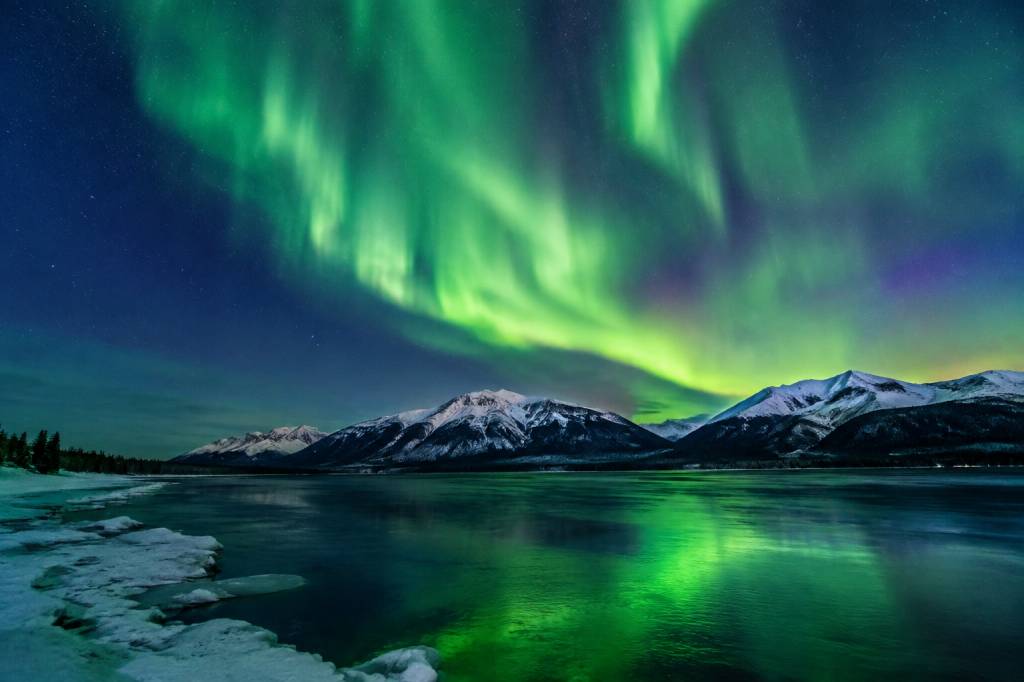
Alaska is one of the best places on Earth to watch the northern lights, but the state is so large that “average temperature in Alaska” can be misleading. Fairbanks, Anchorage, Nome and Utqiagvik do not share the same winter. Even within one city, a clear evening can feel comfortable one night and dangerously cold the next.
For aurora travelers, temperature is only one part of the planning equation. Cloud cover, darkness, road conditions, moonlight, solar activity and your ability to stay outside for several hours all matter. This monthly guide focuses on the main aurora destinations in Alaska and explains what the weather usually means in practical terms.
Alaska weather at a glance for aurora trips
The best aurora season generally runs from late August or early September through early April. You need three things: a dark sky, enough solar activity and a clear view through the clouds. Alaska’s temperatures during this period range from cool autumn conditions to severe winter cold.
Fairbanks is the most practical base for many first-time visitors. It lies under the auroral oval, has frequent clear nights compared with coastal areas and offers a wide choice of tours, cabins and accessible viewing locations. Anchorage is easier to reach but usually requires a drive north or toward darker areas for better aurora conditions.
The figures below are approximate typical ranges, not guarantees. Weather stations, elevation and local terrain create noticeable differences. Always check the latest forecast before leaving your accommodation.
- Fairbanks: the strongest all-round choice for aurora viewing, with cold and often dry winters.
- Anchorage: milder temperatures, but more urban light and more variable cloud cover.
- Nome: open landscapes and dark skies, but wind can make temperatures feel much lower.
- Utqiagvik: extreme Arctic conditions, limited daylight in winter and more demanding logistics.
January: deep winter and long aurora nights
January is one of the coldest months in Alaska. In Fairbanks, average daytime temperatures are often around -8°F to -5°F (-22°C to -21°C), while nights commonly fall between -20°F and -10°F (-29°C to -23°C). Colder readings are possible, particularly during clear, calm high-pressure weather.
Anchorage is generally less severe, with daytime averages near 20°F (-7°C) and nighttime temperatures close to 10°F (-12°C). Coastal wind and snowfall can still make conditions unpleasant, especially when you are standing still beside a road waiting for activity.
January offers excellent darkness for aurora photography. The main difficulty is endurance. A two-hour outdoor session at -20°F is not comparable to a two-hour walk in a European winter. You need insulated boots, proper gloves, a face covering and a vehicle or heated shelter nearby.
If you plan to drive, allow extra time. Batteries lose power quickly, roads may be icy and remote locations can have no mobile signal. Keep the fuel tank at least half full, carry blankets and avoid stopping on narrow shoulders.
February: cold, dark and often rewarding
February remains firmly in the winter category, but daylight begins to return. Fairbanks typically sees average highs near 5°F to 15°F (-15°C to -9°C), with overnight temperatures commonly around -15°F to 0°F (-26°C to -18°C).
In Anchorage, daytime temperatures often hover around 20°F to 25°F (-7°C to -4°C), while nights sit near 10°F to 15°F (-12°C to -9°C). Snow conditions can vary considerably from one week to the next.
This is a strong month for visitors who want long dark hours without the absolute minimum temperatures of early January. You can begin an evening outing around 8 or 9 p.m. and remain active until after midnight, depending on the forecast and solar activity.
One practical advantage of February is that many winter activities are operating normally. You can combine aurora hunting with dog sledding, snowshoeing or a visit to Chena Hot Springs near Fairbanks. Just remember that steam from hot springs can create local fog and obscure the sky around the viewing area.
March: a useful balance of darkness and comfort
March is often one of the easiest months for an Alaska aurora trip. Fairbanks temperatures commonly range from around 10°F to 30°F (-12°C to -1°C), although cold snaps and warmer afternoons are both possible. Nights remain cold enough for excellent snow conditions, but the most severe winter temperatures become less frequent.
Anchorage usually sees daytime averages in the upper 20s to mid-30s Fahrenheit (-2°C to 2°C), with nighttime temperatures often between 10°F and 20°F (-12°C to -7°C).
March also brings more daylight, which helps with sightseeing but reduces the number of fully dark hours. The useful aurora window is still long, especially from roughly 9 p.m. to 2 a.m. Local conditions matter more than a fixed timetable. Aurora activity can appear earlier or later.
From a practical point of view, March is a good compromise for travelers who want to spend time outside without treating every evening like an Arctic expedition. Warm clothing is still essential, but you may not need the same extreme layering system required in January.
April: the end of the reliable season
April is a transition month. In Fairbanks, average daytime temperatures often reach the 30s or low 40s Fahrenheit (0°C to 6°C), while nights can still fall below freezing, commonly between 10°F and 25°F (-12°C to -4°C).
At the beginning of April, aurora viewing remains possible. By the middle and end of the month, twilight lasts too long for consistent visibility, especially in central and southern Alaska. The exact cutoff changes each year because it depends on latitude and the date of your visit.
Snow can become soft during the day and icy after sunset. This creates difficult driving conditions on rural roads. A location that was easy to reach in February may have muddy access, standing water or a damaged gravel track in April.
Choose April only if you are combining aurora viewing with other activities and accept a smaller window of opportunity. Check sunset, astronomical darkness and cloud forecasts before booking a remote tour.
May to July: too much daylight for most aurora trips
May is generally not a practical month for northern lights tourism in most of Alaska. Temperatures are much more comfortable, with Fairbanks daytime averages often in the 50s Fahrenheit (10°C to 15°C) and Anchorage commonly in the upper 40s to 50s Fahrenheit (9°C to 15°C). However, the sky does not become dark enough for long enough.
June and July bring very long days and, in northern Alaska, the midnight sun. Even if the aurora is active, ambient daylight prevents the display from becoming visible. Temperatures are usually mild by Alaskan standards, with Fairbanks often reaching the 60s Fahrenheit (16°C to 21°C) and Anchorage remaining slightly cooler.
These months are excellent for hiking, wildlife viewing and road trips, but not for a traditional aurora itinerary. Do not book a summer Alaska trip expecting to see northern lights simply because the solar forecast looks strong. Darkness is non-negotiable.
August: the aurora season begins again
Late August marks the gradual return of darkness. Fairbanks temperatures typically range from the upper 40s to low 60s Fahrenheit (9°C to 17°C), with cooler nights often between 35°F and 45°F (2°C to 7°C). Anchorage is similar but can be cloudier and wetter.
The first aurora opportunities usually appear in the final third of the month, once the sky is dark for several hours. Visibility is not guaranteed: strong displays can occur, but the season is still getting started and cloud cover remains a major factor.
Pack for changing conditions. A light down jacket, rain shell, warm hat and gloves are useful, even if your daytime plans involve T-shirts. By night, temperatures can drop quickly when the wind is calm and the sky is clear.
September: mild evenings and improving darkness
September is a popular month because it offers a reasonable balance between accessible roads, manageable temperatures and returning darkness. Fairbanks commonly experiences daytime temperatures in the 50s Fahrenheit (10°C to 15°C), with nights falling into the 30s or low 40s Fahrenheit (1°C to 7°C).
Anchorage tends to be milder during the day but can receive more rain. Near the end of September, the first frosts become possible in the interior.
A September aurora outing usually requires less equipment than a midwinter expedition. However, standing outdoors for several hours can still become uncomfortable. Bring insulated layers rather than relying on a single thick coat. A folding chair, warm drink and spare gloves can make a surprising difference.
Autumn weather can change rapidly. Have a second viewing location ready in case clouds settle over your first choice. Around Fairbanks, a short drive can sometimes move you out of a local cloud bank, but never drive aggressively on unfamiliar dark roads to chase a forecast.
October: a strong month with unsettled weather
October brings longer nights and increasingly cold conditions. Fairbanks daytime averages are often in the 30s or 40s Fahrenheit (1°C to 9°C), while nighttime temperatures commonly range from 15°F to 30°F (-9°C to -1°C). Snow may arrive at any time, although rain and freezing rain are also possible early in the month.
Anchorage often remains slightly warmer, with daytime temperatures around the 40s Fahrenheit (4°C to 9°C) and nighttime temperatures near freezing. Coastal weather can change quickly, so cloud forecasts are particularly important.
October is a good choice for travelers who want dark skies without the extreme cold of January. It is also a month when road conditions can be unpredictable. Rental cars may not yet have full winter equipment, and rural access roads can become slick after the first snow or freeze.
For a simple plan, stay near Fairbanks, choose a viewing site with easy parking and avoid narrow mountain roads after midnight. The best aurora location is not useful if you cannot reach it safely or return without fatigue.
November: the winter pattern takes over
In November, Fairbanks usually sees average highs in the teens or 20s Fahrenheit (-9°C to -2°C), with nights often between 0°F and 15°F (-18°C to -9°C). Snow cover is normally established, and daylight becomes very limited.
Anchorage is typically milder, with daytime temperatures in the 20s to low 30s Fahrenheit (-7°C to 0°C). Snowfall and cloud cover can be more variable than in the interior.
November provides long dark hours, but it is not always the easiest month for a first visit. Weather systems can produce snow, low cloud and poor visibility for several nights in a row. Build flexibility into your itinerary. Three or four nights give you a much better chance than a single scheduled outing.
Use a forecast that separates cloud cover from precipitation. “No rain” does not mean “clear sky”; a solid layer of high or low cloud can hide the aurora completely.
December: maximum darkness, serious cold
December offers some of the longest periods of darkness in Alaska, but temperatures can be severe. Fairbanks averages often sit near 0°F to 10°F (-18°C to -12°C) during the day, with overnight temperatures commonly below zero Fahrenheit (-18°C), especially during clear conditions.
Anchorage usually remains less cold, with daytime averages around the 20s Fahrenheit (-7°C to -2°C), but snowfall and cloud can interfere with viewing.
December is attractive for visitors who want a festive winter atmosphere, snow-covered landscapes and long aurora nights. It is also the month when poor preparation becomes obvious very quickly. Regular hiking boots, thin gloves and denim are not enough for a remote viewing stop.
Keep camera batteries warm inside an inner pocket, use a tripod and avoid touching metal equipment with bare skin. If you are traveling with children or older relatives, choose a heated viewing cabin rather than an exposed roadside pullout.
How temperature affects your aurora strategy
Cold does not create the aurora, and warm weather does not prevent it. Temperature mainly affects how long you can remain outside and how safely you can move around. A weak display watched comfortably for 90 minutes is more useful than a strong forecast that leaves you too cold to stay outdoors.
- Dress in layers so you can adjust during driving and outdoor waiting periods.
- Use wool or synthetic base layers; cotton becomes cold when damp.
- Wear insulated, waterproof boots with enough room for thick socks.
- Carry hand warmers, but do not place them directly against bare skin for long periods.
- Keep spare camera batteries inside your coat.
- Bring water, snacks, a headlamp and a fully charged phone.
- Tell someone your route if you are leaving the city independently.
Choosing between Fairbanks and Anchorage
For a focused aurora trip, Fairbanks is usually the more efficient choice. It sits farther north, offers a darker environment and has many viewing services designed around the aurora forecast. Temperatures are colder, but access to heated lodges and organized tours reduces the risk.
Anchorage works well for travelers with a broader itinerary. You can combine the city with Kenai Fjords, Denali or winter activities, but urban light and coastal cloud often reduce the number of useful viewing nights. If the aurora is your main objective, consider spending at least part of the trip farther north or outside the city.
A practical monthly booking rule
For the best balance of conditions, consider late February, March, September or early October. Choose December through February if you are comfortable with serious cold and want maximum darkness. Choose late August or April only if you accept a shorter or less reliable dark-sky window.
Whatever month you select, book several nights rather than relying on one perfect evening. The aurora is a natural event, not a scheduled performance. Your best advantage is time, a clear forecast, warm clothing and a safe backup location.