


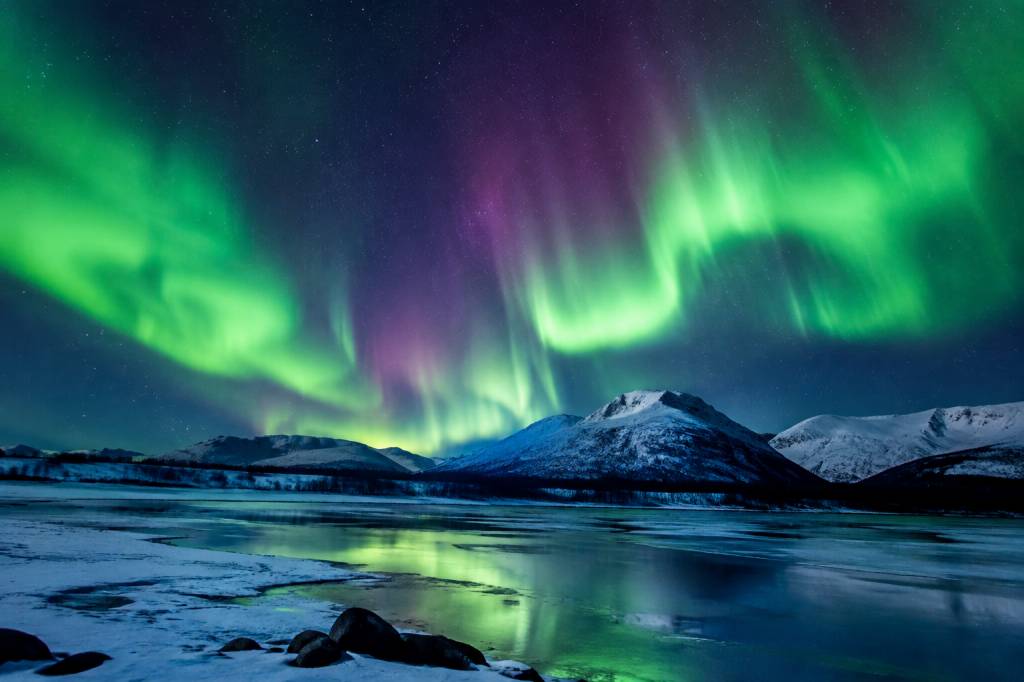
Alaska offers some of the best chances in North America to see the aurora borealis, but a good forecast is not a guarantee of a light show. You need darkness, clear skies and enough auroral activity in the right place at the right time. The practical goal is to bring those conditions together—and have a backup plan when Alaska’s weather does what it likes.
This guide explains when to travel, where to look and how to read the main forecast signals without spending the evening refreshing complicated charts. Forecasts change quickly, so check current aurora and cloud information on the day of your outing.
When is aurora season in Alaska?
The aurora can occur throughout the year, but you need a dark sky to see it. In much of Alaska, that makes late August through April the main viewing season. September and March are popular shoulder-season months, while the long nights of winter offer more hours of darkness.
Summer is usually a poor choice for aurora hunting. Around Fairbanks, the sky stays bright for much of the night in June and early July. Even if the aurora is active, twilight can wash it out. By late August, nights become dark enough to start watching again, though the weather may still be relatively mild.
Winter brings long nights, but also colder temperatures, icy roads and frequent cloud cover. A trip in February or March can offer a useful balance: plenty of darkness, with daylight available for other activities. No month guarantees a display. Plan several nights rather than expecting the aurora to appear on the first one.
What time should you go outside?
There is no fixed “aurora hour.” Displays can happen at any time during a dark night, but activity often increases around local midnight. In Alaska, a practical first check is between 10 p.m. and 2 a.m. Alaska Standard Time in winter. Start earlier if the forecast is active, and stay flexible if the sky is clear and the lights are building.
Give your eyes time to adjust to darkness. Avoid looking at bright phone screens, or lower the brightness and use a red-light setting. Check the sky directly as well as your apps: a faint green arc can appear before a forecast looks especially impressive.
Set a sensible limit. If the sky is fully clouded and the forecast shows no clear patch nearby, move to your backup location or get some sleep. Rechecking the same cloudy sky every five minutes will not improve it.
How to read an Alaska aurora forecast
A useful aurora forecast combines three different pieces of information: auroral activity, cloud cover and darkness. The KP index is only one part of the picture. It describes geomagnetic disturbance on a scale from 0 to 9; higher values can indicate stronger activity and a broader viewing area. It does not tell you whether your local sky is clear, or promise that the aurora will be visible from a particular parking area.
Fairbanks sits under the auroral oval, a region where auroras occur frequently. That means you may see activity there even when the KP number is modest. In southern Alaska, a stronger event may improve the odds, but cloud cover can still block the view. Treat KP as a regional clue, not a yes-or-no answer.
For each evening, check:
-
Cloud cover: Look for the cloud forecast at your exact viewing location, not just the city airport. A clear patch a short drive away may make the difference.
-
Auroral activity: Use an official or reputable aurora forecast for current conditions and short-term outlooks. Forecasts are estimates, and conditions can change quickly.
-
Darkness: Check sunset, twilight and moonrise times. A bright Moon does not make aurora viewing impossible, but it can reduce contrast, especially for faint displays.
-
Road and weather conditions: Before leaving town, check for ice, snowfall, wind and visibility. A clear sky is not worth a risky drive.
One simple rule helps keep expectations realistic: clear skies are essential; high auroral activity is a bonus. If the clouds are thick, the KP number cannot rescue your view.
Fairbanks: the strongest base for a first trip
For many visitors, Fairbanks is the most practical place to plan an aurora-focused stay. It lies beneath the auroral oval, has accommodation and services, and offers access to darker skies beyond the city. You can stay in town, check the local cloud forecast after dinner and choose a direction based on the conditions.
Get away from bright streetlights when it is safe to do so. Chena Hot Springs Road is a popular route for aurora trips, with several places where travelers stop to look at the sky. Do not assume every roadside turnout is suitable: park fully off the road, keep clear of driveways and private land, and never stop where passing traffic cannot see you. Check current road conditions before setting out, especially in winter.
If you are unfamiliar with snow and ice driving, consider booking a local aurora tour. A guide can monitor changing skies, select a safe stopping point and provide transport while you focus on the view. This is a practical choice when temperatures are severe or you do not want to drive late at night.
Fairbanks is also a useful base when the weather changes. If clouds settle over one part of the region, you may be able to adjust your plans, but do not chase every gap without checking distance and road conditions. A cloud forecast is not a guarantee that a clear area will remain clear by the time you reach it.
Anchorage, Denali and other viewing areas
Anchorage has more light pollution than Fairbanks, but auroras can still be visible there during strong displays, especially from darker locations outside the city center. Plan to travel away from bright commercial areas when conditions allow. Before choosing a spot, confirm that it is open and accessible at night; a scenic viewpoint on a map may have a closed gate, limited parking or no safe place to stop.
Denali National Park and the surrounding area offer dark skies and wide views, but access depends on the season, road status and your accommodation. Do not assume the park road is open for a nighttime drive. Check official park information before you go, and choose a place where you can safely return to your lodging in winter conditions.
Other communities, including Nome and locations in Alaska’s Arctic, can also offer excellent dark skies. They require more planning than a Fairbanks stay. Flights, accommodation, local transport and weather disruptions may limit your options, so build flexibility into the itinerary rather than relying on a single night.
Wherever you stay, the best location is not necessarily the most remote one. It is a safe, accessible spot with a reasonably dark view of the sky and a realistic way back if the weather turns.
How to plan a flexible aurora night
Make the decision in stages. During the day, check the broad aurora outlook, cloud forecast and local road conditions. In the evening, compare the latest cloud information for your town and possible viewing areas. Then choose a nearby safe location rather than committing to a long drive before you know what the sky is doing.
Imagine clouds covering Fairbanks while a clearer forecast appears to the north. Before driving, check whether the route is open, how long the trip will take and whether the clear patch is expected to last. If the drive is unsafe or the cloud forecast is uncertain, wait for another window or stay near town. The aurora is a natural event, not a reason to take chances on an icy road.
Give yourself more than one opportunity. A stay of three or four nights is more resilient than a tightly packed itinerary with one late-night outing. Keep daytime activities flexible where possible, so a late aurora watch does not leave you exhausted behind the wheel the next morning.
What to wear and bring
Cold feels sharper when you are standing still, even if you are dressed for a daytime walk. Wear multiple layers and protect the parts that lose heat quickly. Pack your gear before leaving your accommodation so you are not searching for gloves in a dark parking area.
-
Clothing: Insulated, wind-resistant outer layers, warm boots, a hat, a neck covering and mittens or insulated gloves. Bring spare gloves if you have them.
-
Essentials: A charged phone, a portable power bank, drinking water, snacks and a headlamp with a red-light mode.
-
For photography: A tripod, spare batteries and a camera that allows manual focus and longer exposures. Keep spare batteries warm; cold can drain them quickly.
-
For the drive: A full fuel tank, a winter emergency kit and knowledge of the route. Follow local advice about winter driving and do not rely on phone coverage in remote areas.
For a phone photo, steady the device against a support and use a night mode if available. The camera may record color that looks stronger than it does to your eyes. That does not make the photograph false; it simply reflects how a sensor gathers light over time. A faint display can appear nearly gray to the eye and green in a long exposure.
Safety matters more than a clear patch
Alaska’s roads, temperatures and distances deserve respect. Check the forecast before departure, tell someone where you are going and avoid stopping in traffic lanes or on narrow shoulders. Use designated parking areas when possible. Keep a safe distance from riverbanks, steep edges and unfamiliar terrain, especially in darkness.
Do not trespass to reach a viewpoint. Ask locally if access is unclear, and respect closures and private property. If you are tired, cold or uncertain about the return drive, head back. Missing one display is disappointing; getting stranded is worse.
At very low temperatures, protect exposed skin and watch for numbness, confusion or unusual fatigue. Warm up in a vehicle or shelter before discomfort becomes a problem. If you are joining a tour, tell the operator about mobility or cold-weather concerns before booking.
Set expectations, then enjoy the sky
Auroras vary from a quiet green band to fast-moving curtains that spread across the sky. Some nights bring a vivid show; others produce only a faint glow, or nothing visible at all. A forecast improves your choices, but it cannot control solar activity or local weather.
Pick a location with a safe return route, check clouds as carefully as the aurora index and give yourself several nights if the trip allows. When the sky does open, take a moment before reaching for your camera. The best view is the one you actually see.