


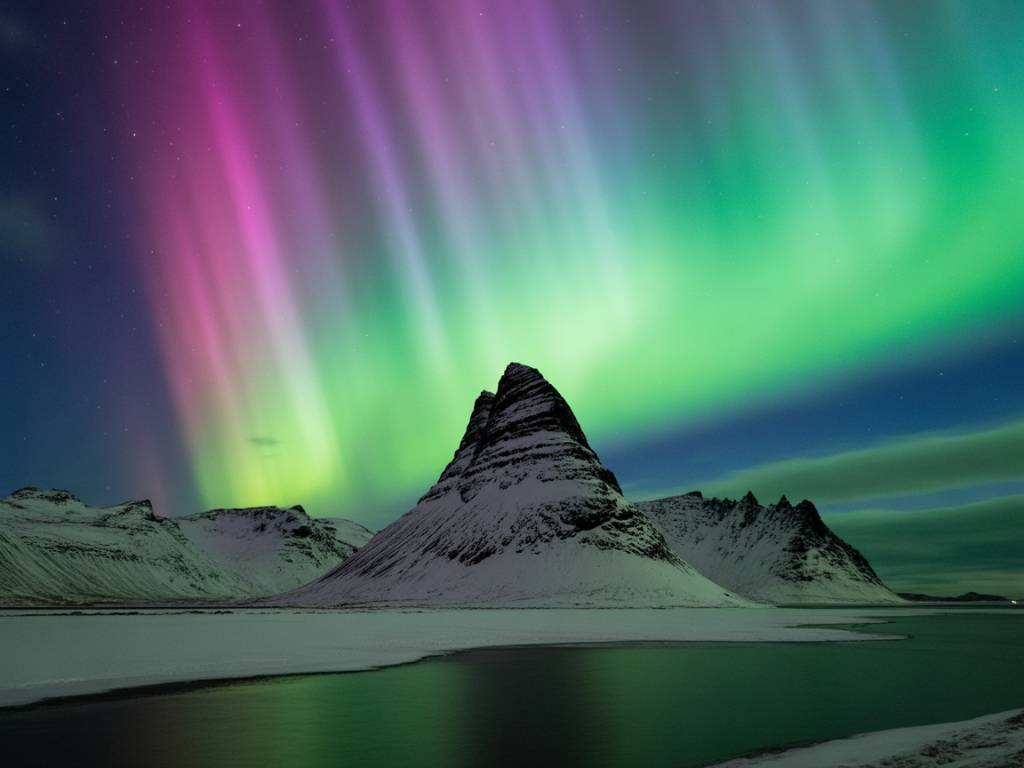
If you’re planning a Northern Lights trip and hesitating between Iceland and Norway, you’re not alone. I get this question all the time when people start playing with KP indices and flight prices at the same moment. Both destinations are excellent for aurora hunting, but they don’t offer the same type of trip, and that’s where you need clarity.
In this article, I’ll compare Iceland and Norway specifically from the point of view of someone whose main objective is to see and photograph the Northern Lights, with minimum time wasted on bad locations, wrong expectations or misunderstood weather charts.
Key differences at a glance
If you only skim one section, make it this one. Here’s the short version.
- Best if you want rugged, independent road-tripping + dramatic landscapes by day: Iceland
- Best if you want a higher chance of clear skies + strong local aurora culture and guides: Northern Norway (Tromsø, Lofoten, Alta)
- Best for budget: Neither is “cheap”, but Norway can be slightly easier to optimise if you base yourself in one area like Tromsø.
- Best for first-time aurora hunters who don’t want to overthink forecasts: Tromsø region in Norway
- Best for diversifying activities if clouds ruin the show: Both, but Iceland wins for variety of natural sights in a short radius (waterfalls, hot springs, glaciers).
Now let’s get into the field details: where you’ll stand at night, what you’ll see, and how the forecasts play out differently in each country.
Latitude, KP index and actual visibility
Both Iceland and northern Norway are inside the so‑called “auroral oval”, where auroras are statistically most common.
Iceland sits roughly between latitude 63°N and 66°N. Reykjavik itself is already inside the oval much of the time. On a moderate KP 3 night, you can often see auroras somewhere on the island if the sky is clear and you’re away from city lights.
Norway is long. For auroras, we’re mainly talking about:
- Tromsø (~69°N)
- Lofoten Islands (~68°N)
- Alta (~70°N)
These areas are closer to the “center” of the auroral oval. That means:
- On low activity nights (KP 1–2), northern Norway can still deliver good overhead auroras.
- In Iceland, KP 1–2 is more borderline; you might only get faint arcs low on the horizon, or nothing visible if you’re under light pollution or thin clouds.
If you’re travelling outside the deep solar maximum years and staying only a few nights, that slight advantage for low KP nights makes northern Norway statistically a bit safer for pure aurora success.
Cloud cover and local weather patterns
Seeing the aurora is a two-step game:
- There must be geomagnetic activity.
- You must have clear skies exactly above you when it happens.
This is where the two destinations start to behave differently on real trips.
Iceland is an isolated island in the North Atlantic, directly on the path of many low-pressure systems. It can deliver magical clear skies… or days of stubborn cloud cover. The good news: you can often jump weather systems by driving 1–3 hours. The bad news: sometimes there is simply cloud everywhere on the island at night, especially in autumn and early winter.
In Northern Norway, the coastline is also exposed to Atlantic weather, but you have:
- Coastal areas (Tromsø, Lofoten) with often variable, fast-changing clouds.
- More continental and drier inland valleys reachable by road (around Skibotn, for example), which tend to have clearer skies in winter.
This gives guides in Tromsø an advantage: on many nights they can simply drive you to a dry inland “blue hole” while clouds stay over the fjords. In Iceland, you can do a similar strategy along the south coast or towards the north, but the island is smaller and more “dominated” by one big weather system at a time.
If your main fear is “three nights of total overcast”, the Tromsø region in Norway offers a slightly better playbook for dodging clouds by road.
Where you will actually stand at night
It’s easy to get lost in KP charts and forget a practical question: what does your actual observing spot look like? Parking? Horizon? Light pollution?
In Iceland, typical locations are:
- Within 1–2 hours of Reykjavik: Thingvellir National Park, around Selfoss, Hella, Vik, or the Reykjanes Peninsula.
- On the south coast: beaches and lagoons near Vik, Jökulsárlón, or Höfn if you do longer drives.
- In the north: Akureyri region and around Mývatn, with slightly longer drives from the capital or domestic flights.
Here you often stand:
- On wide open plains or near coastlines.
- On road lay-bys, small gravel tracks, church parking lots or guesthouse parking.
- With very dark surroundings once you leave Reykjavik or Akureyri.
Accessibility note: in winter, roads can be icy, narrow and windy. If you rent a car, choose 4×4 with proper winter tyres and don’t underestimate wind warnings. Some of the nicest dark spots are literally just a safe pull-out off Road 1, facing north with minimal local lights.
In northern Norway, typical bases are:
- Tromsø: a small city with many organised tours leaving directly every evening.
- Lofoten: villages like Svolvær, Reine, Leknes, Henningsvær.
- Alta: smaller and quieter, but known for aurora lodges.
Here you often stand:
- On fjord edges, frozen lake shores or valley clearings.
- On official rest areas (Norway is good at providing them) and spacious parking spots near main roads.
- With some light pollution near Tromsø itself, but very dark skies only 30–60 minutes’ drive away.
Road maintenance in Arctic Norway is generally excellent in winter. Driving inland to chase clearer skies often feels more controlled than in Iceland, especially for less experienced winter drivers.
Daytime scenery and “backup value” if auroras fail
Both destinations are beautiful. But their daytime “personality” is different, and that matters if clouds kill the show for a night or two.
Iceland packs a lot of iconic sights within relatively short distances, especially if you stay around the south and southwest:
- Waterfalls (Seljalandsfoss, Skógafoss, Gullfoss).
- Geothermal areas (Geysir, Reykjadalur, the Blue Lagoon / Sky Lagoon).
- Black sand beaches (Reynisfjara), glaciers and ice caves (in season).
You can do short loops by day (Golden Circle, south coast to Vik and back) and keep your energy to drive out again at night if the forecast allows it. From an “aurora + general sightseeing” perspective, Iceland is incredibly dense and time-efficient.
Northern Norway shines in a different way:
- Dramatic fjords and mountain walls around Tromsø and Lofoten.
- Picturesque fishing villages, rorbuer (red cabins) on stilts and calm bays.
- Dog sledding, snowshoeing, whale watching (in season), Sami culture experiences.
Distances can be longer between major highlights, especially in Lofoten where you’ll spend more time just moving slowly through the landscape. It’s less about ticking many sites in one day, more about immersing yourself in a few fjords and valleys.
If your priority is: “I want strong aurora chances, but if the sky is cloudy, I still want a very full dayside program”, Iceland has a slight advantage for compact, varied sightseeing. If you’d rather trade density for raw alpine-fjord scenery, Norway will probably feel more special.
City base: Reykjavik vs Tromsø
Most trips will anchor around one city, at least for a few nights. Here’s how Reykjavik and Tromsø compare as “aurora hubs”.
Reykjavik (Iceland)
- Largest city in the Arctic region, wide choice of hotels, restaurants, bars.
- Many tour operators offer nightly “Northern Lights hunts” by bus or minibus.
- However, Reykjavik itself has moderate light pollution. You’ll usually need to:
- Take a tour, or
- Drive 30–60 minutes away (Thingvellir, Hvalfjörður, Reykjanes) for decent darkness.
- Good base for the Golden Circle and the southwest, but less central if you plan a full Ring Road (which is not recommended in deep winter on a short trip anyway).
Tromsø (Norway)
- Smaller than Reykjavik but very active in winter tourism.
- Possibly the most specialised city in the world for Northern Lights tours.
- On many nights, you can already see auroras from within the city limits if activity is strong and you move to darker corners (like Telegrafbukta beach or Prestvannet lake).
- Most guided tours include flexible driving to chase clearer skies inland, hot drinks & thermal suits.
If you want the simplest possible logistics with no car rental and good odds thanks to experienced guides, Tromsø feels almost purpose-built for what you’re trying to do.
Self-drive vs guided tours
Both countries allow you to choose between renting a car and chasing on your own, or booking nightly tours. The trade-offs differ slightly.
In Iceland, self-drive can be extremely rewarding if:
- You’re comfortable with winter driving (ice, wind, occasional whiteouts).
- You like to react quickly to last-minute cloud breaks on the national cloud cover map.
- You choose accommodation with easy, safe access to dark areas.
Guided tours from Reykjavik can work, but many of them follow more standardised routes and can’t always drive very far if the whole southwest is under clouds. Some smaller operators are more flexible; look for those who clearly mention real-time weather chasing, not just “we go east or west”.
In Northern Norway, both options are strong:
- Self-drive from Tromsø to places like Skibotn or Lyngen is usually on well-maintained roads.
- Guided tours from Tromsø are often run by local aurora enthusiasts who read the same satellite cloud images you see on this blog—and then add 20 years of local pattern memory on top.
If you’re hesitating, one hybrid strategy works well in both countries: book 1–2 guided nights early in your trip, then self-drive the remaining clear nights using what you’ve learned.
Costs: is one really cheaper?
Both destinations are expensive compared to southern Europe or North America, especially for food and alcohol. But there are differences.
Iceland cost notes:
- Car rentals can be costly once you add full winter insurance (highly recommended).
- Accommodation range is wide: from hostels and guesthouses to high-end hotels.
- Groceries in supermarkets (Bonus, Krónan) are reasonable by Nordic standards and can help you control budget.
- Many daytime sights are free or low cost (waterfalls, beaches, natural viewpoints).
Norway cost notes (northern region):
- Domestic flights to Tromsø or Evenes (for Lofoten) can be an extra line in your budget if you fly via Oslo.
- Accommodation and restaurants are expensive; alcohol is very expensive.
- Many aurora tours from Tromsø are not cheap, but they often include transport, photography help and warm gear.
- Again, self-catering reduces costs; most cabins and apartments have kitchens.
In practice, a carefully planned trip to either destination can land in a similar budget range. The main question is whether you want to spend more on car + fuel (Iceland) or on guided tours (Norway).
When to go: seasonality differences
Auroras need darkness, so the main season in both Iceland and northern Norway runs from late August to early April. But conditions evolve through that window.
Early season (late August – September):
- Iceland: softer weather, more unstable clouds but not full winter storms yet. Dark enough from late evening.
- Norway: around Tromsø and Lofoten you get a mix of summer feel and first dark nights. Great for photography with some foreground light.
Core season (October – March):
- Iceland: more snow and stronger storms, but also that classic “Arctic winter” atmosphere.
- Norway: long nights, better snow cover inland, very steady aurora tour operations from Tromsø.
Spring tail (late March – early April):
- Both: more daylight and milder temperatures, but still dark enough at night for strong aurora hunting.
- Solar activity sometimes has an equinox boost; I often find late March surprisingly productive.
If you don’t like the idea of driving in deep winter, aim for September or March in both countries. If you dream of snowshoeing to frozen lakes under the aurora, target January–February and accept the extra cloud/storm risk as part of the adventure.
Who should pick Iceland?
Based on past trips and feedback from readers, Iceland tends to be the better match if:
- You want to combine aurora hunting + intense daytime sightseeing in a short trip (4–6 nights).
- You’re comfortable renting a car in winter and driving 1–3 hours at night to chase clearer skies.
- Landscape photography is a key priority: waterfalls, black beaches, ice caves, geothermal areas.
- You’re okay with the idea that sometimes the island sits under one huge cloud deck and you have to wait it out—or enjoy the hot springs instead.
A typical no-nonsense Iceland plan for aurora hunters could look like this:
- Base around Reykjavik or Selfoss for 3–4 nights (Golden Circle, Reykjanes).
- Add 2–3 nights along the south coast (Vik or around Kirkjubæjarklaustur) to increase your range.
- Every afternoon, check:
- Cloud cover forecast over Iceland.
- KP index trend and real-time aurora webcams (where available).
- Decide on a direction (east/west) and commit to a 1–2 hour drive to a dark area with good horizon.
If you like independence and “weather chess”, Iceland is very satisfying.
Who should pick Norway?
Northern Norway is usually the better match if:
- Your priority #1 is maximising your chance of at least one strong aurora night.
- You prefer staying mostly in one region (like Tromsø) and letting local experts do the nightly decision-making.
- You like the idea of fjords, mountains and small Arctic towns more than geysers and black sand beaches.
- You’re not looking to drive hundreds of kilometres; shorter, strategic drives are enough.
A realistic and efficient Norway plan for first-timers could be:
- Fly into Tromsø for 5–7 nights.
- Book 2–3 dedicated aurora chase tours spread across the stay (for flexibility with weather).
- Keep other nights free to:
- Self-drive to nearby dark spots (Kvaløya, Ringvassøya) if the sky is clear.
- Relax in town if the forecast is poor or fatigue hits.
- Add daytime activities like dog sledding, fjord cruises or short hikes depending on snow and ice conditions.
With this setup, you offload most of the forecast stress to people who do this every single night from September to April.
So… Iceland or Norway for the Northern Lights?
If I strip the decision down to the essentials:
- Pick Iceland if the Northern Lights are your main goal but you also want a “road trip” feeling and dense sightseeing, and you’re okay playing a more active role in the weather and driving decisions.
- Pick Northern Norway (especially Tromsø region) if you want maximum simplicity and reliability: strong auroras even on low KP nights, solid road maintenance, and a whole local industry focused on putting you under a clear patch of sky at the right time.
From a pure “probability of success over 4–5 nights” standpoint, I tend to give a slight edge to northern Norway, mainly because of the combination of latitude and the way you can escape coastal clouds by car. From a “variety of landscapes in a compact radius”, Iceland is hard to beat.
Whichever you choose, remember that aurora trips are about stacking the odds, not guaranteeing the show. Plan for at least four nights on site, spread your risk with different areas or tours, and keep your days busy enough that you enjoy the journey—even if the sky decides to test your patience.