


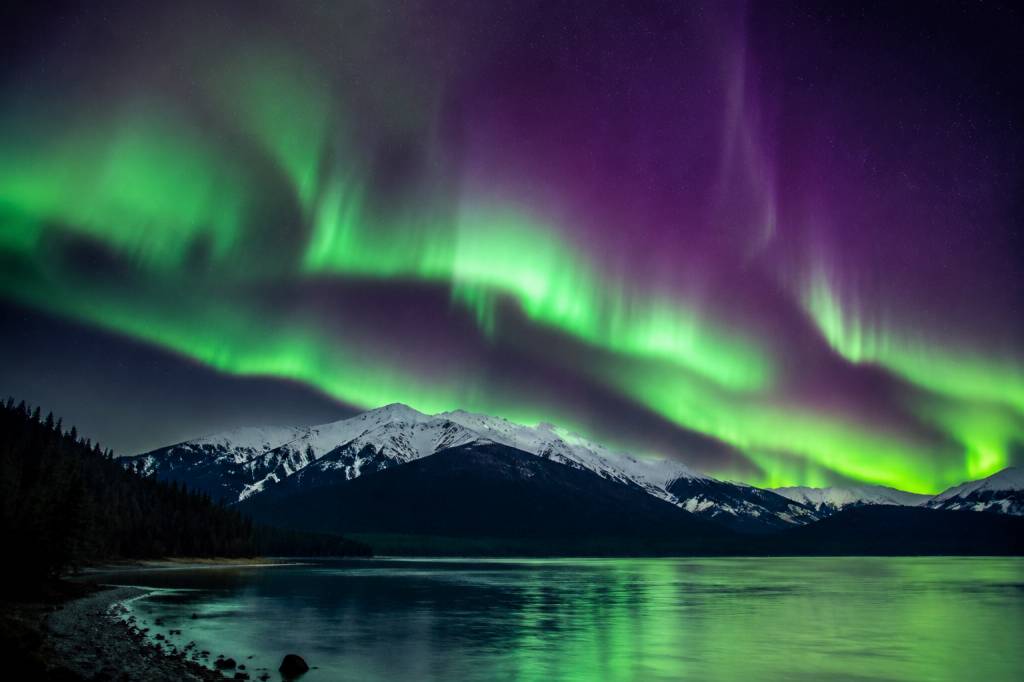
Juneau sits far enough north to offer a real chance of seeing the northern lights, but it is not an aurora destination with guaranteed clear skies. The city’s coastal weather is the main complication: clouds and rain can roll in even when geomagnetic activity is strong. A good plan therefore needs two forecasts—one for the aurora and one for the sky above you.
Here is how to read the Juneau aurora forecast, choose a practical viewing spot, and make the most of a clear night without spending hours chasing every change in the numbers.
Can you see the northern lights in Juneau?
Yes. Juneau is at about 58 degrees north, and auroras can be visible there when geomagnetic activity reaches far enough south. The city is much farther south than Fairbanks, however, so the lights are less frequent and often less intense. On an ordinary night, a high-latitude aurora may remain well north of Juneau. During stronger geomagnetic storms, the viewing zone can expand and bring displays within reach.
That distinction matters when you check an aurora app. A forecast showing activity over Alaska does not mean every Alaskan city will see it. Juneau has its own position relative to the auroral oval, and local cloud cover can block the show regardless of how promising the solar forecast looks.
Set expectations accordingly: treat the aurora as a possible highlight of a winter trip, not a scheduled event. If the sky clears and the forecast lines up, you have a chance. If clouds stay in place, even an impressive forecast on your phone cannot make them disappear.
When is aurora season in Juneau?
The useful season runs from late August or September into April. You need darkness, so the long, bright summer nights are not suitable for aurora viewing. The darkest part of the year is around December, but that does not automatically make December the best month: cloud cover, rain, snow, and travel conditions all affect your chances.
September and March are often discussed as favorable periods because geomagnetic activity can be enhanced around the equinoxes. Think of this as a modest advantage, not a promise. A clear night in January can be better than a cloudy night in March, and solar activity varies from year to year.
Juneau’s winter darkness gives you a wide window to check the sky. The aurora can appear at different times, but late evening through the early morning is a practical period to watch, especially when activity is expected to increase. Do not treat midnight as a fixed appointment. Start checking after dark, keep an eye on conditions, and be ready to go out if the clouds break.
How to read the Juneau northern lights forecast
Three pieces of information matter most: geomagnetic activity, cloud cover, and darkness. Use them together rather than relying on a single KP number.
-
KP index: This measures geomagnetic disturbance on a scale from 0 to 9. Higher values generally mean stronger activity and a better chance of auroras being visible farther south. For Juneau, a low KP reading often means the lights are too far north or too faint. A rising reading can be encouraging, but it is not a guarantee.
-
Auroral oval and short-term forecasts: Check whether the predicted aurora is positioned over or near southeast Alaska. Short-term forecasts can help with timing, but they change quickly. A 30-minute prediction is a snapshot, not a reservation.
-
Cloud cover: This is often the deciding factor in Juneau. Check the local forecast for the specific area where you plan to watch, not only the city forecast. A break in the clouds near the coast may not extend inland, or vice versa.
-
Darkness and moonlight: You need a dark sky, but a bright Moon does not make aurora viewing impossible. It can reduce contrast, particularly for faint displays. The Moon’s phase and position are worth checking when you have several nights to choose from.
For a practical routine, check a reputable aurora forecast for Alaska, then compare it with the National Weather Service forecast for Juneau and nearby areas. Recheck before you leave and again when you reach your viewing spot. If the activity is moderate but the sky is completely overcast, wait for a cloud break or use the evening for something else. If the forecast is only moderate and the sky suddenly clears, it may still be worth a look.
Where to look near Juneau
Your best spot is not necessarily the darkest point on a map. It should also be accessible, safe to reach in winter, and open to the public. Always verify current road, parking, and facility conditions before setting out. Snow, ice, construction, and seasonal closures can change access.
-
Eagle Beach State Recreation Area: North of downtown, Eagle Beach offers an open coastal setting away from some of the city’s brightest lights. It can be a useful option when the road and recreation area are accessible. Check the latest conditions, dress for wind, and use only designated parking. Clouds over the coast can still spoil the view, so check the local sky forecast before driving.
-
North Douglas Highway: The road provides access to quieter areas and open views away from the busiest parts of town. Choose a legal, safe place to stop and make sure you are well off the roadway. Do not pull over on a narrow shoulder just because the sky looks promising. If there is no safe parking, keep driving to a designated area or return to town.
-
Thane and the south end of town: Areas along the road south of downtown may offer darker views than central Juneau, depending on your exact location and the direction of the aurora. Access and stopping options are limited in places. Check the route in daylight and never block traffic or private access.
-
A darker point outside downtown: Even a short drive from bright streets can help. Look for an open view toward the northern sky, a legal place to park, and enough space to set up without standing near traffic. If you are walking from a car, bring a headlamp and stay on a route you can safely retrace.
Juneau’s mountains make the horizon more complicated than it is on a broad, flat plain. A low aurora may be hidden behind a ridge even when activity is present. Whenever possible, choose an open view facing north, but do not assume that a mountain silhouette means the entire display is blocked. Stronger auroras can rise higher in the sky and appear overhead.
What time should you go out?
Start with the forecast, not a fixed hour. If the aurora forecast shows activity building around late evening and the clouds are expected to clear, plan to be in position before the predicted window. If the sky is already clear, it can be worth checking earlier; auroras do not follow a clock.
Give yourself time to adjust to the dark. Once you arrive, turn off bright lights and allow your eyes to adapt. Check the sky regularly rather than staring at your phone. A faint green band can be difficult to see at first, while a camera may reveal colour before your eyes do. If you photograph the sky, take a short test exposure and then look up again—the point is to see the aurora, not only its preview screen.
Cloud forecasts are not perfectly precise in southeast Alaska. If the sky is partly cloudy, give a promising location a little time, but set a limit so you do not spend the entire night waiting in the cold. A nearby break can open quickly; equally, a clear patch can close just as fast.
What to bring for a Juneau aurora watch
Standing still outdoors feels colder than walking, especially beside the water. Dress for a long wait and assume the ground may be wet, icy, or snowy.
-
Wear warm layers, including a wind-resistant outer layer, insulated footwear, gloves, and a hat.
-
Bring a charged phone, a power bank, and a headlamp with a red-light setting if available.
-
Pack water and a warm drink, and tell someone where you are going if you are travelling beyond town.
-
Use a tripod if you plan to photograph the aurora. A phone camera can work, but keep the phone warm because cold drains batteries quickly.
-
Carry traction aids if conditions are icy, and keep emergency supplies in the vehicle during winter travel.
Do not walk onto unfamiliar ice or get close to the water’s edge in the dark. Check for changing road conditions, and never leave a vehicle running in an enclosed space. If visibility or driving conditions deteriorate, turn back. Missing one aurora attempt is better than turning a forecast check into a roadside emergency.
What if the forecast is poor?
First, separate the problem. If the aurora forecast is weak but the sky is clear, you can still take a brief look, especially if you have several nights in Juneau. If the aurora forecast is strong but cloud cover is complete, wait for a possible break or call it a night. The weather forecast is often more useful for deciding where to go than another refresh of the KP chart.
Check nearby conditions before crossing town or driving north. Coastal weather can vary over short distances, but do not assume a clearer patch is worth a long drive without evidence. Use current observations and local forecasts, and choose a turnaround point before leaving. If conditions change, your fallback may be a shorter stop at a safer, closer location—or a warm evening indoors and another attempt the next night.
Travellers with flexible schedules should keep more than one night available. That extra margin can matter more than choosing a particular week based on an equinox. If your trip also includes time in Fairbanks or another more northerly destination, your overall odds of seeing the aurora may improve, but do not count on a transfer between cities to rescue a single cloudy night.
How to plan a realistic aurora night
On the afternoon of your chosen night, check the cloud forecast for Juneau and your intended viewing area. Around dusk, review the latest aurora prediction and road conditions. If both the sky and activity look promising, head to a legal viewing spot with enough time to park safely. Once there, watch the sky, stay warm, and reassess conditions rather than driving from place to place without a plan.
For example, a moderate aurora forecast with a clear northern horizon is a reasonable reason to go out. A high KP reading beneath thick coastal cloud is not. That simple distinction can save you an unnecessary late-night drive—and keep your expectations grounded.
Juneau rewards patience more than complicated forecast decoding. Track the aurora, check the clouds, choose a safe dark location, and leave yourself room to try again. If the lights appear, you will be ready. If they do not, you will still have spent the evening under a winter sky in one of Alaska’s most striking coastal settings.