


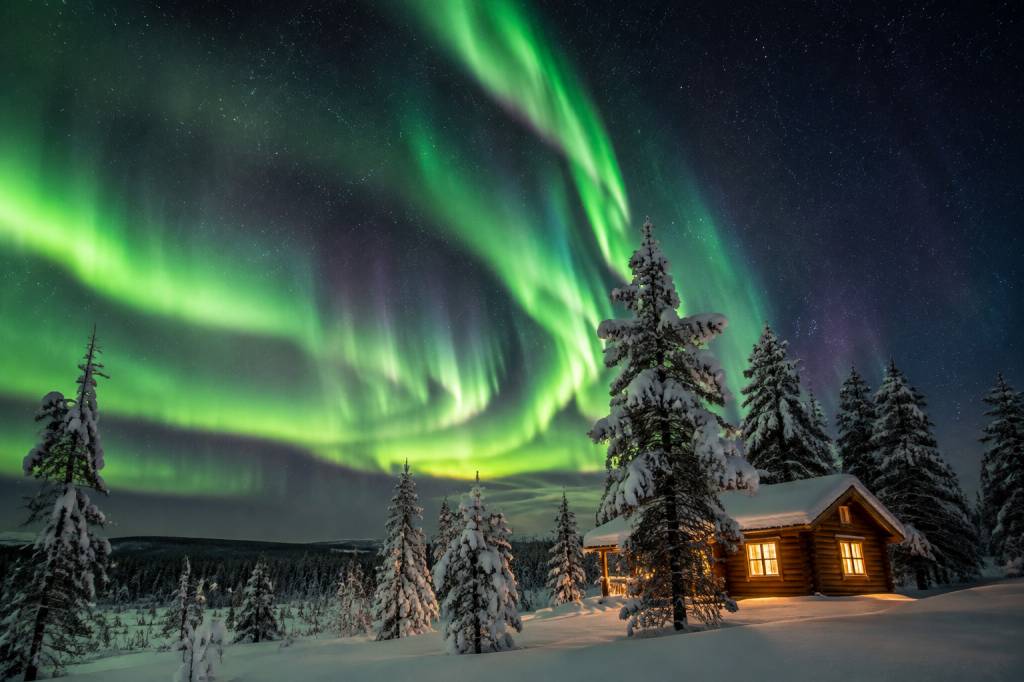
Finnish Lapland offers long winter nights, dark wilderness and a good network of places to watch the northern lights. But no town can guarantee a display. The aurora depends on solar activity, clear skies and your willingness to wait outdoors when the forecast looks promising.
The practical advantage of Lapland is flexibility: you can choose a lakeshore, a fell, a forest clearing or a spot close to town, then change plans if clouds move in. Here is how to choose where to go, when to look and what to do when the sky does not cooperate.
Where to see the northern lights in Finnish Lapland
The best viewing spot is usually somewhere dark, open to the northern sky and easy to reach safely. A famous destination is useful, but darkness and cloud cover matter more than a landmark name. Check access, road conditions and the weather before setting off.
Rovaniemi: convenient, with darker options nearby
Rovaniemi is the easiest base for many first-time visitors. It has frequent transport, accommodation and places to eat, but city lights can make faint auroras harder to see. Start by checking the sky from a dark area outside the central streets, or book an organised trip if you do not have a car.
Ounasvaara, on the edge of the city, is a familiar option for a quick outing. Choose an accessible viewpoint and check local conditions before you go; snow, ice and winter darkness can make paths more difficult than they look on a map. If the forecast shows widespread cloud over Rovaniemi, ask a local guide whether conditions are clearer farther from town rather than driving blindly into the night.
Rovaniemi is a useful choice when you want an aurora attempt without giving up restaurants, museums or a comfortable indoor fallback. It is not the darkest location in Lapland, so keep expectations realistic and be ready to leave the city centre.
Levi and Kittilä: a practical mix of services and open country
Levi has a wide range of accommodation and winter activities, while the surrounding area offers darker skies away from the busiest resort lights. Look for an open viewpoint or a lakeside area with a clear view of the sky. If you are driving, use designated parking and never stop on a road shoulder just because the sky has turned green.
The resort’s lights do not make an aurora impossible to see, especially during a bright display, but they can wash out faint detail. A short move away from the centre can improve the view. Local guides can also help you avoid spending the evening under the wrong cloud bank.
Saariselkä and Inari: dark skies and room to roam
Saariselkä is a strong base for travellers who want access to fell scenery and quieter surroundings. Open terrain can give you a broad view of the horizon, but exposed viewpoints can be windy and cold. Check that your chosen location is reachable in current conditions, and do not assume that a track shown on a summer map is suitable in winter.
Further north, Inari offers lakeside settings and a calmer pace. Lake Inari can provide an expansive horizon when the sky is clear, but ice conditions vary. Never walk or drive onto lake ice unless local authorities or experienced local operators have confirmed that it is safe. Watching from shore is the sensible option.
Utsjoki and the far north: darkness with fewer services
Utsjoki lies in Finland’s far north, where the long winter nights create plenty of potential viewing time. The trade-off is distance: services and transport choices are more limited than in the larger resorts. Plan fuel, meals and accommodation ahead, and check road and weather updates before travelling.
Remote does not automatically mean better. A clear, safely accessible spot near your accommodation is more useful than a spectacular location you cannot reach in poor weather. If you are unfamiliar with the area, ask your host or a local guide about legal parking and suitable viewing points.
When is the best time of year?
The aurora season in Finnish Lapland generally runs from late August or September through early spring. You need darkness, so the bright summer nights around midsummer are not suitable for seeing the northern lights. In autumn, lakes may still be open and the ground can be easier to navigate, but nights are shorter than in midwinter.
From roughly November to March, nights are long and winter landscapes are at their most familiar. January and February bring very long dark periods, but also severe cold, snow and challenging road conditions. March often offers a useful combination of dark evenings and more daylight for daytime activities. The best month is the one that gives you several nights in Lapland, not a single all-or-nothing attempt.
September and October can be rewarding if the sky is clear and you are travelling before full winter conditions arrive. Autumn weather can change quickly, and the first snow or icy patches may appear without much warning. Pack for cold nights even if daytime temperatures feel mild.
What time do the northern lights appear?
There is no fixed showtime. Displays can happen at any hour of darkness, and they may begin, fade and return during the same evening. A practical first check is between about 9 p.m. and midnight, but do not treat that window as a rule. If the sky is clear and solar activity is active, keep checking later.
Plan an evening in blocks rather than standing outside for hours without a break. Check the forecast before dinner, take a first look after dark, then reassess conditions before travelling farther. If clouds cover the sky, use a weather map to see whether they are moving or likely to persist. A short walk outside can answer a simple question that no app can answer for you: can you actually see stars?
How to read an aurora forecast without overthinking it
Three factors matter most: auroral activity, cloud cover and darkness. The KP index is a broad measure of geomagnetic activity, but it is not a direct promise that the aurora will appear above your exact location. A modest reading can still bring a visible display in Lapland; a high reading is of little use if thick clouds block the sky.
-
Check cloud cover first. Find a local forecast or satellite image, and look at nearby areas as well as your town. A clear patch within a reasonable drive may be worth considering.
-
Use KP as context. Treat it as one clue about activity, not a pass-or-fail score. The aurora can be visible without an extreme value.
-
Look for darkness. Move away from bright streetlights when it is safe and practical. Give your eyes time to adjust.
-
Check more than one update. Forecasts change. Recheck conditions before leaving and again if you are deciding whether to stay out.
Solar wind measurements and short-term aurora alerts can help with timing, but they do not remove uncertainty. Use them to guide your evening, not to promise yourself a display at a precise minute.
Choose a viewing spot that works in real conditions
When scouting a location, look for a northern view, a low horizon and enough space to stand away from traffic. A frozen lake can seem ideal because it is open, but it is not automatically safe. A roadside pullout may be convenient on a map and dangerous in practice. Prioritise a legal, maintained parking area and an easy route back to your accommodation.
If you are on an organised tour, ask how far the group may travel, how long it will remain outside and whether there is a warm vehicle or indoor shelter. A good guide should explain that chasing clouds can improve your odds but cannot guarantee a clear sky or an aurora.
Travelling independently? Share your route with someone, carry a charged phone and keep enough fuel for changes of plan. In winter, allow extra time for driving and keep a safe distance from other vehicles. Do not stop in a live traffic lane to take a photograph.
What to wear and bring
Waiting for the aurora means standing still, and that feels colder than walking. Dress in layers: a warm base layer, insulating mid-layer and wind-resistant outer clothing. Add insulated boots, warm socks, mittens, a hat and a neck covering. Bring hand warmers if you use them, but do not rely on them instead of proper clothing.
-
A charged phone, with an offline map if you are travelling beyond town.
-
A headlamp with a red-light mode, used carefully so you do not spoil other people’s night vision.
-
A thermos and a snack for longer waits.
-
A tripod if you want sharper night photographs.
-
Spare camera batteries, kept warm in an inside pocket.
For phone photos, use night mode and brace the phone against a stable surface. The display may look brighter and more colourful than the aurora appears to your eyes. That is normal; cameras collect light differently. Enjoy the view before turning the whole evening into a settings test.
When clouds spoil the plan
Cloud is the most common reason a promising aurora forecast turns into a quiet evening. First check whether the cloud cover is local or widespread. If there is a clear opening nearby, a short, safe drive may help. If cloud blankets the region, avoid an exhausting chase based only on hope.
Keep a city fallback ready. In Rovaniemi, for example, you can spend the evening indoors and check the sky again later. In smaller places, ask your accommodation about local weather, road access and nearby sheltered viewpoints. A warm room is not a failure; it is a sensible base for another attempt tomorrow.
Build several dark nights into your itinerary if seeing the aurora is a major priority. No forecast can guarantee a sighting, but extra nights give you more chances to find a clear sky and active conditions. Treat the northern lights as one part of the trip, alongside snow activities, local food and the landscape itself.
A simple plan for your first aurora night
Choose accommodation with a clear cancellation or transport plan, then identify one nearby viewing spot before sunset. Check cloud cover and road conditions after dinner. If the sky is clear, head out with enough clothing for a long wait. If it is cloudy, look for a realistic nearby opening or stay close and check again later.
In Finnish Lapland, the best place is not always the most remote one, and the best time is not printed on a schedule. Pick a dark, safe location, watch the cloud map and give yourself more than one night. Then you can spend less time decoding charts and more time looking up.