


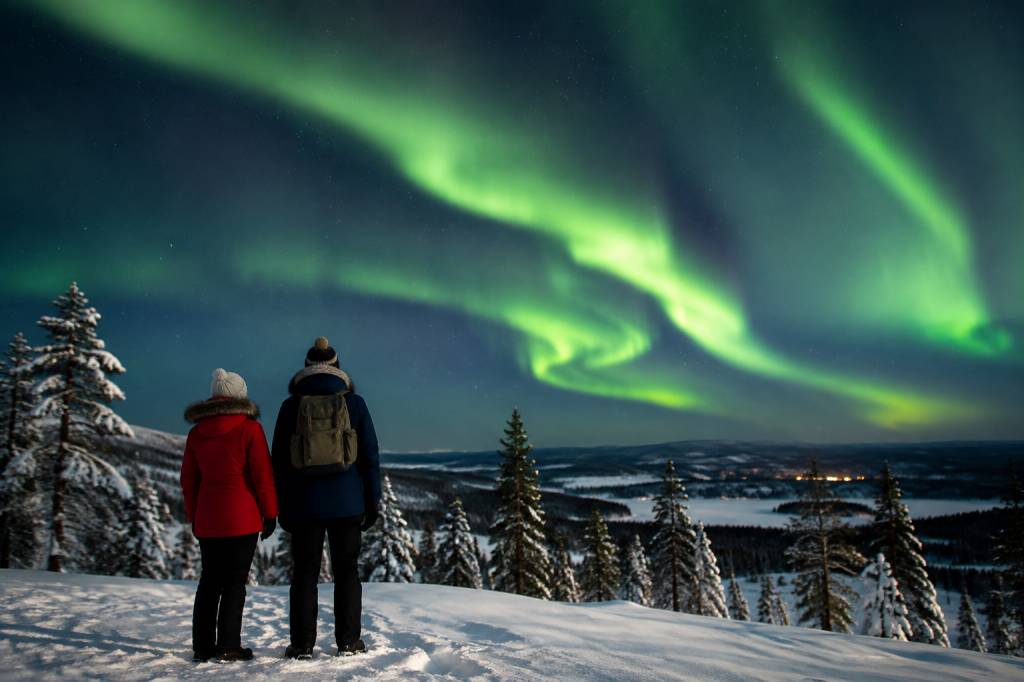
Planning a northern lights trip to Finland is less about chasing a perfect forecast and more about giving yourself enough time, dark skies and room to change plans. The aurora can appear on a clear night with little warning—or stay hidden behind clouds despite strong solar activity. A practical itinerary makes those surprises easier to handle.
Finland is a rewarding place to look for the northern lights because the country combines a long winter season, accessible towns in the north and a wide choice of places to stay. But “Finland” covers a lot of ground. Your experience will differ depending on whether you base yourself in Rovaniemi, travel farther north to Inari, or spend your nights in a remote cabin in Lapland.
Here is how to choose a destination, read the forecast, plan your evenings and prepare for cold-weather travel without turning your holiday into a nightly weather emergency.
Choose the right time of year
The aurora season in Finland generally runs from late August to early April, when nights are dark enough for viewing. In autumn, the evenings are milder and lakes and forests can still be free of snow. By midwinter, the nights are long, but temperatures can fall sharply and roads may be icy. March often offers a useful balance: plenty of darkness, a higher sun and longer daylight hours for outdoor activities.
There is no single best month for everyone. Choose December or January if you want a deep-winter setting and do not mind short days. Consider February or March if you want more daylight for skiing, snowshoeing or scenic drives. September can suit travellers who prefer milder conditions, though rain and cloud are still part of the deal.
Allow at least three nights in your chosen region. Four to six gives you more flexibility if the first evenings are cloudy. A one-night stop can work, but it is a gamble: the aurora does not adjust its schedule to your flight home.
Pick a base that fits your trip
Rovaniemi is the easiest starting point for many visitors. It has an airport, rail and bus connections, a broad range of accommodation and plenty of organised activities. Its convenience comes with a trade-off: the town has more artificial light than smaller Lapland communities. You may need to travel away from the centre for a darker view.
Inari, Ivalo, Saariselkä and the areas around Lake Inari offer a more northerly base, with access to darker landscapes and a strong choice of winter stays. Ivalo has an airport, while local transfers and rental cars can help you reach accommodation outside town. Kittilä and Levi are useful options for combining skiing with aurora viewing. Each base has its own transport and activity setup, so check how you will get from your accommodation to a dark-sky location before booking.
When comparing places to stay, look beyond the glass-roofed room in the photographs. Ask whether the property has an unobstructed view, how far it is from streetlights, whether outdoor access is available at night, and whether staff can advise on local conditions. A heated cabin with a dark yard can be more useful than a famous room if you want to step outside quickly when the sky clears.
Understand what the forecast can and cannot tell you
A useful aurora forecast combines three things: solar activity, darkness and local sky conditions. Solar activity creates the energy behind the display. The Kp index is a broad measure of geomagnetic disturbance, not a promise that a bright aurora will appear directly above your hotel. A high Kp reading can help, but it cannot clear the clouds or remove light pollution.
Cloud cover is often the deciding factor for a traveller on the ground. Check a cloud forecast for the specific area you plan to visit, and update it during the day. Conditions can vary between nearby towns, valleys and open lakeshores. A clear forecast for Rovaniemi does not necessarily mean clear skies in Inari, or the other way around.
Use forecasts as planning tools, not guarantees. Check the aurora outlook, cloud cover and local weather together. Then look outside. Forecast models change, and a quick glance at the sky can tell you whether a patch is opening above your location.
Darkness matters, too. The sky needs to be sufficiently dark, so check local sunset and sunrise times and avoid expecting a display in the middle of a bright twilight period. Around the darkest part of winter, nights are long, but the best viewing window still depends on cloud breaks and auroral activity. Stay flexible rather than relying on one exact hour.
Plan evenings with a flexible routine
Before your trip, identify two or three viewing options within reach: one near your accommodation and one farther from town lights. Ask your host or tour operator which places are accessible and safe in current conditions. On the day, check the cloud forecast again and decide whether you are staying local, driving to a darker spot or booking a guided outing.
A useful routine is to eat early, rest during the evening and check conditions before heading out. Keep your camera and warm layers ready so you are not searching for gloves while the sky changes. If clouds cover the whole region, do not spend hours watching a blank sky simply because an app predicted activity. Keep checking for a local break, but protect your sleep as well.
For a short trip, a guided aurora tour can reduce the work of choosing a route and monitoring conditions. Guides may be able to move between locations, but no responsible operator can guarantee a sighting. Read the cancellation and rescheduling terms before booking, and ask how far the tour may travel and what time it is expected to return.
Choose a viewing spot safely
Darkness is useful; unsafe access is not. Lakes, frozen rivers and remote roads can look inviting in photographs, but winter conditions vary. Do not walk or drive onto ice unless local authorities or a qualified guide have confirmed it is safe. Stay off private land, use established public access points and avoid stopping where your vehicle blocks traffic or snow-clearing equipment.
If you are driving, choose a legal parking area and walk only where the surface is safe and visible. Keep a charged phone, warm clothing and enough fuel for delays. In remote areas, mobile coverage may be limited, and a navigation app may not reflect road closures or changing conditions. Tell someone your route if you are travelling beyond town.
A good backup does not have to be dramatic. If the cloud forecast is poor outside town, try a darker public spot closer to your accommodation, ask local staff for an alternative or enjoy an indoor evening and try again the following night. A safe, comfortable plan beats a risky dash down an unfamiliar road.
Pack for waiting outside
Aurora viewing can involve standing still for a long time. Dress for the temperature and wind, not just the number shown on the forecast. Start with a warm base layer, add insulating layers and finish with a wind-resistant outer layer. Insulated boots, warm socks, mittens, a hat and a neck covering make a major difference.
Bring spare gloves or mittens if you plan to use a camera, because handling equipment with bare fingers gets uncomfortable quickly. Hand warmers can help, but they are not a substitute for suitable clothing. Carry a headlamp with a red-light setting if possible, and keep a small snack and a thermos in your bag. Tell your group when you are heading out, especially if you are staying somewhere remote.
Cold affects batteries. Keep spare camera and phone batteries in an inside pocket, and avoid leaving your phone exposed longer than necessary. A tripod is helpful for night photography, but you do not need specialist equipment to enjoy the display. Your eyes are often the best first camera.
Take photographs without missing the moment
If you want to photograph the aurora, practise the basics before travelling. A camera with manual controls and a wide-angle lens gives you flexibility, while a tripod keeps the shot steady during a long exposure. Set your focus in advance and test your settings on a dark evening rather than learning everything outdoors in freezing weather.
Phones with a night mode can capture strong displays, especially when supported on a tripod or stable surface. Turn off the flash, keep the lens clean and use a timer or remote shutter to reduce movement. The best settings depend on the brightness and speed of the aurora, so experiment in small steps. A fast-moving display may need a shorter exposure to preserve its shape.
Take a few pictures, then put the camera down. The lights can be subtle, bright, slow or constantly changing. Staring at a screen while the sky performs overhead is a very modern way to miss the show.
Build a trip that works even without an aurora
Plan daytime activities you would enjoy regardless of the forecast. Rovaniemi offers museums and winter excursions; Levi and Saariselkä have established ski areas; and the Inari region provides opportunities to explore local landscapes and Sámi culture through reputable cultural organisations and guides. Check seasonal opening hours and transport before you commit.
Keep some space in your schedule. If you have a late night watching the sky, you may not want an early departure the next morning. If a cloud system settles over your first base, a longer stay or a pre-planned move may give you options—but crossing a large part of Lapland at short notice is not always practical. Compare travel times in daylight and remember that winter roads can slow the journey.
For a simple itinerary, arrive in Rovaniemi or Ivalo, settle in for three or four nights and choose one main base rather than moving every day. Add a guided tour for one evening if you would like local transport and support, then keep the remaining nights flexible. Before booking, check transfer times, luggage rules and whether your accommodation has a reliable way to reach nearby services.
Set realistic expectations
You may see a bright green arc filling the sky, or a pale glow that appears and fades between clouds. The colour and intensity depend on the aurora, darkness and your viewing conditions. Cameras can record colour that looks stronger than it does to the naked eye, particularly during a faint display. That does not make the sighting less real; it is simply how the camera and human eye respond to low light.
The most practical goal is not “see the aurora at a specific time.” It is “spend several dark nights in a good location, monitor local cloud cover and stay ready to move safely when conditions improve.” That approach gives you the best chance without letting every forecast update dictate your whole holiday.
Finland rewards patient travellers. Choose a base that suits your transport and comfort level, prepare for real winter conditions, and keep at least one backup plan for each evening. Then, when the sky finally opens, you will be warm enough, close enough and ready to look up.