


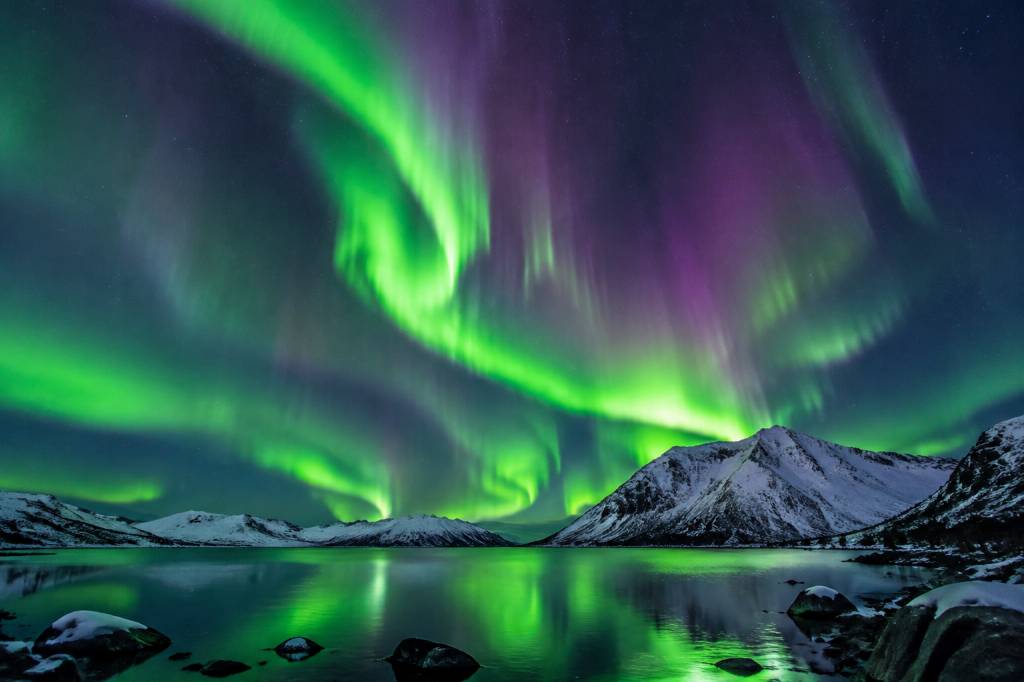
November is one of the most practical months for a northern lights trip. Nights are long, winter landscapes are taking shape, and many aurora destinations are already operating at full pace. You do not need a rare solar storm to have a chance of seeing the lights—but you do need darkness, a clear patch of sky and enough patience to stay outside when the forecast looks promising.
The main challenge is not finding a high KP number. It is finding a place where the sky is dark and the clouds are not blocking it. Here is how to choose where to go, when to look and what to do when the weather changes.
Why November works for aurora watching
By November, nights are long across the auroral zone, which gives you more hours in which the northern lights could appear. In many northern destinations, useful darkness begins in the late afternoon and lasts into the morning. That is a big advantage over late summer, when bright skies can make aurora viewing difficult or impossible.
November is not yet the same as the deepest winter everywhere. In Tromsø, northern Norway, daylight is still noticeable at the start of the month, while places farther north enter a much darker part of the season. Iceland and southern Lapland also have several hours of daylight, which can make daytime activities easier than in midwinter.
There is a trade-off: November weather can be unsettled. Low cloud, rain near the coast and fast-moving snow showers can erase an otherwise excellent aurora forecast. Treat the month as a balance of long nights and changeable skies, rather than a guarantee of clear weather.
Where to see the northern lights in November
The best base is usually somewhere within or close to the auroral oval, with enough road access or local transport to move away from clouds and city lights. A famous destination is not automatically the best place on a given night. Check the cloud forecast for your actual viewing area, not just the city where you are staying.
Tromsø and northern Norway
Tromsø is a convenient base for first-time aurora hunters. It has frequent flights, accommodation, restaurants and guided tours, while the surrounding region offers access to darker locations. The city itself has light pollution, so for a stronger view you will generally want to get away from the brightest streets and buildings.
On a clear night, local viewpoints and dark areas outside the centre can work. For a wider choice, guided tours may drive toward the coast, inland valleys or neighbouring regions in search of clearer skies. The important detail is that the best direction can change every evening. Coastal weather and inland weather do not always behave the same way.
Do not assume that the highest point is the best viewpoint. A safe, accessible roadside pull-off with an open northern horizon is more useful than a remote summit you cannot reach confidently in winter conditions.
Abisko and Swedish Lapland
Abisko, in northern Sweden, is often chosen for its mountain setting and its reputation for relatively favourable local weather. That reputation is not a promise of clear skies. Cloud can still arrive, and a bright forecast does not mean the aurora will appear at a particular time.
The area is a good choice if you want a quieter base and are comfortable planning around limited services compared with a larger city. Check accommodation, transport and tour availability early, especially for dates around school holidays. If you are travelling independently, confirm winter road and trail conditions before setting out after dark.
Finnish Lapland
Rovaniemi, Levi, Saariselkä and Inari are popular starting points in Finnish Lapland. November brings dark evenings and a range of winter activities, but cloud cover can vary considerably from one area to another. If you have a flexible itinerary, staying several nights gives you more options than trying to predict the sky from one fixed evening.
Look for a viewpoint with an open northern horizon and minimal artificial light. Lakes, frozen marshes and open fell areas can provide broad views when conditions are safe. Do not walk onto a lake or frozen water unless local authorities confirm that the ice is safe; snow can hide thin or unstable sections.
Iceland
Iceland offers dramatic scenery and plenty of dark locations outside Reykjavík, but its weather can change quickly. A clear forecast for the capital does not necessarily describe conditions on the Snæfellsnes Peninsula, the south coast or the north. Check both cloud and road conditions before planning a long drive.
Reykjavík can be a workable base if you book a tour or have several nights available, but city lights reduce contrast. A short trip into darker surroundings can improve the view when the sky is clear. In November, wind, rain, icy roads and limited visibility may matter more to your plan than the aurora index. Never continue driving into a storm just to chase a forecast.
Canada and Alaska
For North American travellers, Yellowknife and Whitehorse are established aurora destinations, while Fairbanks is a familiar base in Alaska. These locations can offer dark skies and access to areas away from urban lighting. In November, however, cold temperatures and winter road conditions deserve serious attention.
Use local road reports, carry appropriate cold-weather gear and avoid stopping where your vehicle could block traffic or become difficult to see. If you are not experienced with winter driving, choose a reputable local guide rather than treating a remote road as an improvised viewing spot.
When to look: timing your November night
Aurora activity can happen at any time during the hours of darkness. Many displays are seen in the evening or around midnight, but there is no reliable rule that says the lights will appear at a particular hour. A forecast can identify a promising window, not book you a performance.
Start checking the sky once it is properly dark. If conditions are good, plan to be outside for at least a few hours rather than making one quick stop. Take warm layers, a hot drink and a way to keep your phone battery warm. Cold can drain batteries quickly, and a dead phone is not helpful when you are checking a cloud map or finding your way back.
Give yourself multiple nights if seeing the aurora is a priority. One clear evening can be enough, but a trip of three or more nights usually gives you more chances to work around cloud and changing activity. Keep daytime plans flexible so you are not exhausted before the best viewing window.
KP index, cloud cover and solar activity
The KP index is a measure of geomagnetic activity. Higher values can mean aurora is visible farther from the poles, but KP is not a simple visibility score for your exact location. A modest reading can still produce a display in the far north, while a high reading will not help if thick cloud covers the sky.
For a practical decision, check three things:
-
Cloud cover: Look at low, middle and high clouds for the specific area and hours you plan to be outside. A partly clear patch may be enough.
-
Aurora activity: Use the KP forecast or a local aurora forecast as guidance, not as a guarantee. Forecast confidence falls as you look farther into the future.
-
Darkness and local conditions: Check sunset, moonlight, visibility, wind and temperature. A bright moon can reduce contrast in a faint display, but it does not prevent the aurora from appearing.
Cloud forecasts are often the most useful part of the plan. If your base is overcast, compare nearby areas before travelling. A clear patch 40 kilometres away may be a better option than a stronger activity forecast under solid cloud. Recheck conditions before you leave because weather maps can change through the evening.
How to choose a viewing spot
Look for a dark location with a wide view of the sky, especially toward the north, and a safe way to reach it. For a first visit, a marked viewpoint, an established tour stop or a well-lit public access point is usually a better choice than an unmarked track.
Before you go, check whether parking is permitted and whether the road is maintained in winter. Do not park on the road, block a gate or stop on a blind bend. Keep clear of private land and respect local signs. If you are walking away from a vehicle, carry a headlamp, wear reflective clothing and tell someone where you are going.
In remote areas, mobile coverage may be limited. Download maps in advance and make sure you can return to your accommodation without relying on a live signal. The best aurora photograph is not worth getting lost in freezing conditions.
What to wear and bring
Standing still in the cold can feel much harsher than walking around during the day. Dress in layers, with a windproof outer shell, insulated boots and warm socks. Bring gloves you can operate a phone or camera in, plus a spare warmer pair if you have them.
-
Wear thermal base layers and an insulating middle layer.
-
Cover your head, neck and hands; wind can make a mild temperature feel much colder.
-
Bring water, a warm drink, snacks and a fully charged phone.
-
Carry a headlamp with a red-light setting if possible, so you can see without dazzling other people.
-
Take a tripod if you plan to photograph the sky, and keep spare batteries warm in an inside pocket.
You do not need specialist camera gear to enjoy the display. Modern phones can capture bright auroras in night mode, especially when held steadily. Look with your eyes first; camera screens can make a faint green glow look more vivid than it appears in person.
What if the forecast looks poor?
Do not spend the whole trip refreshing a forecast that only updates your anxiety. Check it at sensible intervals, compare nearby cloud conditions and make a decision based on safety as well as visibility. If cloud is widespread, use the evening for a warm meal, a local museum or an early night. You will be better prepared for the next clear window.
If you are on a guided tour, ask how the operator chooses its route and what happens if conditions are poor. A good guide will explain the limits of the forecast and will not promise a sighting. If you are travelling independently, choose a backup location before darkness falls rather than searching for one while driving on icy roads.
In November, the most reliable strategy is simple: stay several nights, keep your plans flexible, follow local safety advice and give clear skies time to find you. The northern lights are never on a timetable, but a well-planned trip gives you more chances to be outside when the sky finally opens.