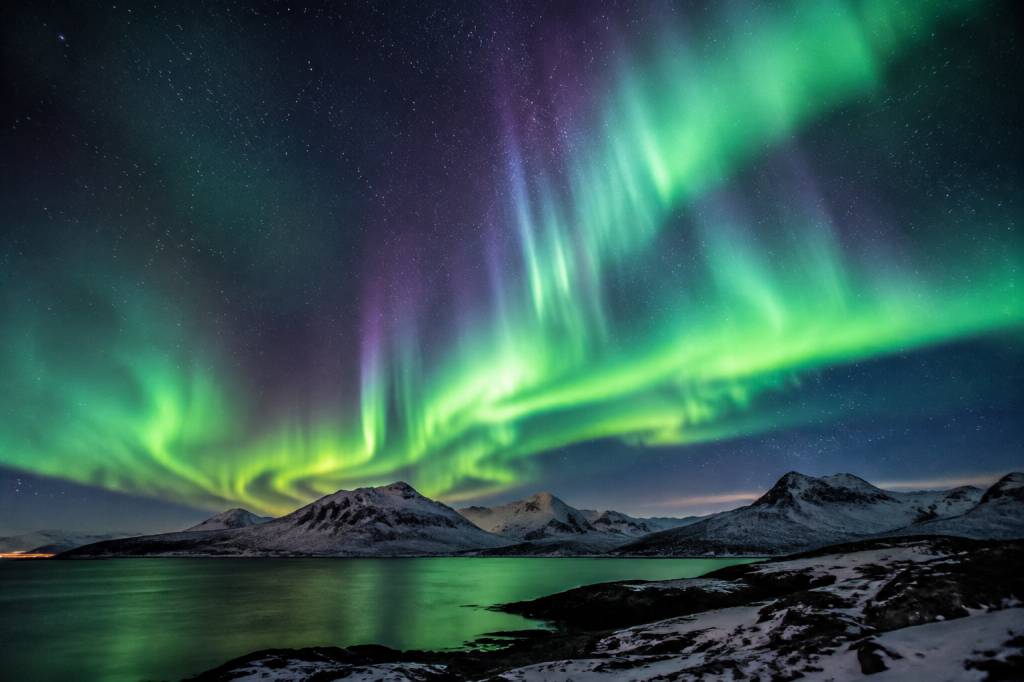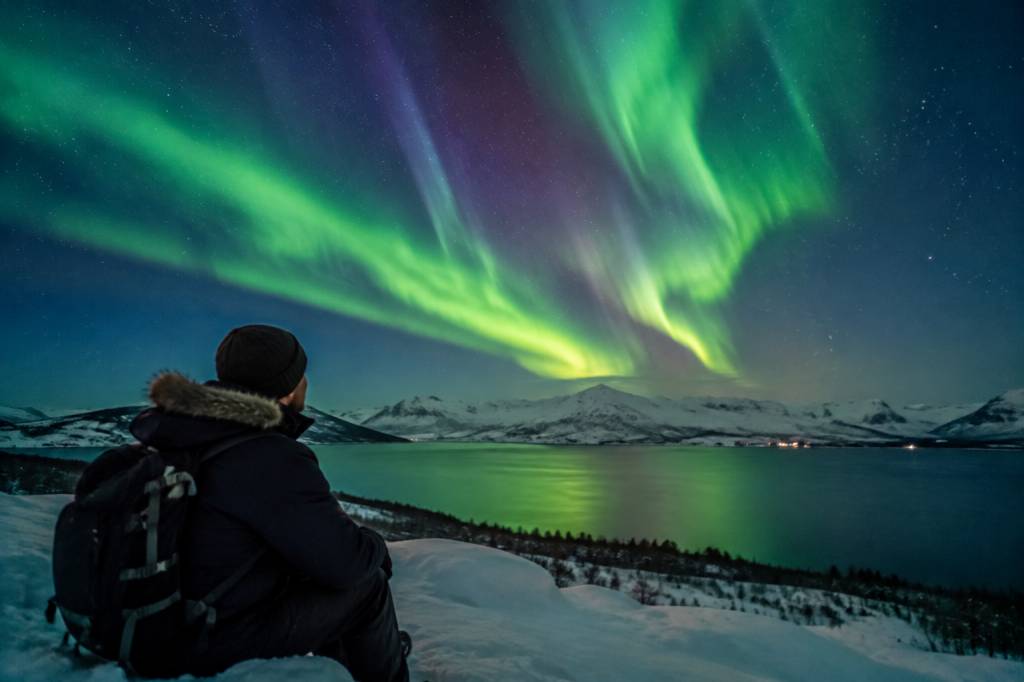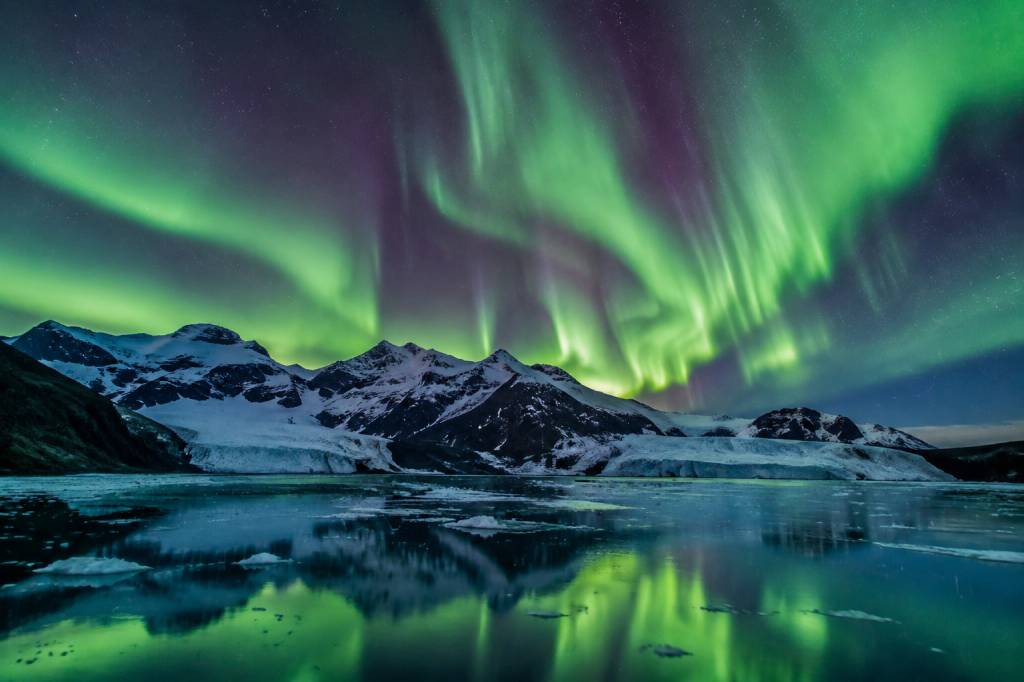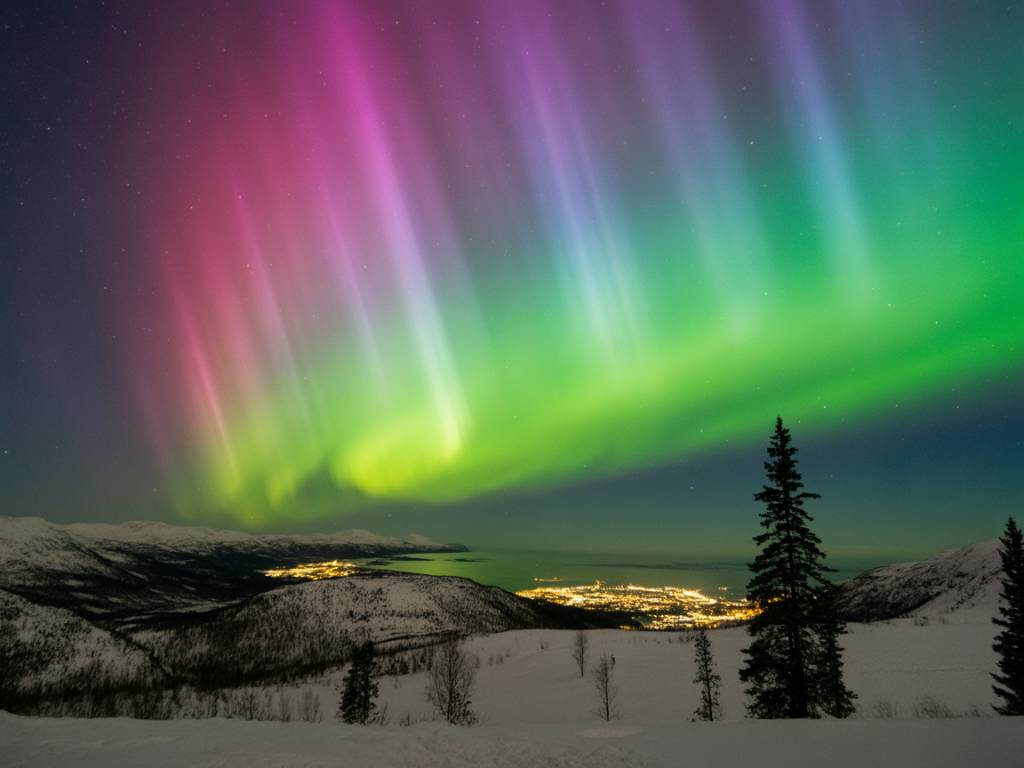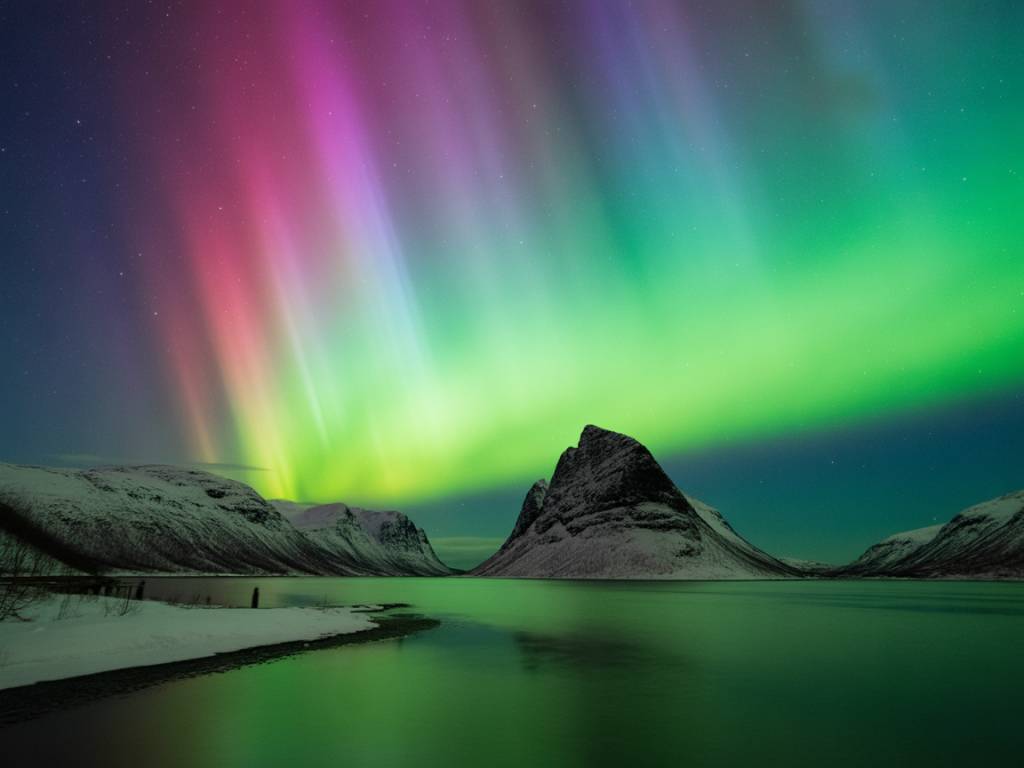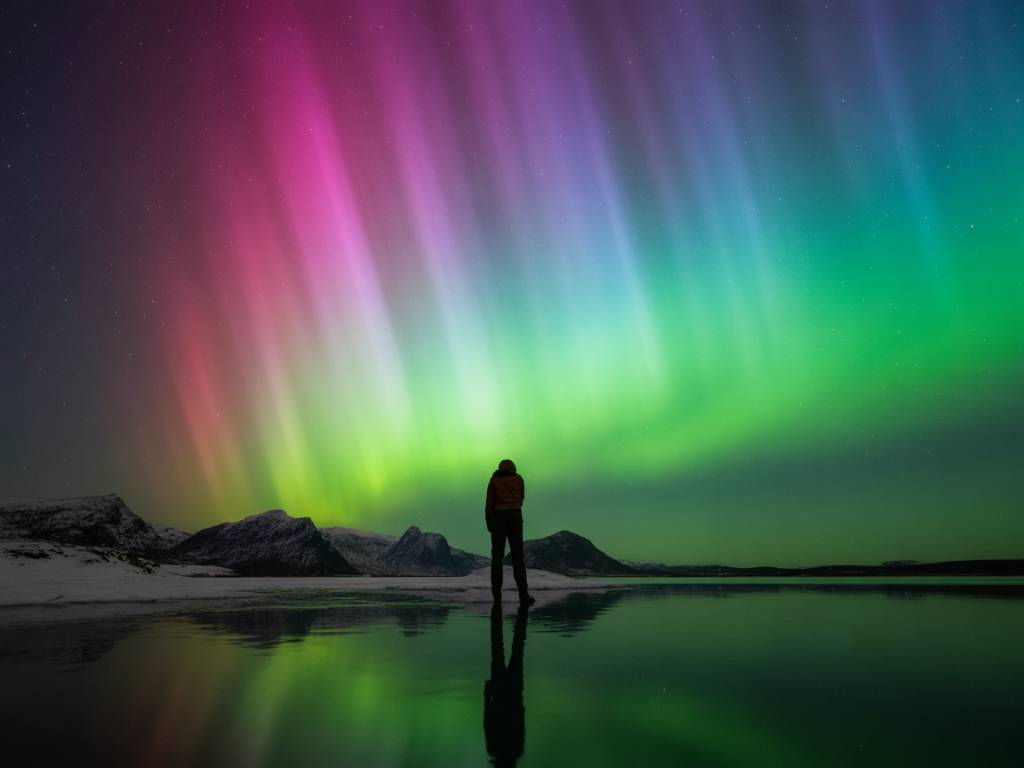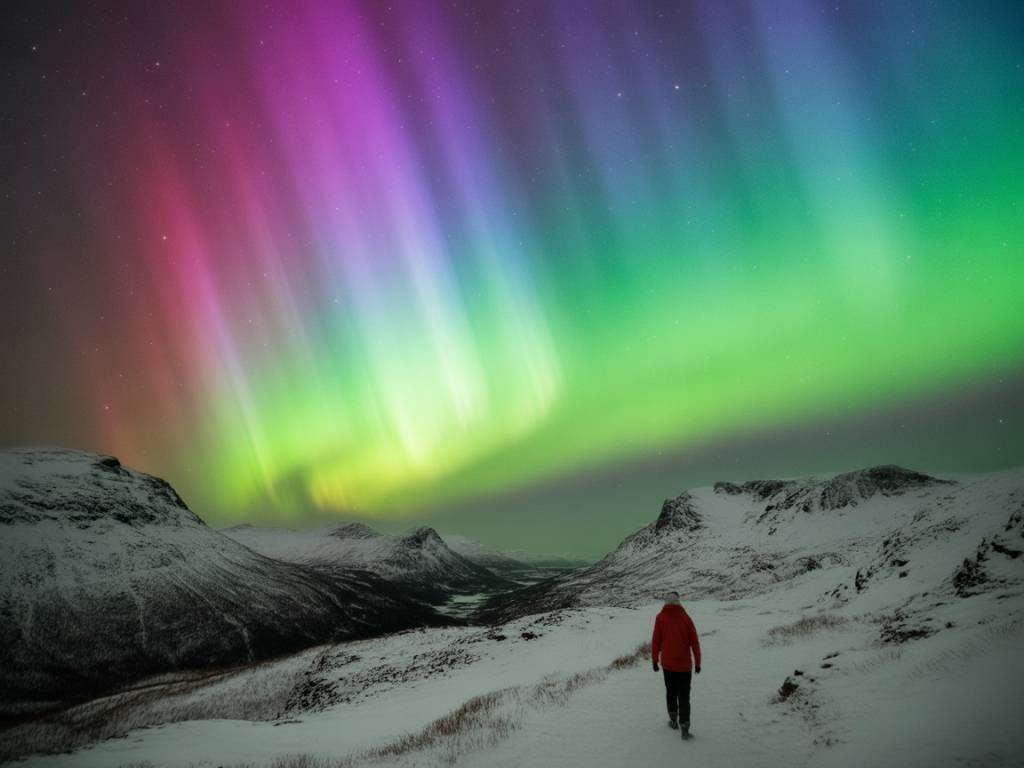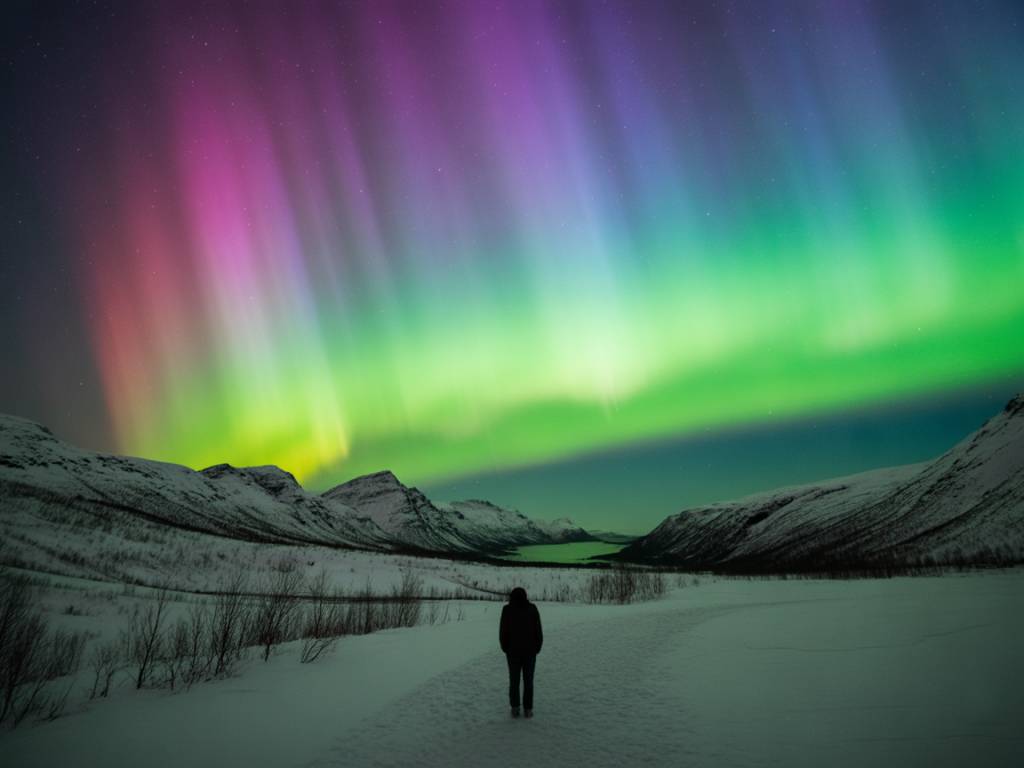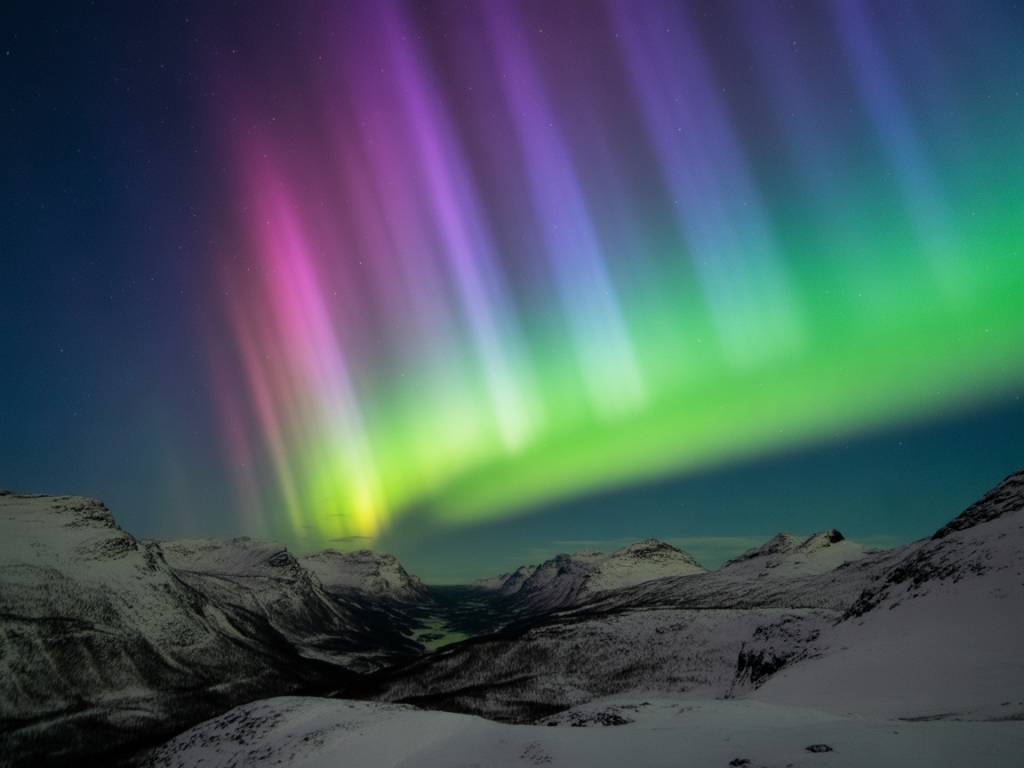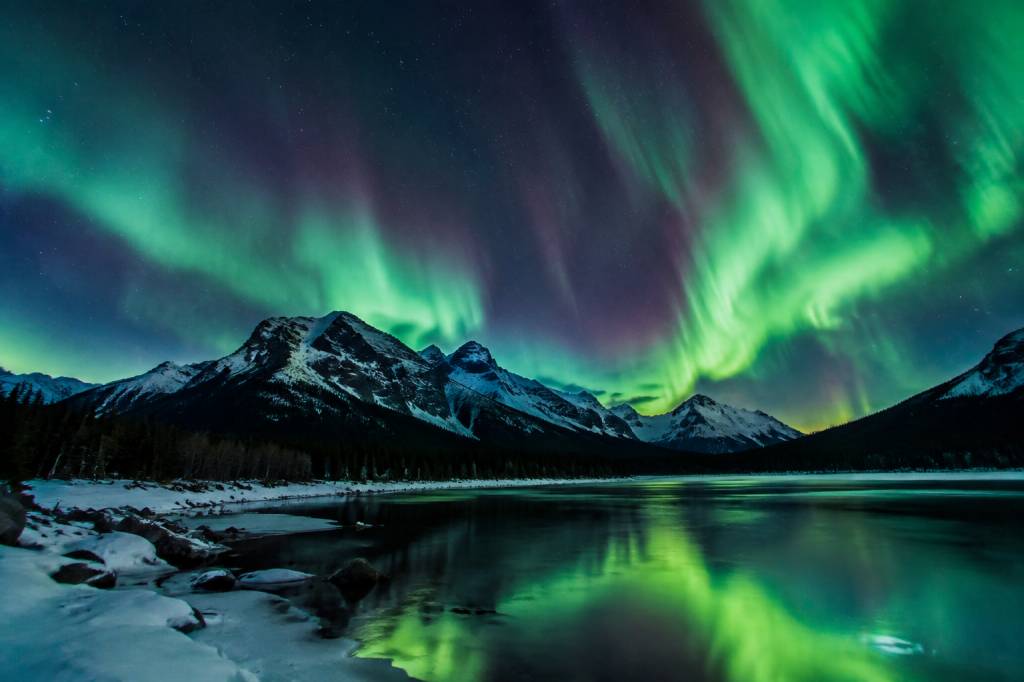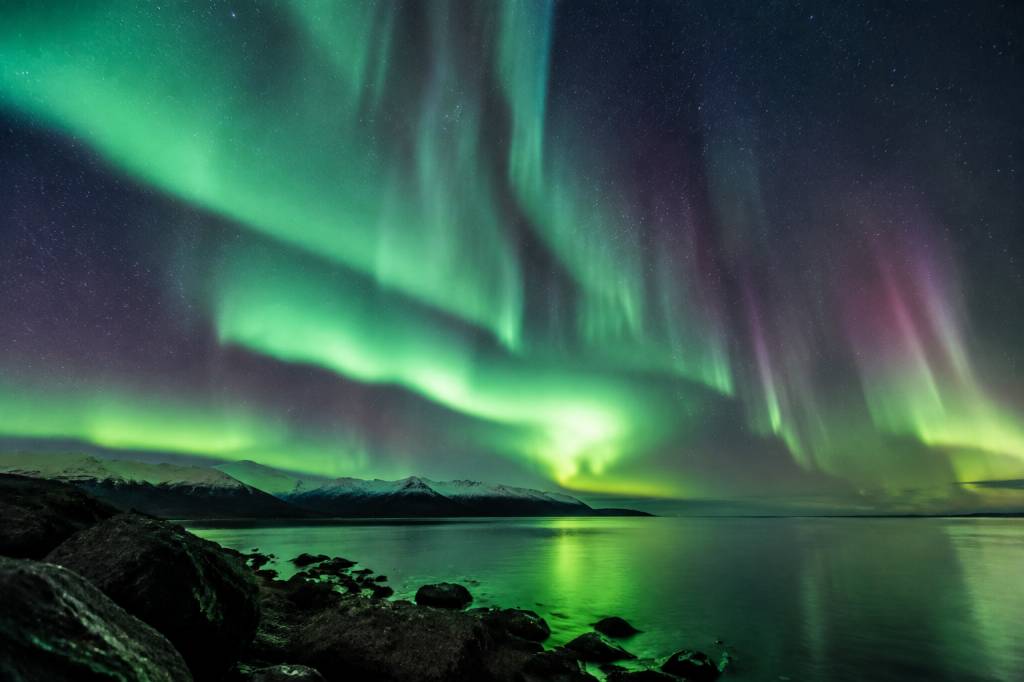

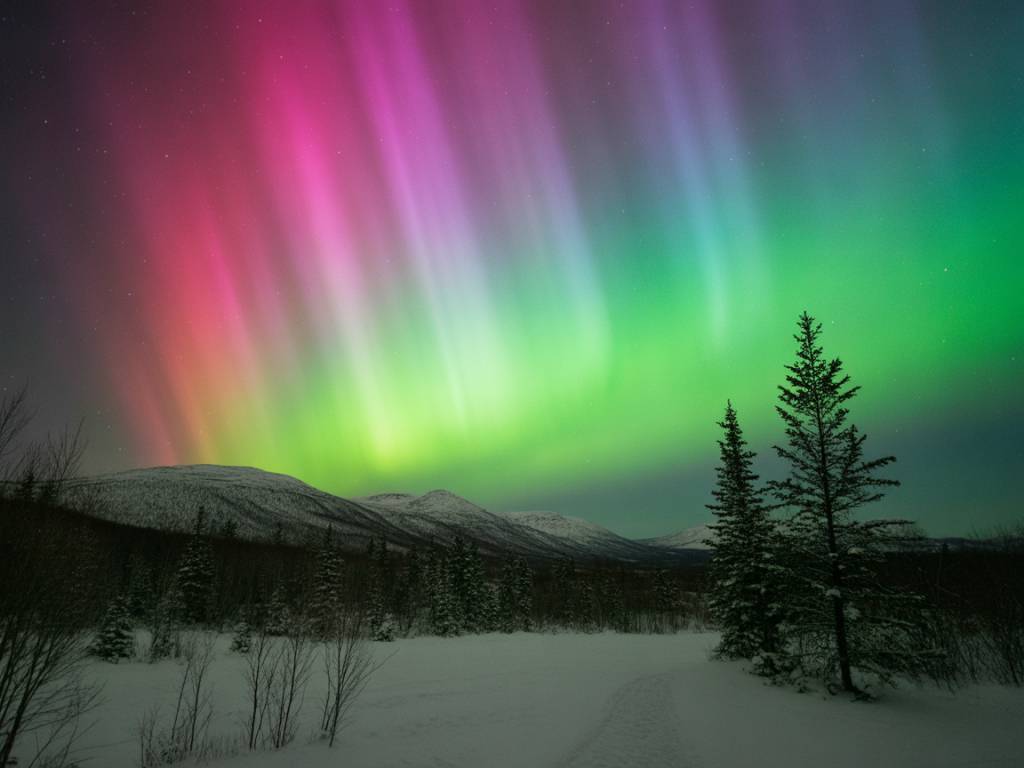
Seeing the northern lights in New Hampshire is not science fiction anymore. With the recent strong solar cycles, auroras are now visible several times a year over New England — and sometimes they are bright enough to be seen even from southern NH. The key is to know where to go, when to watch, and how to react fast when the forecast changes at the last minute.
In this guide, I’ll treat New Hampshire like je traite Tromsø ou le nord de la Suède : en mode “terrain”. Moins de jargon, plus d’actions concrètes. Objectif : vous donner un plan clair pour ne pas manquer la prochaine alerte aurorale au-dessus des White Mountains ou du Lac Winnipesaukee.
How often can you see northern lights in New Hampshire?
New Hampshire is far south compared to classic aurora destinations like Norway or Iceland. You won’t see auroras every clear night in winter. But during strong solar events (geomagnetic storms), the auroral oval expands south and can cover all of New England.
In practice:
- Weak to moderate aurora (KP 4–5): Sometimes visible low on the northern horizon from dark-sky spots in northern NH.
- Strong storm (KP 6–7): Good chances of visible auroras across much of the state, especially north of the White Mountains.
- Major storm (KP 8+): Auroras can be seen even from cities like Manchester or Nashua if the sky is clear and light pollution is limited.
Realistically, plan for:
- A few “serious” chances per year (on average) that are worth losing sleep and driving for, mainly during periods of high solar activity.
- Many nights where forecasts look promising but clouds, haze or a weak solar wind kill the show. That’s normal at this latitude.
Your strategy in New Hampshire is to treat aurora hunting like storm chasing: stay flexible, have locations ready, and be able to move when the indices jump.
Best months and times to see northern lights in New Hampshire
Unlike the Arctic, New Hampshire doesn’t have polar night, so you rely more on darkness and weather than on latitude. The lights can technically appear any time of year, but some seasons are more practical than others.
Best seasons:
- September–November: Long nights, frequent clear skies between fronts, and the well-known “equinox boost” in auroral activity. Fall foliage + aurora is possible, but cloud risk is high in peak foliage weeks.
- February–April: Nights are still long, the cold is less brutal than in January, and you often get crisp, transparent air after cold fronts.
More difficult seasons:
- December–January: Extremely long nights (good) but often heavy cloud cover, snowstorms, and dangerous road conditions (less good).
- May–August: Short nights and late twilights. Auroras must be strong and high in the sky to be visible before the sky brightens again.
Best time of night:
- 23:00–02:00 local time is usually the most active window, but strong storms can start as early as 20:00 or peak closer to 03:00.
- The key factor is darkness: be ready as soon as astronomical twilight ends and stay flexible for a few hours if the indices are promising.
In New Hampshire, you often have to juggle work, family and a long drive. My advice: for big solar storms, treat it like a one-night mini-expedition. Plan your route, prepare clothes and snacks in advance, and accept that sleep will be short.
How to read the aurora forecast for New Hampshire
The same technical data used in Iceland works for New England, but you need to interpret them with your southern latitude in mind.
1. KP index (0 to 9)
- KP 3 or less: Forget it for NH. You’d need a perfect, ultra-dark northern horizon and a very sensitive camera to capture anything.
- KP 4–5: Slight chance in the far north of the state, low on the horizon, from places like Pittsburg or the far reaches of the White Mountains, under perfect conditions.
- KP 6: Now we’re talking. Good chance from dark-sky locations across the White Mountains and north-central NH.
- KP 7–8: Visible across most of the state, even with some light pollution, especially if the lights rise higher in the sky.
2. Bz (orientation of the interplanetary magnetic field)
- Look for Bz negative (southward), ideally sustained below -5 nT, even better at -10 nT or more.
- A strong KP forecast without a southward Bz often leads to disappointment at mid-latitudes.
3. Cloud cover
- A perfect KP 8 is useless if you’re under a snowstorm. Always check high-resolution cloud maps for New England, hour by hour.
- Look for moving gaps behind a cold front. In New Hampshire, many good aurora nights happen in the “clear slot” 3–6 hours after a front passes.
My method when I’m in the region is simple: I set alerts for sudden KP spikes, monitor Bz and speed, then cross-check with cloud forecasts. If KP jumps to 7, Bz goes negative and the satellite loop shows clearing skies over the Whites, I’m in the car.
Darkest regions in New Hampshire for aurora watching
New Hampshire has a big advantage over many mid-latitude states: you can escape light pollution fairly quickly, especially towards the north and in the higher elevations. At this latitude, darkness is almost as important as KP.
Most promising regions:
- The Great North Woods / Pittsburg area
- White Mountains region (away from the main resort lights)
- Central lakes and rural hills (Squam Lake, parts of Winnipesaukee, and the Baker River valley)
When choosing a spot, check three things on the map:
- How far am I from big light domes (Concord, Manchester, Portland, Montréal, Sherbrooke)?
- Is my northern horizon open (lake, field, ridge with view to the north)?
- Can I park safely at night without trespassing or blocking traffic?
Specific locations to see northern lights in New Hampshire
The list below is not exhaustive, but these are realistic starting points that combine darker skies, reasonable access and a decent northern view. Always check local regulations, weather and road conditions before you go.
1. Pittsburg & the Canadian border area
This is the far north of New Hampshire, and one of the darkest regions in New England.
- Why it’s good: Very little light pollution, high latitude for the state, and several large lakes that open the northern horizon.
- Sample spots:
- Roadside pullouts along US-3 near First Connecticut Lake (check for safe shoulders and snow banks in winter).
- Public access points around Second Connecticut Lake and Third Connecticut Lake where you can see north over the water.
- What to expect: On KP 6–7 nights, the aurora can be quite visible here, sometimes even with vertical pillars and movement.
- Logistics: Long drive from southern NH. Fuel up before heading north, winter tires recommended from late fall to early spring.
2. Northern White Mountains (Jefferson, Randolph, Gorham)
The northern flank of the Presidential Range is a good compromise between access and darkness.
- Why it’s good: Mountain valleys shield you from some southern light pollution and you have open views to the north along certain stretches.
- Sample spots:
- Pullouts along US-2 between Jefferson and Randolph, with views towards the Crescent Range and the north.
- Some trailhead parking lots (for example near Appalachia trailhead) can offer reasonably open skies if not crowded or snowed in.
- What to expect: On KP 6+, you should see a clear arc low to mid-sky on the northern horizon, and good color on photos even if the display stays modest visually.
3. Franconia Notch & surrounding ridges
This is a classic scenic area by day, and it can work at night if you choose your angle carefully.
- Why it’s good: Elevation helps you get above haze; the area is relatively dark if you face away from I-93 and town lights.
- Sample spots:
- Some trailhead lots off I-93 / Franconia Notch Parkway (check which are open overnight and safe to park).
- Viewpoints along Route 3 north of Twin Mountain, where you can face north into less populated areas.
- Cautions: Winter can bring icy parking lots and sudden fog in the Notch. Always keep an eye on changing mountain weather.
4. Kancamagus Highway (NH-112)
The “Kanc” is famous for starry skies. For auroras, it can work if you find a clear opening to the north.
- Why it’s good: Away from major towns, multiple pullouts, and high enough to escape some low-level haze.
- Sample spots:
- Scenic overlooks like Hancock Overlook and C.L. Graham Wangan Grounds Overlook, checking in daylight which ones offer a north-facing view.
- Some trailhead parking lots with open sky. Walk a few meters away from the road to escape headlights.
- What to expect: The valley is oriented roughly east-west, so you’ll have to choose your exact spot based on local topography to get a clean northern horizon.
5. Lakes Region (Squam Lake, quieter sides of Winnipesaukee)
These are more central but can still work on strong storms.
- Why it’s decent: Open water gives a low northern horizon; easier access than the far north if you’re coming from the south of the state.
- Sample spots:
- Public access points on the north shores of the lakes, where you can look north over the water.
- Quiet rural roads with fields facing north, away from major highways.
- Use case: Ideal if the KP is very high (7–8) and you don’t have time to push all the way to Pittsburg or the Whites.
6. Rural fields and backroads in central & western NH
Not every good aurora spot needs a name.
- Why it’s useful: If a sudden storm hits and you have only 60–90 minutes, sometimes the best option is simply a farm field with an open northern view 20–30 minutes from home.
- How to find them:
- Use satellite view on your map app to spot open areas oriented north.
- Aim for small side roads where you can pull fully off the pavement without blocking anyone.
City-based viewing: Manchester, Concord, Nashua & Portsmouth
Can you see the aurora from cities in New Hampshire? Yes, but with strong limitations.
What you can realistically expect:
- A faint auroral glow low in the north on KP 7+ nights, often washed out by city lights.
- Brighter structures (pillars, rays) may still cut through light pollution during extreme storms, especially from parks or hilltops.
Simple strategy from a city:
- Head to the darkest northern edge of town (parks, cemeteries, quiet hills with fewer lights).
- Turn your back to the city center’s light dome and give your eyes 20–30 minutes to adapt to the dark.
- If the KP jumps above 7 and Bz is strongly south, be ready to drive 30–60 minutes to darker surroundings. City viewing is your “plan B”.
Practical gear for chasing auroras in New Hampshire
You don’t need expedition-level equipment for a New Hampshire aurora night, but a few basics will make a big difference.
Clothing and comfort:
- Warm layers (including windproof outer shell), even in fall or early spring.
- Insulated boots and thick socks; you’ll stand still a lot, and frozen feet kill motivation fast.
- Thin gloves you can keep on while using your camera or phone.
- Blanket or sleeping bag in the car if you’re traveling with kids or waiting during long lulls.
Safety and navigation:
- Full tank of gas and an ice scraper in winter.
- Paper map or downloaded offline maps; some remote stretches have limited signal.
- Headlamp with red mode to preserve night vision.
Photography (optional but recommended):
- Camera with manual mode + wide, fast lens (f/1.4 to f/2.8).
- Sturdy tripod.
- Spare batteries kept warm in your pocket.
Even if the aurora looks faint to the eye, your camera may pick up intense color and structure. At mid-latitude, photos are often what transform a “maybe I saw something” into a clear memory.
How to plan an aurora night in New Hampshire (step-by-step)
If I were in New Hampshire for a week in March and wanted to maximize my chances without losing my mind over forecasts, I would follow this routine:
- One week before:
- Check the general solar activity trend (any big sunspots? recent flares?).
- Pre-select 2–3 dark locations within 1–3 hours’ drive: one in the White Mountains, one in the Lakes Region, and a local rural backup.
- Morning & afternoon of a potential night:
- Check updated KP predictions and cloud forecasts for the night.
- Fuel the car, pack warm clothes, snacks, and camera gear while it’s still daylight.
- Around sunset:
- Look at real-time data: current KP, Bz, solar wind speed.
- If KP is already 5–6 with Bz south and forecasts suggest it will rise, commit to a dark-sky location. Don’t wait until midnight to decide.
- On site:
- Arrive early enough to orient yourself in daylight or twilight.
- Turn off interior lights in the car, let your eyes adapt.
- Check the north frequently and watch for subtle, milky arcs or diffuse glow before the show intensifies.
- During the night:
- Monitor the sky more than the apps. Auroras can ramp up and fade in 5–10 minutes.
- If clouds move in but radar and satellite show a gap elsewhere within an hour’s drive, consider relocating.
Managing expectations at New Hampshire’s latitude
It’s important to be honest: New Hampshire is not Lapland. You will not get nightly curtains of green and purple dancing overhead all winter.
What you can get, however, are:
- A few spectacular nights per solar cycle where the sky explodes in color and pillars even at mid-latitude.
- More frequent, subtle displays where patience, dark skies and a camera reveal structures that casual observers in town will never notice.
- The satisfaction of catching a “rare event” in your own backyard, without needing a transatlantic flight.
If you approach aurora hunting in New Hampshire like a series of well-planned night drives rather than a guaranteed show, you’ll enjoy the process a lot more. Each outing trains your eye, refines your spots and reduces your “weather stress” for the next event.
In the end, that’s the spirit of this blog: turning technical forecasts into real nights under the sky. With a bit of preparation and the right expectations, New Hampshire can absolutely deliver that moment where a pale arc suddenly intensifies, splits into pillars and makes the whole northern horizon come alive.