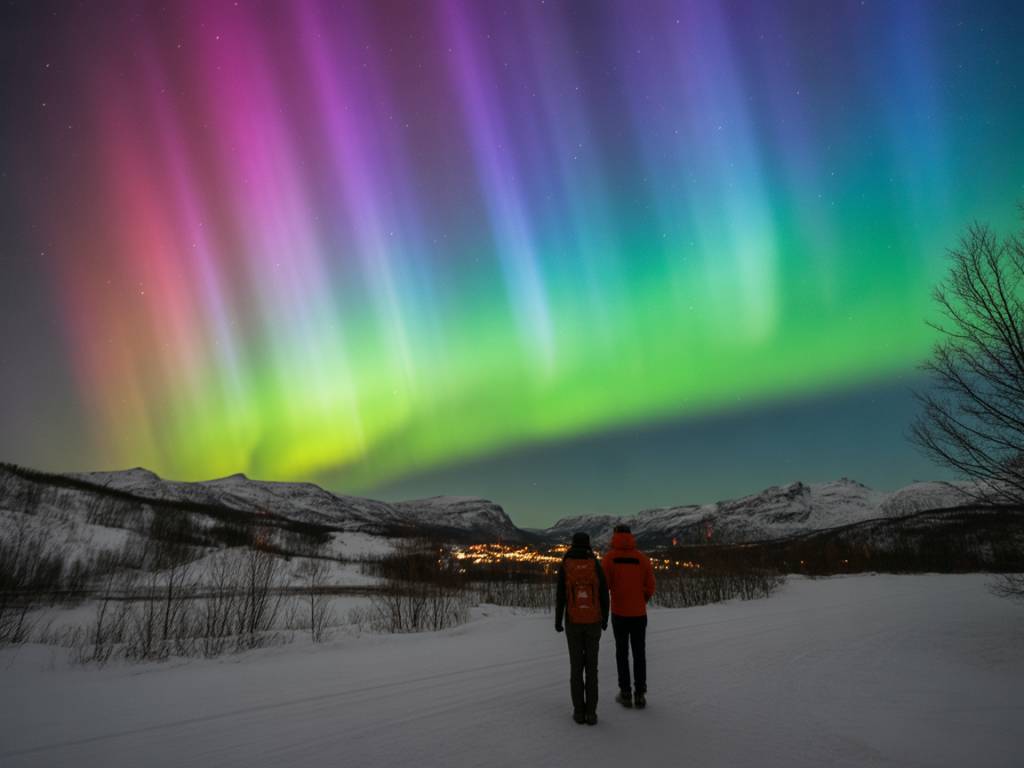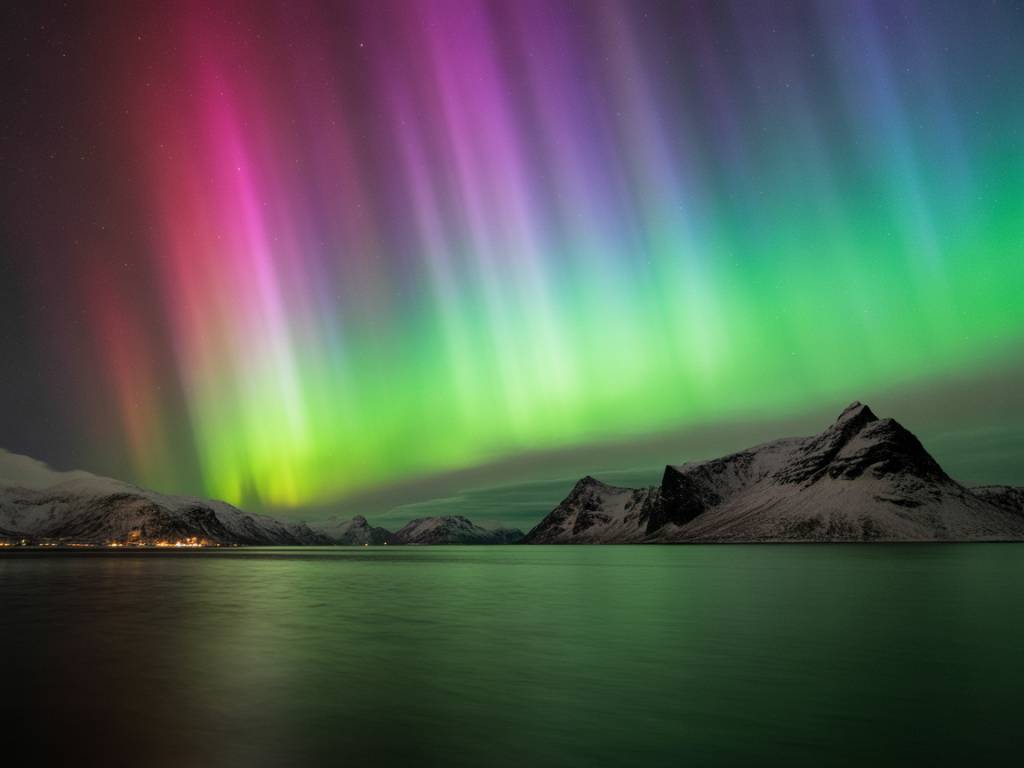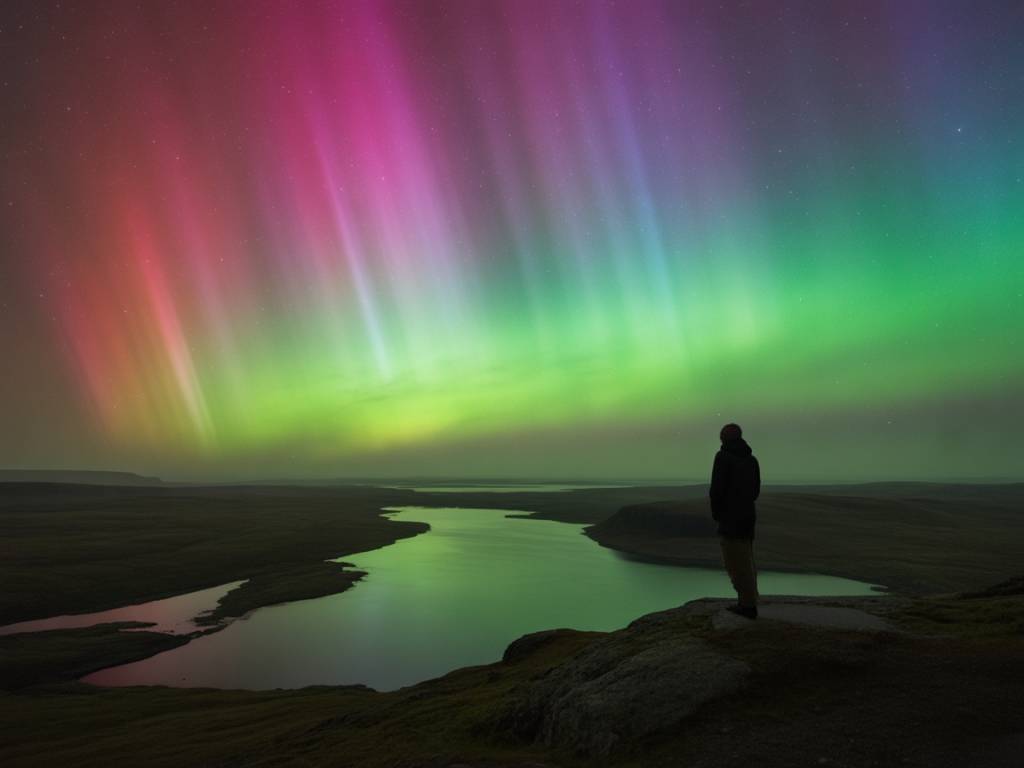

Banff is one of the most rewarding places in Alberta to watch the northern lights, but it is not an automatic show every night. The town sits far enough north for auroral activity to be visible during strong geomagnetic storms, while the surrounding mountains provide dark viewpoints only a short drive away. The challenge is timing: you need darkness, clear skies, enough solar activity and a practical place to stop safely.
This Banff aurora forecast guide explains how to read the main indicators, when your chances are highest, where to go around Banff National Park and what to do when the weather changes at the last minute. The aim is simple: less time refreshing confusing charts, more time looking at the sky.
Can you see the northern lights in Banff?
Yes, but Banff is not as consistently active as northern destinations such as Yellowknife, Fairbanks or northern Iceland. Banff is located at approximately 51 degrees north. The auroral oval usually sits farther north, so weak displays may remain below the horizon or be visible only as a faint green glow toward the northern sky.
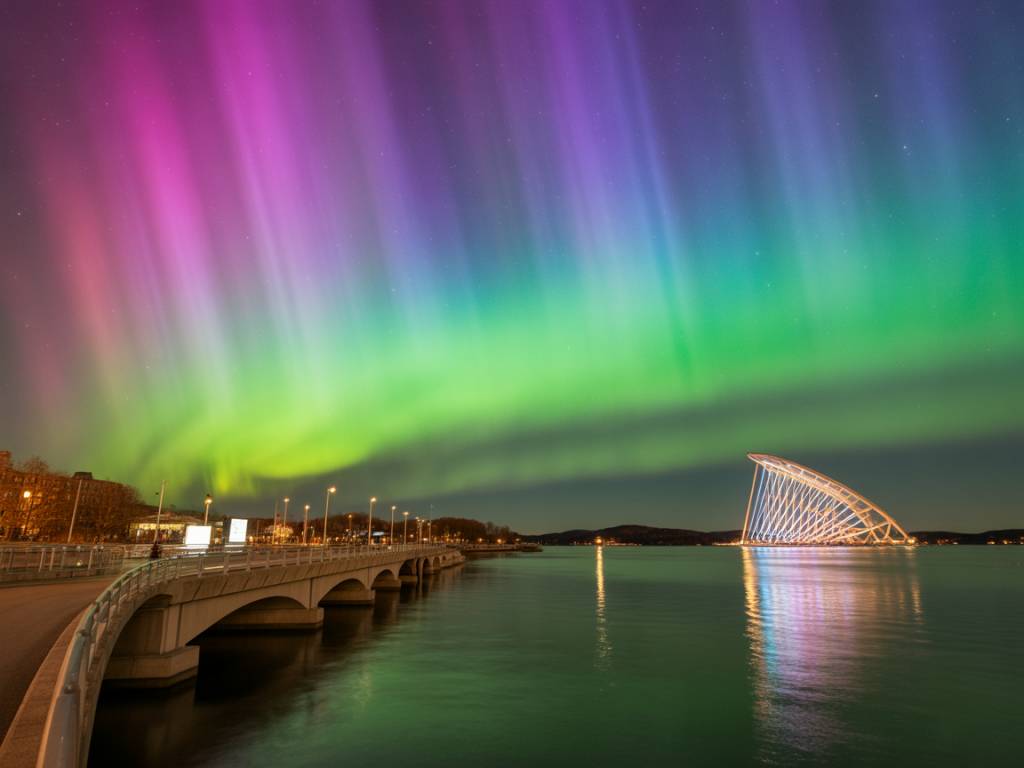
During stronger geomagnetic storms, the auroral oval expands southward. This is when Banff can produce impressive displays, sometimes directly overhead. The most memorable nights usually combine a high geomagnetic index, very low cloud cover and a moonless or partly moonlit sky.
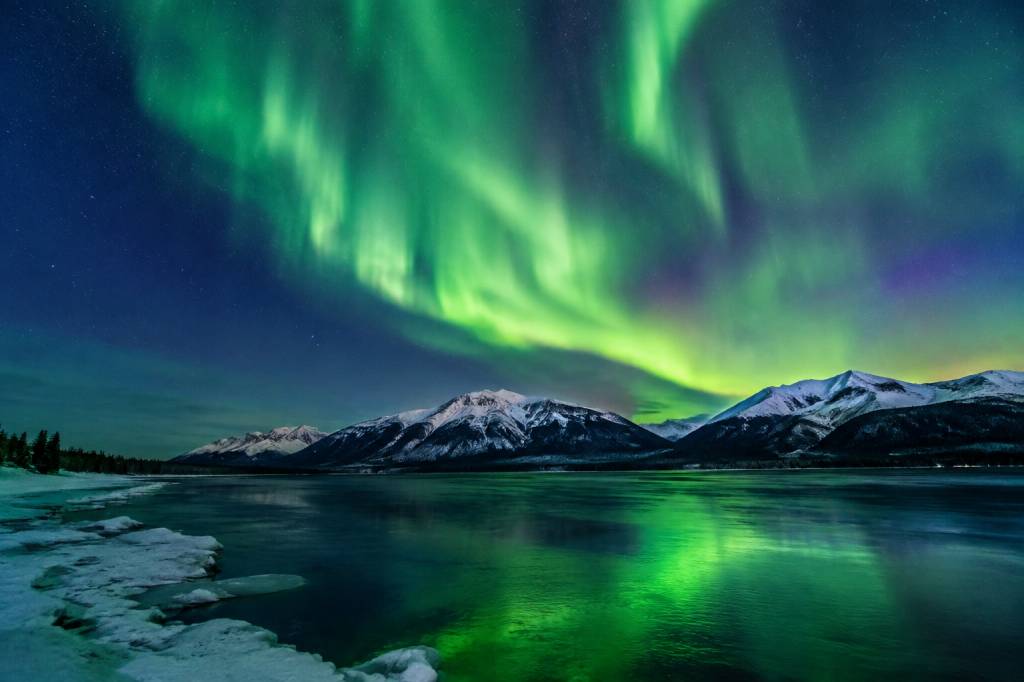
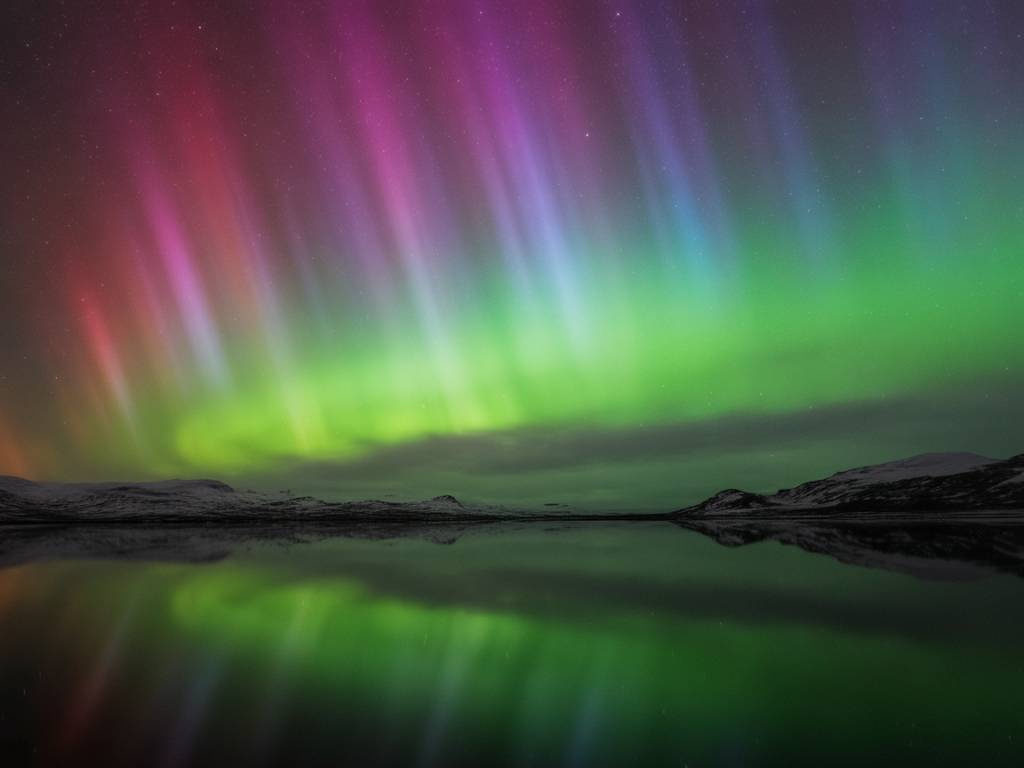
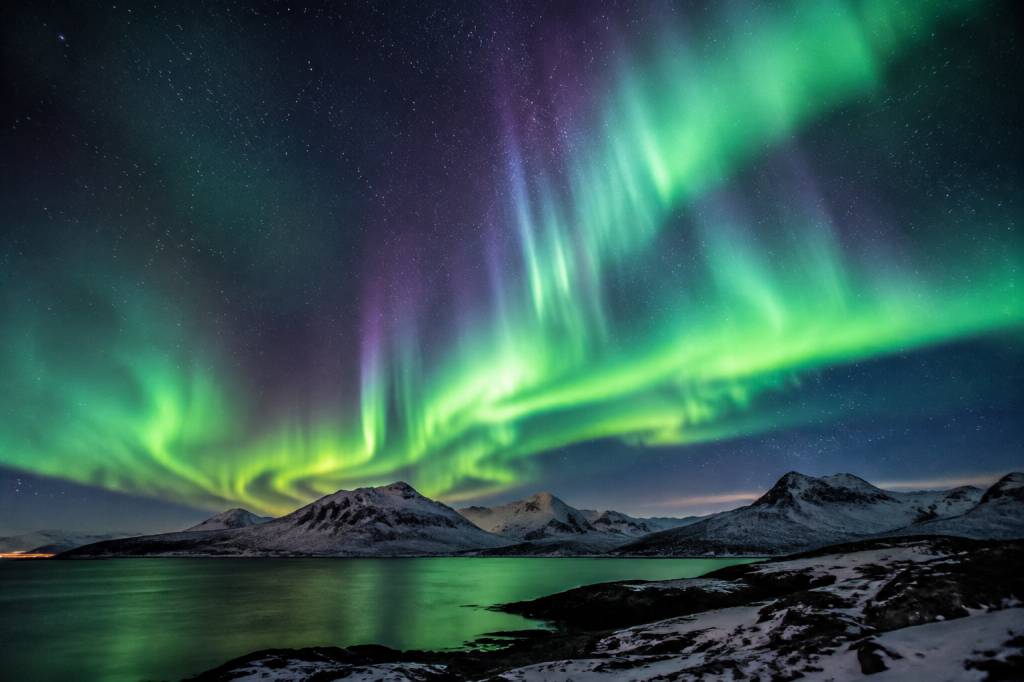
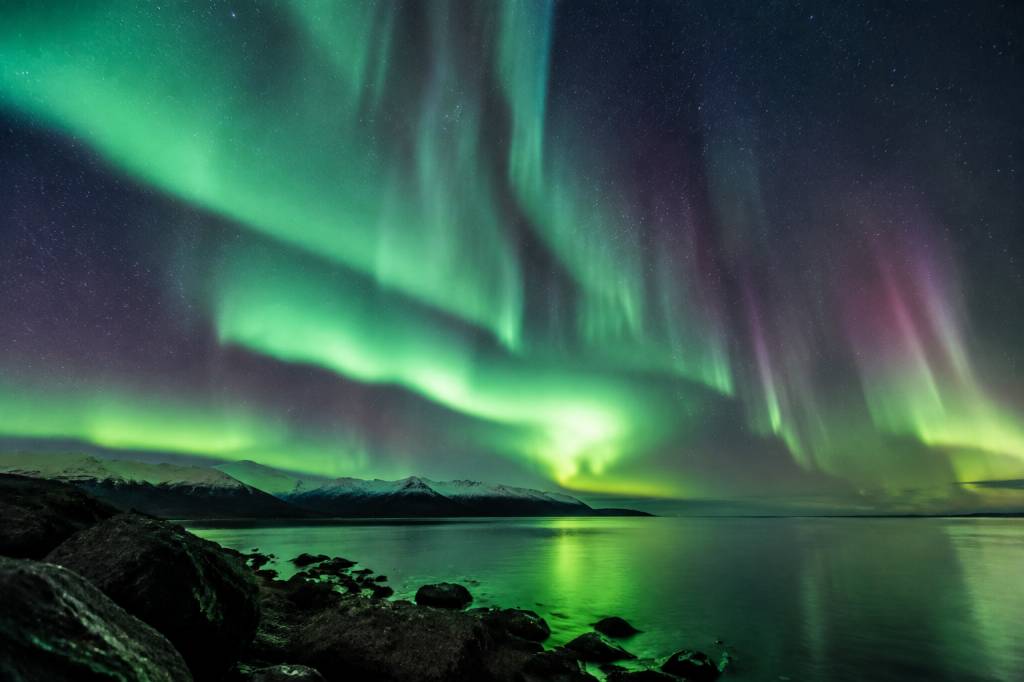
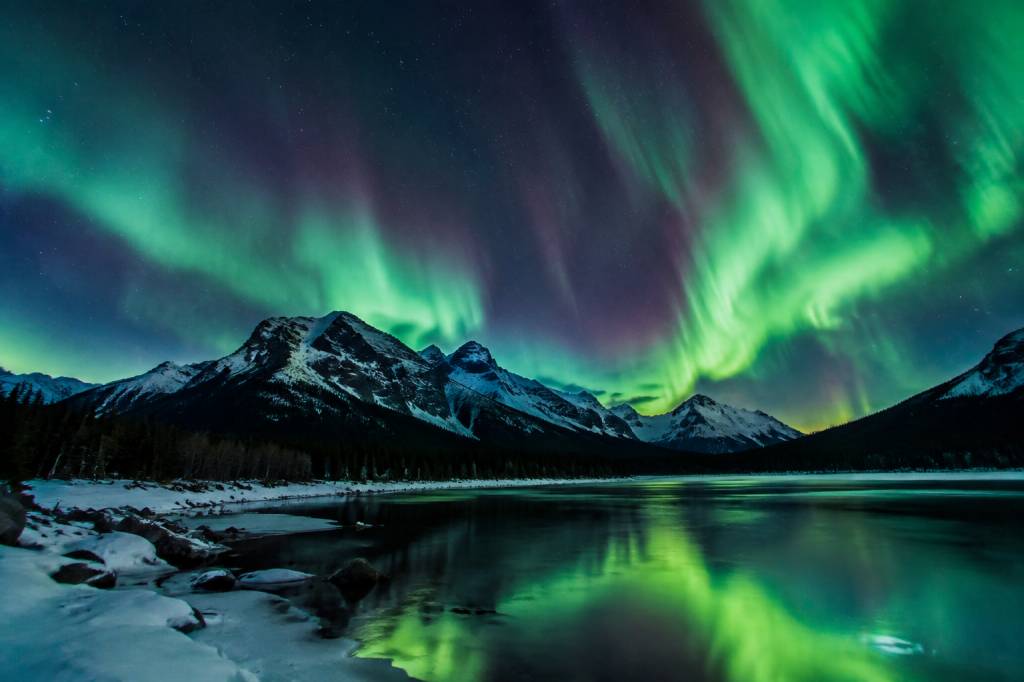
Mountain scenery adds a major advantage. Even a modest aurora can look dramatic above the Rockies, especially when reflected in a calm lake. The lights do not need to be bright red and green to create a worthwhile photograph. A faint green arc over the peaks can still be an excellent result.
Best months for aurora viewing in Banff
The northern lights are possible throughout the year, but darkness determines whether you can see them. In June and much of July, astronomical darkness is limited around Banff, making these months poor choices for aurora hunting. Solar activity may be present, but the sky is simply too bright for most displays.
- Late August to September: Nights become darker, temperatures are still manageable and autumn landscapes can add colour to your photographs.
- October and November: These are useful shoulder-season months with long nights and fewer visitors. Snow and cloud can become more frequent, so road conditions require attention.
- December to February: You get very long hours of darkness, but cold temperatures, snow and limited access to some locations make preparation essential.
- March and April: Longer nights remain available, and the spring equinox period can bring useful geomagnetic activity. Roads may still be icy outside town.
- May to July: Aurora sightings are possible, especially during major storms, but the short or bright nights reduce the practical viewing window.
For many visitors, September, October and March offer the best balance between darkness, accessibility and comfort. There is no guaranteed “aurora month,” however. Solar weather does not follow the tourism calendar.
What the Banff aurora forecast actually means
A forecast is useful only if you know how to translate it into a decision. Three factors matter most: geomagnetic activity, cloud cover and darkness.
The Kp index is a general measure of geomagnetic activity on a scale from 0 to 9. For Banff, a Kp of 4 or 5 can sometimes produce visible activity, particularly if the auroral oval is positioned favourably. A Kp of 6 or higher improves the odds considerably. However, Kp is a global index and does not describe exactly what is happening above Banff at a particular minute.
A low Kp does not always mean “nothing to see.” Localised substorms can create short displays, and the northern horizon may show a faint arc even when the forecast looks modest. Equally, a high Kp does not guarantee visibility if Banff is covered by cloud or if the strongest activity occurs during daylight.
Solar wind speed and the Bz value help explain why activity can suddenly improve. A stronger solar wind and a sustained southward Bz orientation allow more energy to enter Earth’s magnetic field. These details are more useful for advanced monitoring than for planning a holiday months in advance. For most travellers, the practical rule is to watch the short-term forecast during the final 24 to 48 hours.
Cloud cover is often the deciding factor. A Kp 7 event is irrelevant if you are standing beneath 100 percent cloud. Check the hourly cloud forecast for Banff, not only the general regional forecast. Conditions can differ between the town, Lake Minnewanka, Lake Louise and the Bow Valley.
Darkness matters as much as solar activity. The useful viewing period is generally from the end of astronomical twilight until dawn. In practice, start checking the sky from around 10 p.m. onward, but do not assume the display will follow a fixed schedule. Aurora activity may appear for ten minutes, fade for an hour and return shortly before sunrise.
Best times of night to see the aurora
There is no guaranteed peak hour, but auroras are often more active between approximately 10 p.m. and 2 a.m. local time. This is a useful planning window, not a rule. Strong storms can begin earlier in the evening or continue until dawn.
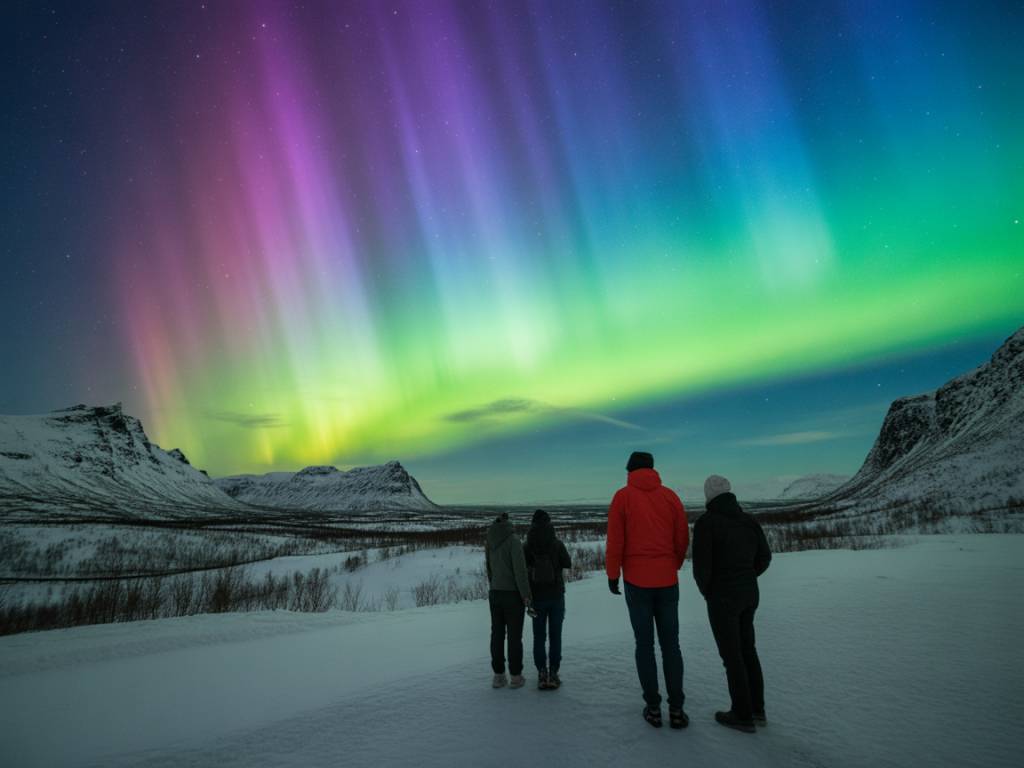
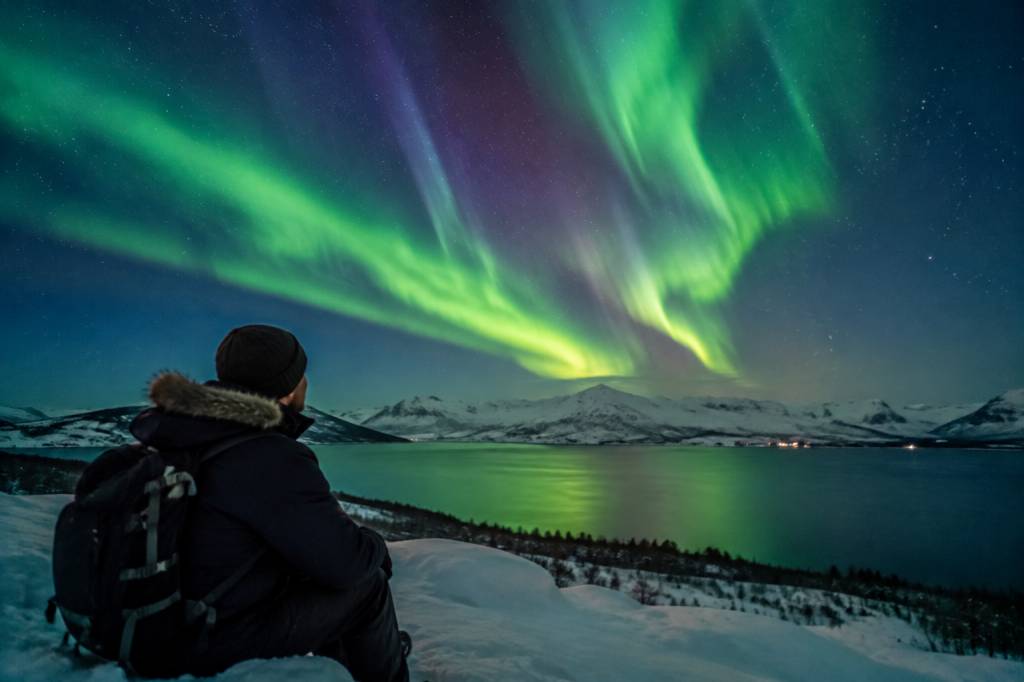
For a practical Banff viewing plan, arrive at your location before 10 p.m. This gives your eyes time to adapt and avoids driving around during the most promising part of the night. Turn off bright phone screens, face north and wait at least 15 to 20 minutes before deciding that the sky is inactive.
Human vision is less sensitive to colour than a camera sensor. A faint aurora may look like a grey-green cloud to your eyes but appear clearly green in a long-exposure photograph. Do not mistake ordinary high cloud for aurora, though. Aurora usually has a defined arc, vertical rays or slow movement. Thin cloud tends to drift as a featureless layer and may soften stars across the entire sky.
Where to watch the northern lights near Banff
Banff townsite has light pollution, but you can still see strong auroras from some open areas. For better contrast, drive away from the main commercial streets and choose a location with a clear northern view.
Lake Minnewanka is one of the most practical choices near Banff. It is close enough for a short night drive and offers open views across the lake. The shoreline can be windy, and ice conditions vary during winter. Stay on designated areas, keep away from unstable lake ice and check whether facilities or access roads are open before leaving town.
Vermilion Lakes are also close to Banff and can provide attractive reflections when the water is calm. The mountains may block part of the northern horizon from some positions, so walk a short distance along the accessible areas and look for the widest view. This is a convenient option when cloud is moving quickly and you do not want to commit to a long drive.
Two Jack Lake can offer a darker setting and strong mountain compositions. It is especially photogenic when the lake is calm, but winter access and parking conditions must be checked. Never stop in the traffic lane to photograph the sky. A beautiful foreground is not worth creating a hazard.
Lake Louise is farther from Banff and is not automatically better for auroras. The area can have darker skies, but surrounding peaks may restrict the horizon depending on your position. If you are already staying near Lake Louise, it can be a sensible base. If you are in Banff town, check the cloud forecast before making the drive; clear skies in Banff do not guarantee clear skies at Lake Louise.
Bow Lake and the Icefields Parkway offer exceptional landscapes, but night driving requires more planning. Wildlife, black ice, snow and limited services are real concerns. Use recognised parking areas, carry warm clothing and avoid remote roads unless you are comfortable driving in winter conditions. The farther you go, the more important it becomes to have a return plan before the aurora appears.
How to choose a viewing location on the night
Use a simple three-step process. First, check the cloud map across the Bow Valley. If Banff is cloudy but the forecast shows a clear corridor toward Lake Minnewanka, move east. If cloud is building from the west, locations farther along the Icefields Parkway may not improve the situation.
Second, check the northern horizon from the proposed site. Mountains are spectacular, but a high ridge directly north can hide a low auroral arc. Third, consider the return journey. A viewpoint with a slightly darker sky is not useful if reaching it requires an unsafe drive on an icy road at 1 a.m.
Banff provides several advantages over remote wilderness locations: accommodation, fuel, mobile coverage in many areas and quick access to restaurants or indoor shelter. Use those advantages. You do not need to drive three hours into the darkness every time the Kp index rises.
Weather conditions that can make or break the forecast
Clear skies are the priority, but “partly cloudy” deserves a closer look. If the cloud is scattered and moving, you may still get excellent openings. If a solid cloud deck covers the entire valley, waiting at the same viewpoint is unlikely to help.
Wind can also affect your experience. Strong wind creates ripples on lakes, moves cloud quickly and makes temperatures feel much lower. In winter, blowing snow can reduce visibility on roads even when the satellite image suggests clear skies.
Temperature is not a minor detail. Banff nights can become dangerously cold, especially beside an open lake. Batteries lose power rapidly, camera screens become sluggish and fingers lose dexterity. Check the actual temperature and wind chill before leaving, not only the daytime forecast.
Equipment for a comfortable aurora night
- Wear insulated boots, thermal layers, a windproof outer jacket, gloves and a warm hat.
- Carry spare camera batteries and keep them inside an inner pocket.
- Use a tripod for long exposures. Handheld night photography will usually produce blurred stars and mountains.
- Bring a headlamp with a red-light mode so you can preserve night vision.
- Pack water, snacks and a fully charged phone or power bank.
- Keep reflective clothing or a high-visibility item accessible if you are walking near a parking area.
- Use offline maps because mobile service can be inconsistent outside the main communities.
For camera settings, start with a wide-angle lens, manual focus set close to infinity, an aperture around f/1.4 to f/2.8 and an exposure between two and ten seconds. Adjust the ISO according to the brightness of the aurora and the amount of moonlight. If the lights are moving quickly, use a shorter exposure to preserve the rays. A tripod matters more than an expensive camera.
What to do when the forecast changes
Aurora forecasts are updated frequently because solar wind conditions can change quickly. Recheck the forecast in the afternoon, again after dinner and once more before leaving your accommodation. Compare the aurora forecast with the hourly cloud map; never rely on one chart alone.
If Banff is cloudy, look for a break rather than immediately driving to the farthest possible location. Cloud often forms unevenly along the mountains. A short move of 20 to 40 minutes can make a major difference, while a longer drive may simply place you beneath a different cloud layer.
If activity is weak, wait. This is where many visitors leave too early. Give your eyes time to adjust, watch the northern horizon and check for changes every few minutes. On a low-activity night, the display may remain faint and photographic rather than dramatic. On a storm night, the sky can change in less than five minutes.
Safety rules for night aurora viewing in Banff
Banff National Park is not a controlled viewing park after dark. Roads may be icy, wildlife can be active and many areas have no lighting. Park only in designated spaces and never block gates, emergency access or traffic lanes.
Do not approach wildlife for a better photograph. Elk, deer and other animals are common near roads, while larger wildlife may be difficult to see in darkness. Keep your distance, stay with your group and use a flashlight when walking back to the vehicle.
Lake ice is particularly dangerous during freeze-up and spring thaw. A frozen-looking surface is not proof of safe ice. Stay off lakes unless local authorities have clearly confirmed access and conditions. The safest aurora photograph is the one taken from solid ground.
Finally, tell someone where you are going and when you expect to return. If conditions deteriorate, use a nearby townsite viewpoint as your fallback. The aurora may be the goal, but a safe drive home is part of the plan.
A practical Banff aurora checklist
- Check the three-day aurora outlook, then focus on the hourly forecast within 24 hours.
- Look for Kp 4 or higher, but treat cloud cover as the deciding factor.
- Choose a location with a clear northern horizon and safe parking.
- Arrive before 10 p.m. and allow at least 20 minutes for your eyes to adjust.
- Bring winter clothing even when the afternoon felt mild.
- Keep a nearby backup location instead of driving without a plan.
- Respect park rules, wildlife distances, lake restrictions and other visitors.
Banff rewards patience more than complicated forecasting. When geomagnetic activity, clear skies and darkness line up, the Rockies become an outstanding aurora backdrop. When they do not, the same planning still gives you a safe night beneath one of the clearest mountain skies in Canada. Check the forecast, choose the most practical dark viewpoint and give the sky time to work.