
The Kp index is one of the first numbers aurora travelers check when planning a night in Alaska. It is also one of the easiest to misread. A high Kp value can mean the aurora oval is expanding and activity is increasing, but it does not guarantee a display over your hotel. A lower value does not automatically mean you should stay indoors, either.
For Alaska, the useful question is not simply “How high is Kp?” It is “Where is the aurora oval, what is the sky doing above me, and can I reach a dark, safe viewing spot before conditions change?” Here is how to turn the index into a practical plan.
What the Kp index measures
Kp is a planetary measure of geomagnetic activity. It is calculated from observations at ground-based magnetic observatories and reported on a scale from 0 to 9. The value summarizes disturbances in Earth’s magnetic field across a three-hour period. In general, the higher the number, the more disturbed the magnetic field and the greater the chance that auroral activity will extend farther from the polar regions.
Kp is a scale, not a percentage. Kp 6 does not mean a 60 percent chance of seeing the northern lights, and Kp 3 does not mean the aurora will be three times weaker than at Kp 9. The number describes geomagnetic conditions, not the brightness, color, cloud cover, or visibility at a particular address.
You may see Kp reported as a current estimate, a three-hour reading, or a forecast for upcoming intervals. Forecasts are useful for planning, but geomagnetic activity can change quickly. Treat them as guidance rather than a promise that the sky will perform on schedule.
Why a modest Kp can still work in Alaska
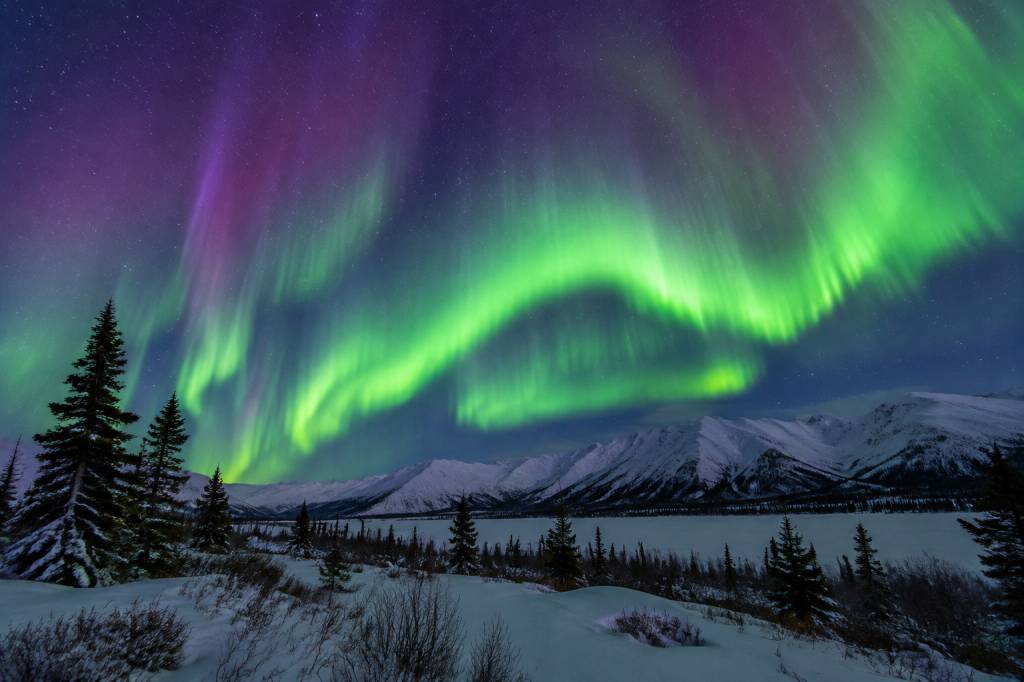
Alaska sits beneath or close to the auroral oval, the broad ring around the geomagnetic poles where auroras occur most often. That position matters. In places farther south, a strong geomagnetic storm may be needed to bring the aurora into view. In northern Alaska, and often around Fairbanks, activity at a modest Kp can still produce auroras overhead or nearby.
This is why a traveler in Fairbanks should not use the same simple rule as someone watching from a much lower latitude. A Kp 2 or 3 night may be worth going out for if the sky is clear and the aurora is active locally. At higher Kp values, the oval can expand southward, improving the chances for observers in places such as Anchorage or farther south, but local weather remains decisive.
Think of Kp as a broad map-scale clue. It can help indicate where auroral activity may be possible, but it cannot tell you whether a particular valley, roadside pullout, or city viewpoint is under clouds.
What different Kp levels may mean for travelers
These ranges are practical guides, not guarantees. The same Kp value can produce different views depending on location, timing, cloud cover, and the shape of the auroral oval.
-
Kp 0–1: Geomagnetic activity is quiet. In Alaska, that does not rule out aurora, especially in the north or around Fairbanks. Look for local aurora forecasts and clear skies rather than dismissing the night from the Kp number alone.
-
Kp 2–3: A reasonable range for aurora viewing in many parts of interior Alaska. A display may be faint at first, or it may brighten in short bursts. Give your eyes time to adjust and avoid judging the sky from a brightly lit parking lot.
-
Kp 4–5: Activity is more unsettled, and the auroral oval may extend farther south. This can be encouraging for locations outside the far north, but it still does not guarantee a clear or dramatic show.
-
Kp 6–7: A stronger geomagnetic storm is possible. Auroras may be visible farther south than usual, and displays can become more dynamic. Check road and weather conditions carefully; storm-level excitement is no reason to drive faster or take risks.
-
Kp 8–9: Very strong geomagnetic activity. The aurora may reach unusually low latitudes, but forecasts at these levels can be uncertain, and local cloud, darkness, and visibility still matter.
For a trip based in Fairbanks, a clear Kp 2 night can be more useful than a cloudy Kp 7 night. That is not a contradiction. It is the difference between a geomagnetic signal and an actual view of the sky.
Check the sky before chasing the number
Cloud cover is often the make-or-break factor. A powerful aurora behind a thick cloud deck is still hidden. Before leaving, check a cloud forecast for the exact area you plan to visit, not just the forecast for the nearest city. Conditions can differ between the city, the hills, and a route outside town.
Look at the forecast for the hours you will be outside. A clear evening can turn cloudy later, while a cloud break may open a short viewing window. Satellite imagery can help you see where cloud bands are moving, but it is not a substitute for a local forecast or a view of current conditions.
Darkness matters too. Alaska’s aurora season is tied to long, dark nights, generally from late summer into spring, though timing and conditions vary by location. Around the equinoxes, geomagnetic activity can sometimes be favorable, but there is no single “best night” that overrides weather and darkness. Moonlight does not erase the aurora, but a bright moon can make faint displays and stars less prominent.
Use Kp alongside local aurora forecasts
For a useful picture, compare several kinds of information instead of refreshing the Kp number every few minutes:
-
Kp forecast: Use it to understand the broad level of geomagnetic activity and possible expansion of the auroral oval.
-
Local aurora forecast: Check whether activity is expected near your destination. Short-term aurora maps and regional forecasts can be more relevant than a global index alone.
-
Cloud forecast: Check the viewing location and nearby alternatives. A clear patch may be more valuable than a higher Kp reading.
-
Current sky conditions: Look outside when possible. A forecast can lag behind reality, and a brief opening may be worth using.
-
Road and safety information: Confirm that your route and stopping place are accessible and safe in the current conditions.
Do not confuse Kp with other solar or aurora measurements. Solar wind speed, the direction of the interplanetary magnetic field, and local magnetometer readings can help specialists assess short-term activity. They are useful context, but they are not required for a visitor to make a sound plan. Start with location, clouds, darkness, and safe access.
Planning a viewing night near Fairbanks
Fairbanks is a popular base because it is well placed for aurora viewing and has road access to darker areas outside the city. You do not need to drive hundreds of miles every time the forecast improves. First check whether there is a clear, legal, and safe place within reach of your accommodation. If clouds cover the city, compare conditions along more than one route before setting out.
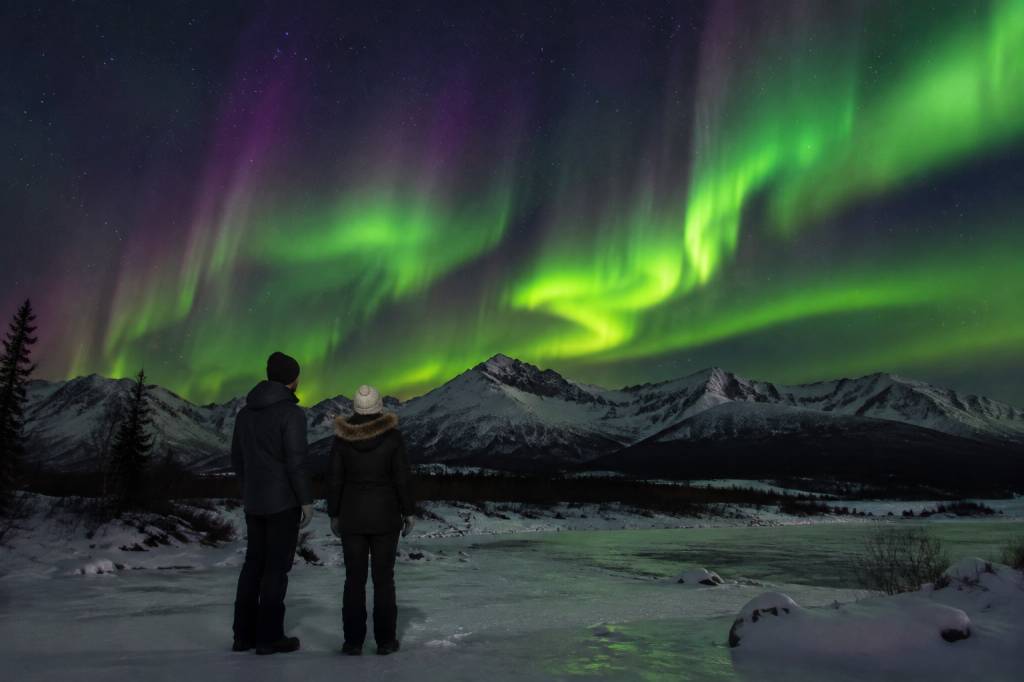
On one field night, the Kp forecast looked unremarkable, so the group nearly called it early. The sky outside town was clear, however, and a pale arc appeared low on the northern horizon. It strengthened in waves while everyone waited in the dark. The lesson was not that Kp is useless; it was that a quiet-looking number should not replace a check of the sky and the local forecast.
Choose a viewing point before you start driving. Confirm that you are allowed to park there, that the road is open, and that you can safely turn around. Avoid stopping on narrow shoulders, blocking gates, or walking onto an unlit road to find a better composition. If conditions worsen, return to a planned fallback rather than improvising on an icy roadside.
If you are staying in Anchorage, the same principles apply, but expectations should be adjusted. Anchorage is farther south than Fairbanks and has more city light. Stronger activity may improve the chances, yet clouds and light pollution can still spoil the view. Check local conditions and identify a dark, accessible viewpoint before leaving town.
How to respond when the forecast changes
A forecast is a starting point, not a timetable. If Kp rises, do not assume the best display will happen immediately. If Kp stays low, do not automatically cancel. Check the sky at intervals, and allow enough time for activity to build. Auroras often brighten and fade, and a quiet period can be followed by a sudden burst.
Set a practical time limit before you go. For example, plan a few hours outside, with a warm place to retreat to and a clear route back. This avoids spending the whole night refreshing a screen and turning a vacation into a weather-monitoring shift.
If clouds move in, compare nearby conditions only when it is safe to do so. Driving farther is not always the answer: cloud cover may stretch across the region, and long winter drives bring their own risks. A sensible fallback might be a closer location with safe parking, a later check from your accommodation, or another night in your itinerary.
What to bring for a real Alaska night
Cold is easier to manage when you prepare for standing still. Dress in layers, cover hands and ears, and bring footwear suited to snow or ice. A warm drink, a charged phone, and a headlamp with a red-light setting can make waiting more comfortable. Keep spare batteries warm; cold can reduce their useful life.
Bring a camera only if you want to use one. Modern phones can record some auroral color, but a camera cannot make a cloudy sky clear or guarantee a dramatic image. Take time to look with your eyes, too. The first moments outside can seem dark, so give yourself a little time to adjust before deciding there is nothing to see.
For winter driving, check your vehicle, fuel, tires, and local road advisories. Tell someone where you are going if you are heading beyond town, and do not stop in a place that puts you or other drivers at risk. Remote scenery is part of the appeal; being stranded in it is not.
A simple decision rule for the night
Before you head out, ask four questions: Is the sky likely to be clear where I am going? Is there a local indication of auroral activity? Is it dark enough, and is the viewing place accessible? Do I have a safe route and warm clothing? If most answers are yes, a moderate Kp can be enough reason to try.
The Kp index is valuable because it puts geomagnetic activity into a simple, shared scale. Its limit is just as important: it does not describe your clouds, your road, or what is happening above one specific hill. In Alaska, use Kp to set expectations, then make the decision from local conditions. That approach gives you a better chance of seeing the aurora—and a much calmer night if the sky stays quiet.