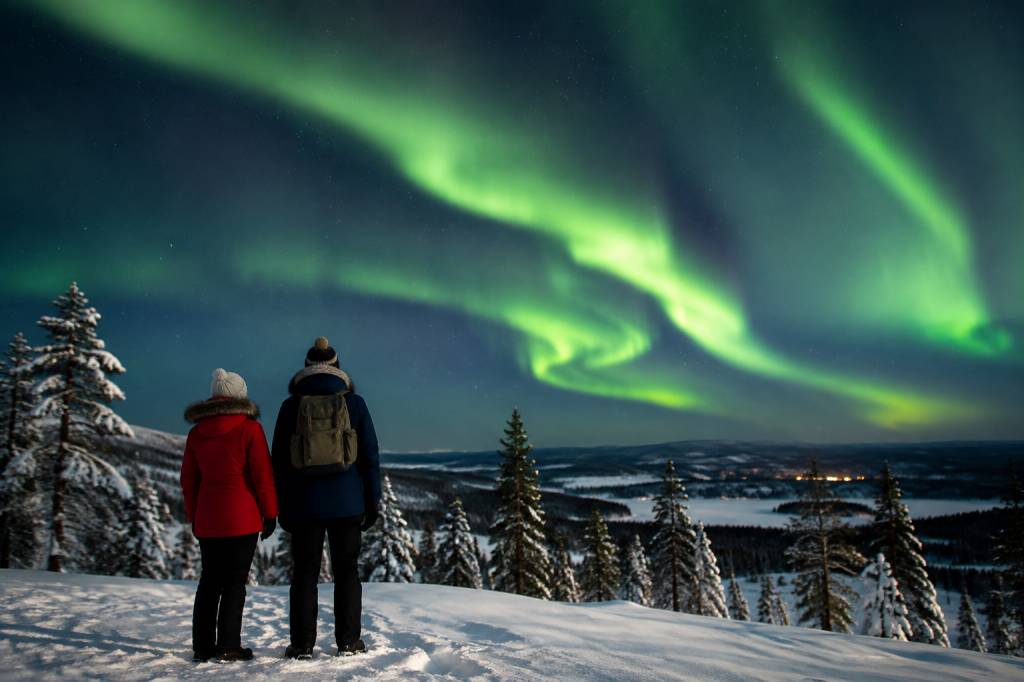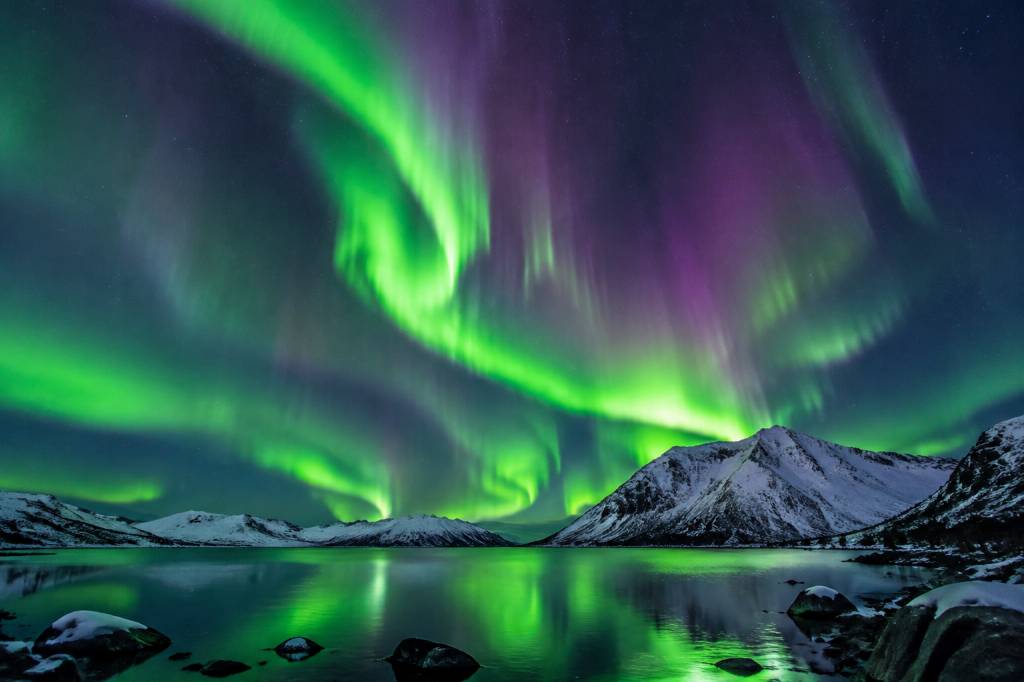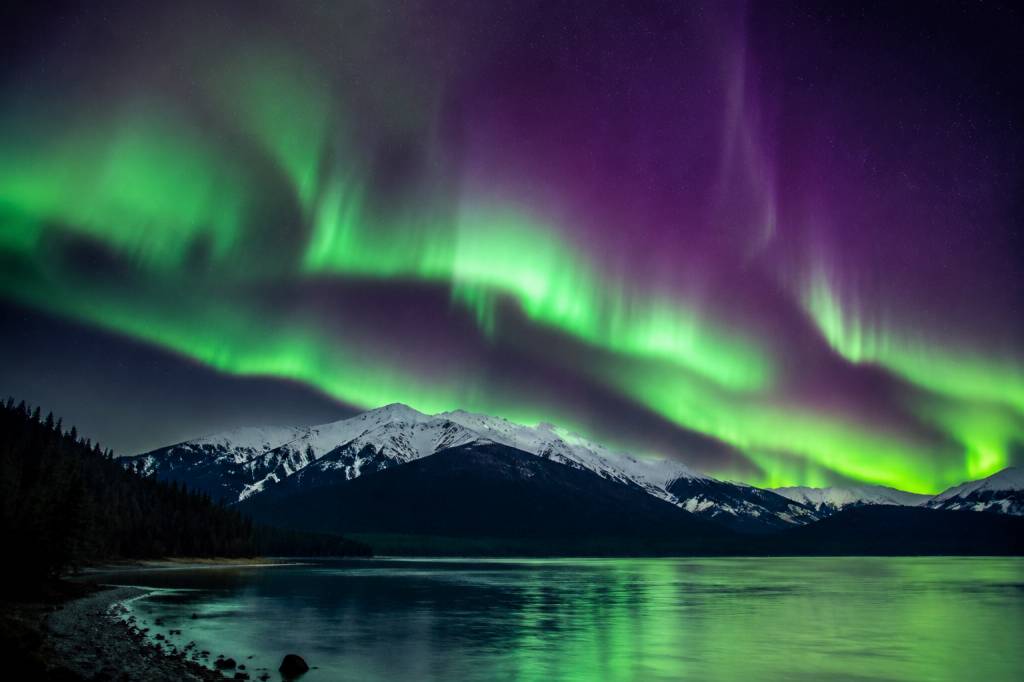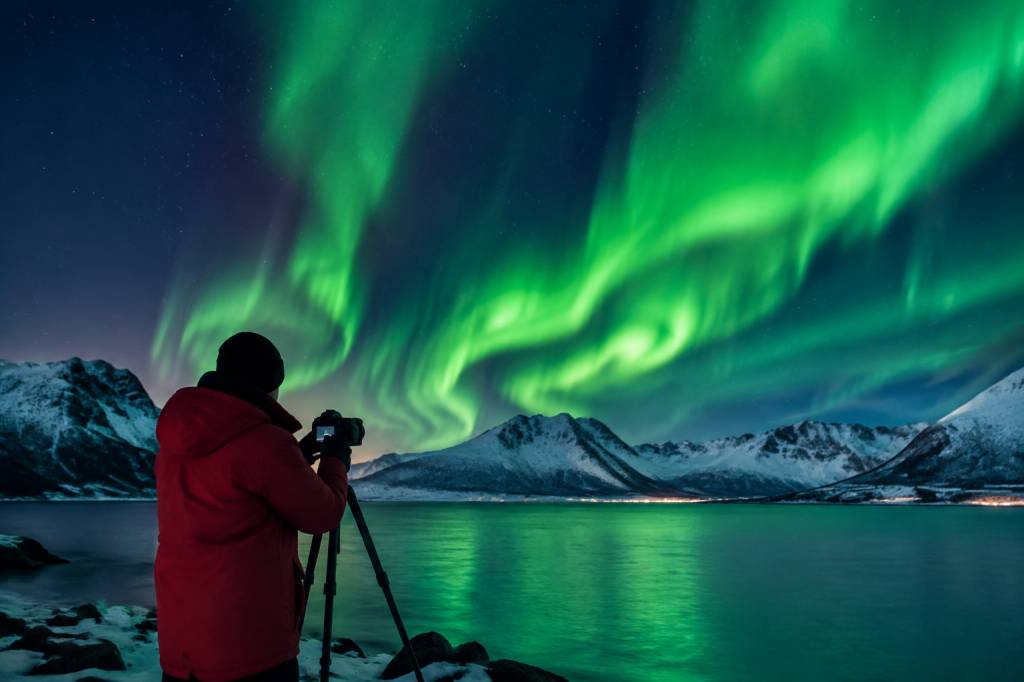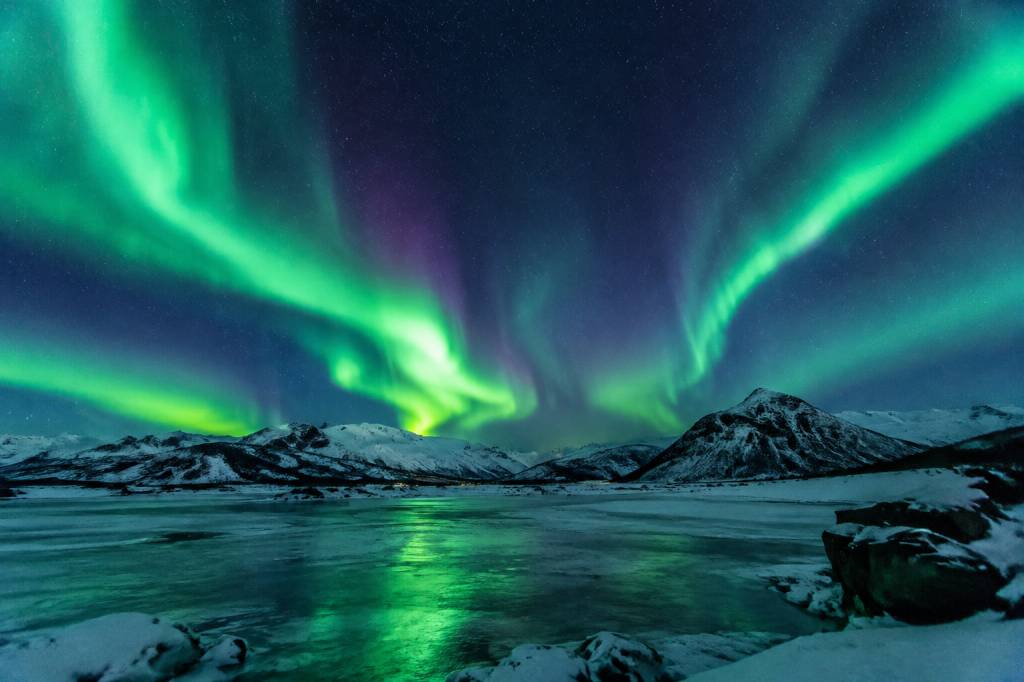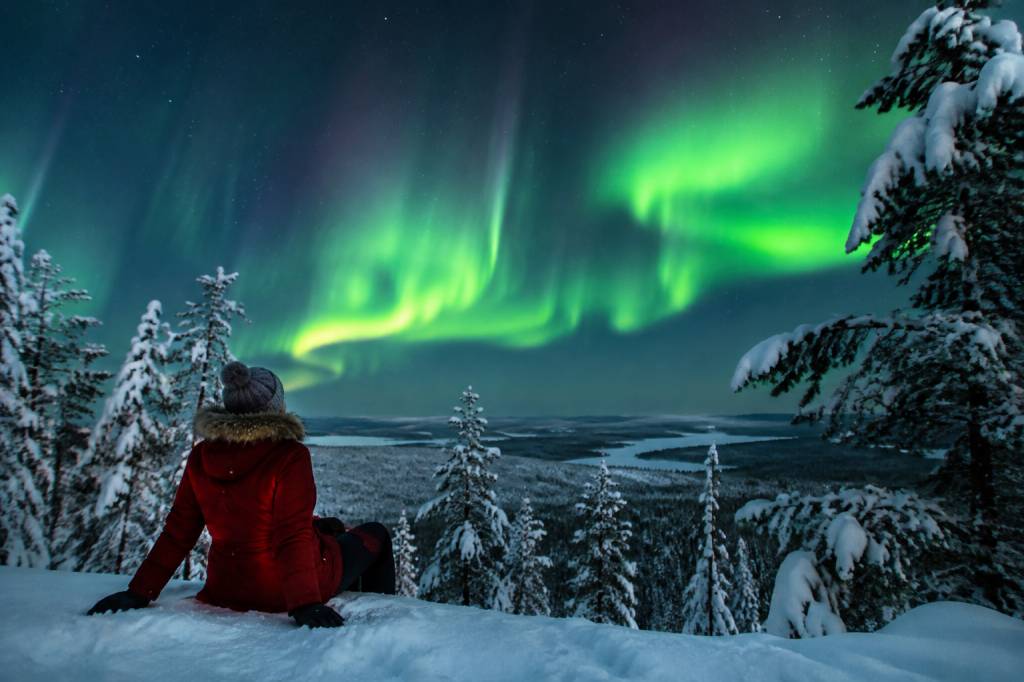

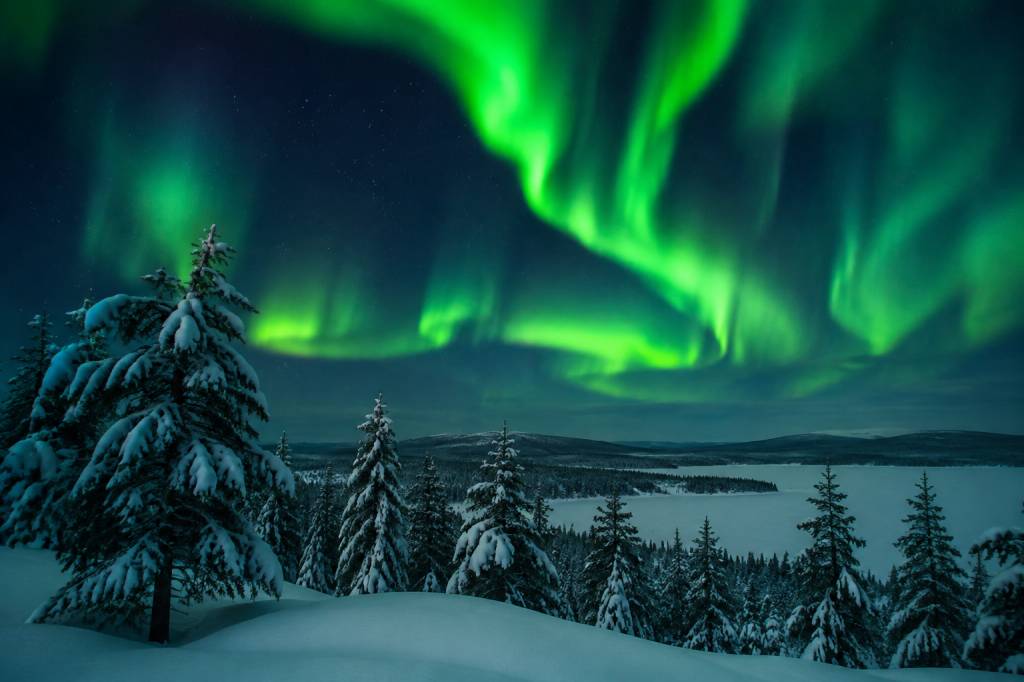
There is no single “best night” to see the northern lights in Lapland. You need three things to line up: darkness, clear skies and aurora activity. The first is predictable, the second changes quickly, and the third can only be forecast with limited notice. Plan around all three, and give yourself several nights rather than expecting a guaranteed show on one evening.
For most travellers, the practical viewing season runs from late August to early April. The strongest all-round choices are often September and March, when nights are dark but temperatures can be easier to manage than in midwinter. December and January offer long hours of darkness, but cloud, snow and cold can make a viewing plan more demanding. Here is how to choose the right dates, where to look and what to do when the forecast changes.
When is Lapland dark enough?
The aurora can occur throughout the year, but you cannot see it against a bright sky. In Lapland, the midnight sun keeps the sky too light for most of summer. The viewing season begins as proper darkness returns, usually in late August or early September, and continues until the nights shorten again in April.
The exact dates depend on where you are. Lapland covers a large area across northern Finland, Sweden and Norway, and places farther north enter and leave the dark season earlier than locations farther south. At the beginning and end of the season, check local sunset and twilight times for your actual destination. A dark, moonless-looking evening is not enough if the sky is still holding onto twilight.
From late September through March, darkness is generally not the limiting factor. Your main challenge becomes finding a break in the clouds. In midwinter, the sun may barely rise in the far north, giving you a long window for aurora watching. That sounds ideal, but a long night under thick cloud is still a cloudy night. More darkness creates more opportunity; it does not guarantee visibility.
The best months for most travellers
September and early October are strong choices if you want aurora viewing without the deepest winter cold. Nights are dark enough, and the ground may still be free of heavy snow, making some roads and walking routes simpler. Autumn weather can also be unsettled, so keep your plans flexible and check cloud forecasts on the day.
November to February brings long nights and a classic snowy Lapland setting. In northern Finland, places such as Inari, Ivalo and Saariselkä are popular bases; in Swedish Lapland, Kiruna and Abisko are well-known options. These months can be excellent for a winter trip, but cold affects how long you can stay outside. Snowfall and low cloud can also block the display, so book enough nights to allow for a change of plan.
March is a particularly practical month. Nights are still long enough for aurora hunting, while daylight makes it easier to enjoy winter activities and travel between locations. Temperatures may be less severe than in the heart of winter, though conditions vary from year to year. Snow can remain on the ground, and clear spells are never guaranteed.
Late August and April can work, especially for travellers with flexible dates and a clear view of local darkness times. They are shoulder-season options rather than automatic bargains for aurora viewing: evenings are shorter, and twilight can limit the useful viewing window. Check the dates and location before booking.
What time of night should you go out?
Aurora activity can happen at any hour of darkness. A useful starting window is around 9 p.m. to 2 a.m. local time, but do not treat those hours as a schedule. Displays can begin earlier, continue later or appear in short bursts. If the sky is clear and activity is building, stay ready. If it is overcast, waiting outside for several hours will not make the clouds disappear.
Before leaving your accommodation, check the cloud forecast for the next few hours, not just the daily summary. Look for a clear patch moving toward your area, and compare forecasts from more than one source if the conditions are uncertain. Cloud cover can differ between nearby valleys, lakes and higher ground. A forecast is a guide, not a promise, so recheck it before driving.
Set a practical cut-off time too. If you have an early excursion the next morning, it may not make sense to stay out until dawn every night. The goal is to create several good chances, not to exhaust yourself on the first evening.
KP index, solar activity and cloud cover
The KP index is a measure of geomagnetic activity, on a scale from 0 to 9. It is useful for describing how disturbed Earth’s magnetic field is, but it is not a simple “aurora score.” A high KP reading does not guarantee that you will see bright lights from your location, and a modest reading does not mean there will be no display in Lapland.
Lapland lies at a high latitude, within or close to the region where auroras are commonly visible. That means you do not always need an extreme KP value. For a traveller, local cloud cover and darkness often matter more than chasing a headline number. A moderate display beneath a clear sky is more useful than a powerful forecast hidden behind solid cloud.
Solar wind and geomagnetic forecasts can help you decide when to stay alert, but their accuracy varies with lead time. Treat longer-range aurora predictions as an indication of potential, then check short-term updates as the evening approaches. If the forecast says activity is low but the sky is clear, it can still be worth taking a look. If activity is high but the sky is covered, search for a safe, accessible area with clearer conditions rather than driving blindly after a KP number.
Choosing where to stay in Lapland
Your base matters because it affects both the darkness around you and your ability to respond to changing weather. Small settlements often have less artificial light than city centres, but you do not need to travel deep into the wilderness to see an aurora. A dark, open spot a short distance from town may be enough.
In Finnish Lapland, Ivalo and Inari offer access to open areas and lakeside viewpoints, while Saariselkä provides services and nearby opportunities to get away from bright lights. In Swedish Lapland, Abisko is known for its local weather patterns and mountain setting, while Kiruna is a larger base with transport and accommodation options. Conditions vary locally; no town can promise clear skies.
Look at the practical details before choosing a hotel or cabin: Is there a safe place nearby where you can stop and watch? Can you reach it without a long drive on unfamiliar winter roads? Is there a warm indoor alternative if the weather turns? A remote cabin may feel wonderfully dark, but it can also leave you with fewer transport options when the forecast changes.
How to plan a flexible aurora evening
Make a simple plan before dinner, then update it as the sky changes. Choose one primary viewing area and one backup. Check road conditions, travel time and whether the parking area is open and safe to use. Do not stop on a road shoulder just because the sky looks promising; snowbanks, poor visibility and passing traffic can make roadside viewing dangerous.
If the cloud forecast is poor at your base, compare nearby locations before setting off. A clear patch a short drive away can be useful, but only if the route is safe and the forecast supports the trip. Avoid chasing rapidly changing cloud maps across long distances. Conditions may shift before you arrive, and winter driving takes longer than a map estimate suggests.
Keep a town-based fallback for fully cloudy evenings. Visit a local museum, try a sauna, or enjoy a meal and return outside later if the forecast improves. This is not wasted time: a well-paced trip is more enjoyable than spending every night staring at an app and refreshing the same chart.
What to wear and bring
Cold feels sharper when you are standing still and watching the sky. Wear several layers, including a warm insulating layer and a wind-resistant outer shell. Insulated boots, warm socks, gloves or mittens, a hat and a neck covering are essential in winter. Bring spare hand warmers if you use them, and keep your phone close to your body so its battery does not drain quickly in the cold.
A headlamp helps you move around safely, but use a red-light setting where possible to preserve night vision. A tripod is useful for photographing the aurora, though your eyes are the best equipment for enjoying it. Pack water and a snack if you plan to be away from town for a while. Tell someone where you are going, especially if you are travelling independently.
Dress for the time you will spend waiting, not for the short walk from the car. If you become cold, go indoors and warm up. There is no prize for enduring unsafe conditions, and the aurora does not care whether your toes have stopped working.
How many nights should you allow?
Plan for at least three nights in Lapland if aurora viewing is a major goal. Four to six nights give you more flexibility, particularly during a season with changeable cloud. A longer stay does not guarantee a sighting, but it gives you more opportunities to catch a clear evening and avoids putting all your hopes on one forecast.
Try not to schedule every activity after dark. Keep at least some daytime plans flexible, and avoid long, tiring excursions before a late viewing attempt. If you are staying for several nights, you can choose the best evening conditions rather than forcing an outing every night.
Set realistic expectations, then look up
Auroras are natural displays, not timed performances. They may appear as a faint grey-green band, brighten into moving curtains, or remain visible for only a few minutes. Cameras can show colour more strongly than the unaided eye, especially when the display is faint. Give your eyes time to adjust and look across the northern sky, while remembering that auroras can appear in other directions too.
The most reliable approach is straightforward: travel during the dark season, stay several nights, check cloud cover and local conditions, and choose safe, dark viewing spots. September and March are often the best balance of darkness and manageable travel for many visitors; midwinter offers the longest nights but also brings greater cold and winter-road demands. Pick the month that suits your trip, keep a backup plan and leave room for the weather to surprise you.