
How to read the northern lights forecast for Rovaniemi
Rovaniemi is a popular base for seeing the northern lights in Finnish Lapland, but a forecast cannot promise a display. It can help you decide when to go out, where to look and whether it is worth waiting for a gap in the clouds. The key is to read solar activity and local weather together: a strong aurora forecast is of little use if the sky above you is overcast.
Forecasts change, sometimes quickly. Check the latest aurora and cloud-cover information on the day of your visit, then compare it with conditions outside. A clear patch on a map is useful; a clear patch over your actual viewing spot is better. Treat every forecast as a planning tool, not a guarantee.
Three details matter most:
-
Cloud cover: Look for clear or partly clear skies over Rovaniemi and the places you can realistically reach. Thin high cloud may still dim the display.
-
Aurora activity: The KP index gives a broad indication of geomagnetic activity. It is helpful context, but it does not tell you exactly what will happen above one city.
-
Darkness and timing: You need a dark sky and a view toward the northern horizon. In winter, the useful window can last for hours, but the aurora may appear at any point within it.
What the KP index does—and does not—tell you
The KP index runs from 0 to 9 and describes geomagnetic activity across a broad region. Higher values can mean brighter auroras and a greater chance of seeing them farther south. Rovaniemi is already in Finnish Lapland, so a modest KP reading does not automatically rule out a sighting. If the sky is dark and clear, activity can be visible even when the number looks unremarkable.
Think of KP as a regional signal, not a local weather forecast. It does not tell you whether a cloud bank is covering the city, whether the lights will be overhead or low on the horizon, or precisely when a bright arc will appear. Short-term aurora forecasts can also change as incoming solar wind measurements are updated.
For a practical decision, use the KP reading alongside a local cloud forecast and a look at the sky. If activity is moderate and a clear opening is expected, it may be worth heading out. If activity is high but a thick cloud layer covers every accessible area, you may be better off waiting for a clearing or trying again later.
When to look for northern lights in Rovaniemi
The aurora season in Rovaniemi generally runs from late August or September into early spring. You need darkness, so summer is not a realistic time to see the lights: the long daylight and bright summer nights leave too little dark sky. Autumn and spring can offer a useful balance of dark hours and less severe temperatures, while midwinter brings long nights and a classic Lapland setting.
There is no single best hour. Aurora displays can begin in the evening, intensify around midnight or appear later. A common mistake is to check the sky once at 9 p.m., see nothing and head back indoors. If cloud cover and activity remain promising, check again later. On the other hand, there is no need to stand outside all night without a plan. Set a reasonable viewing window, warm up indoors between checks and keep an eye on changing conditions.
For your trip, allow more than one evening if you can. A few nights give you flexibility when clouds, solar activity or both fail to cooperate. One night may be clear but quiet; another may bring stronger activity but cloud over. Extra time does not guarantee a sighting, but it gives you more chances to use a good forecast window.
Where to watch near the city
Rovaniemi has bright streets, hotels and commercial areas that can make faint auroras harder to spot. Moving away from the strongest lights improves contrast, but you do not have to drive deep into the wilderness. Choose a place with an open view of the sky, safe access and a straightforward route back.
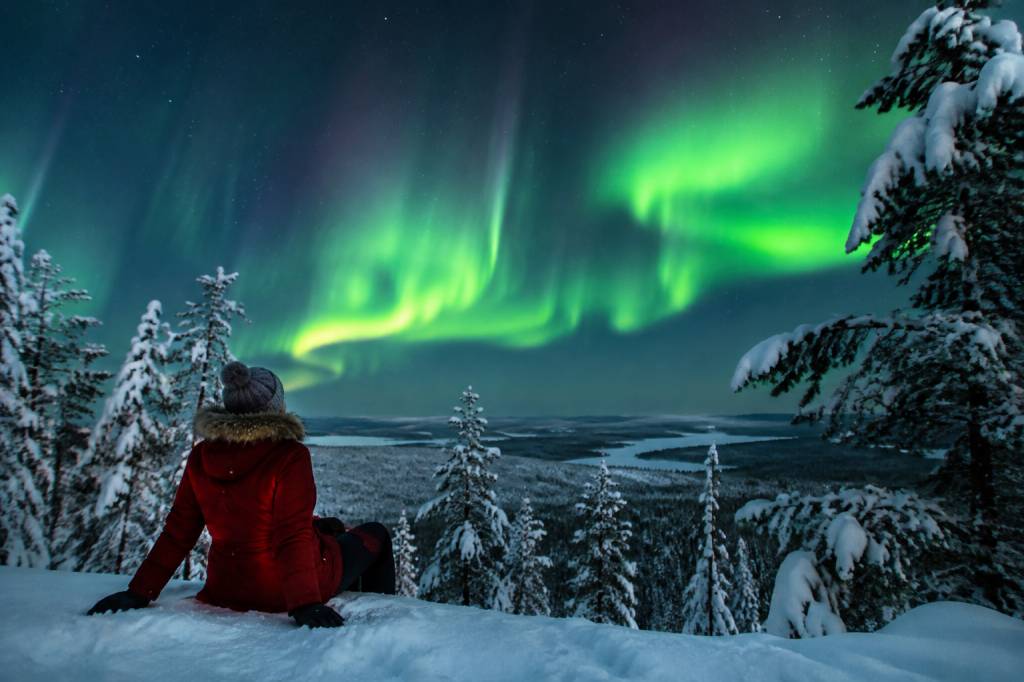
Ounasvaara, close to the city, is a familiar option for visitors looking for darker surroundings and elevated views. Conditions vary by location and season, so check access, opening information and the state of paths before setting out. Snow, ice and poor visibility can make a short walk much slower than it looks on a map. Do not assume that a viewpoint is reachable just because a road or trail appears nearby.
Another practical choice is to find a suitable open area outside the brightest part of town. Before you go, confirm that the site is accessible to the public, that parking is permitted and that you will not block a road or private entrance. A dark roadside pull-off is not automatically a safe viewing location. Park only where it is legal, keep clear of traffic and never stand in the carriageway to take photographs.
If you have booked an aurora tour, ask the operator how they make decisions when the forecast changes. A good plan includes flexibility: the guide may move to a clearer area, wait for a break in the clouds or cancel if conditions become unsafe. Ask about transport, clothing requirements and what happens if the weather deteriorates.
City lights, cloud gaps and backup plans
You can still check for auroras from Rovaniemi itself. Find a place away from the brightest lamps, look toward the northern sky and give your eyes time to adjust. A faint green band can be easy to miss when you are walking beneath streetlights or looking at your phone every few seconds. Once you have checked the forecast, dim your screen and look up regularly.
Cloud cover is often patchy. If the city is overcast, the forecast map may show a clearer area nearby, but driving there only makes sense if the route is safe and the clearing is likely to last. Do not chase every small gap across unfamiliar roads. In winter, snow, ice, darkness and wildlife can all make driving more demanding. If visibility is poor or you are tired, stay put and check again later.
A sensible backup plan can save an evening. If the sky closes in, return to your accommodation, warm up and monitor the latest cloud forecast. If the aurora activity is still favourable, set an alarm for a later check. If not, treat the night as a chance to rest rather than turning a low-probability forecast into a long, uncomfortable wait.
What to wear and bring
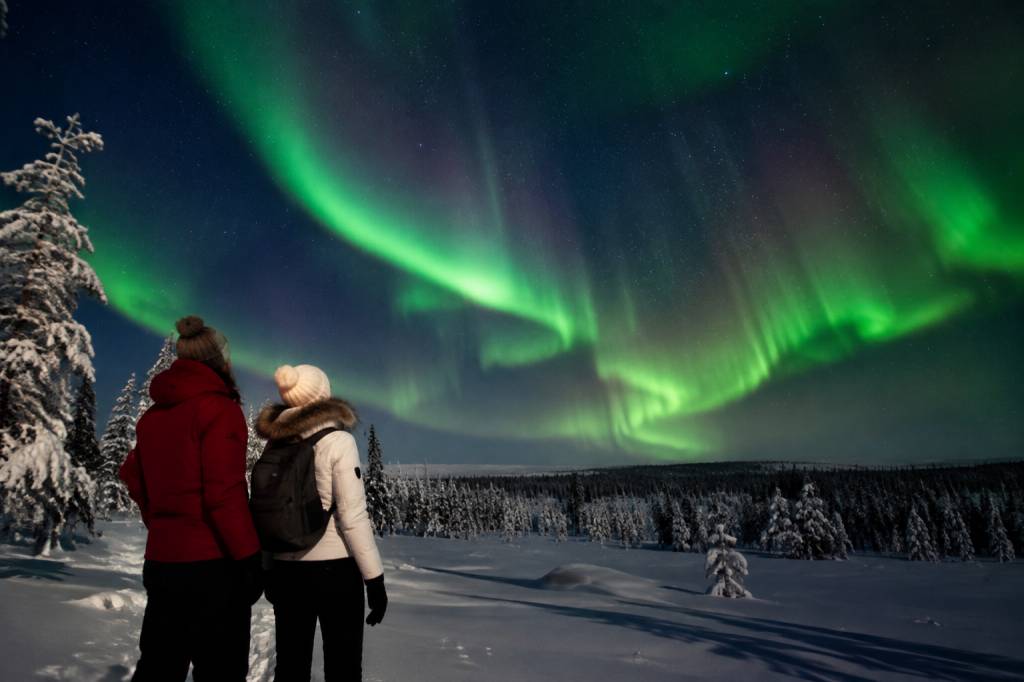
Cold feels different when you are standing still and watching the sky. Dress for waiting outdoors, not for the short walk from a warm car. Layers let you adjust without overheating on the way to your viewing point, and warm feet and hands make it easier to stay patient.
-
Wear warm base layers, an insulating mid-layer and a windproof outer layer. Add a hat, insulated gloves or mittens, and warm socks.
-
Choose winter boots with good grip. Check for ice at parking areas and on paths, and carry traction aids if you expect slippery conditions.
-
Bring a charged phone, a small flashlight and a power bank. Cold weather can reduce battery life. Keep the flashlight pointed down so you do not spoil other people’s night vision.
-
Pack a warm drink and a simple snack. A short break in a sheltered place can make a second viewing attempt more comfortable.
-
Take a paper or offline map if you are driving beyond town. Do not rely on mobile coverage everywhere, and tell someone where you plan to go.
Before leaving, check road and weather conditions as well as the aurora forecast. If you are not comfortable driving on winter roads at night, use a reputable tour or choose a location close to your accommodation. No photograph is worth taking a risk on an icy road.
Photographing the aurora without missing it
A phone may capture a display that looks faint to the naked eye, especially in a dark location. Use night mode if available, hold the phone steady and avoid pointing it directly at bright lamps. A tripod can help with longer exposures, but it is not essential for a quick record. Take a few photographs, then spend time watching the sky without a screen in front of you.
If you use a camera, start with a wide lens and a stable support. A bright aurora may need a shorter exposure than a faint one; long exposures can blur fast-moving curtains into a smooth band. Review a test image, adjust focus and exposure, and then put the camera down for a while. The display can change faster than your settings.
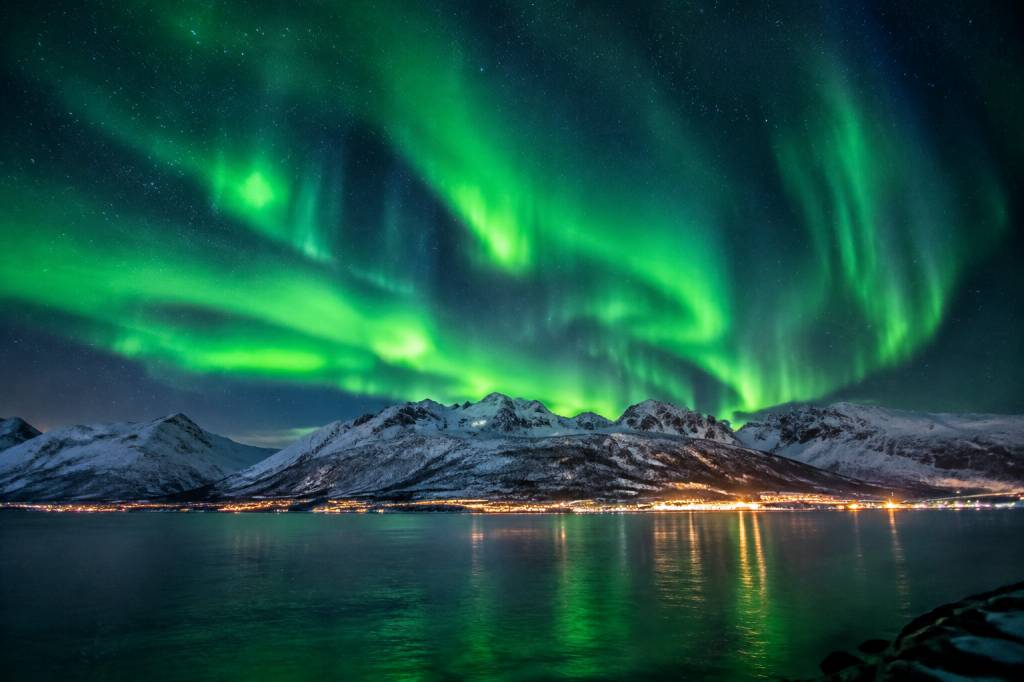
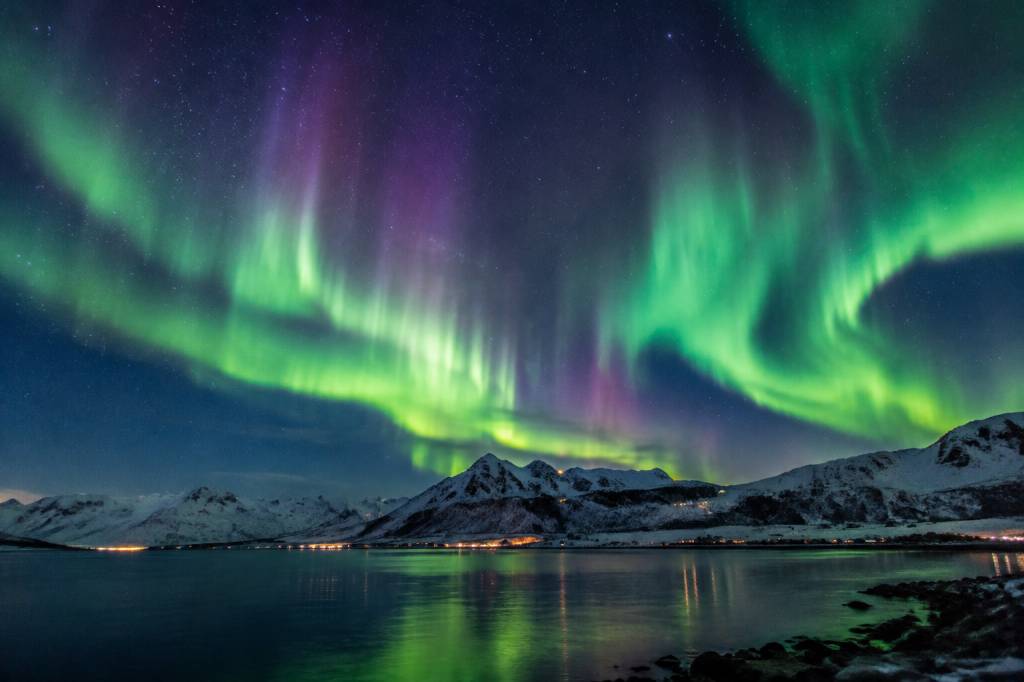
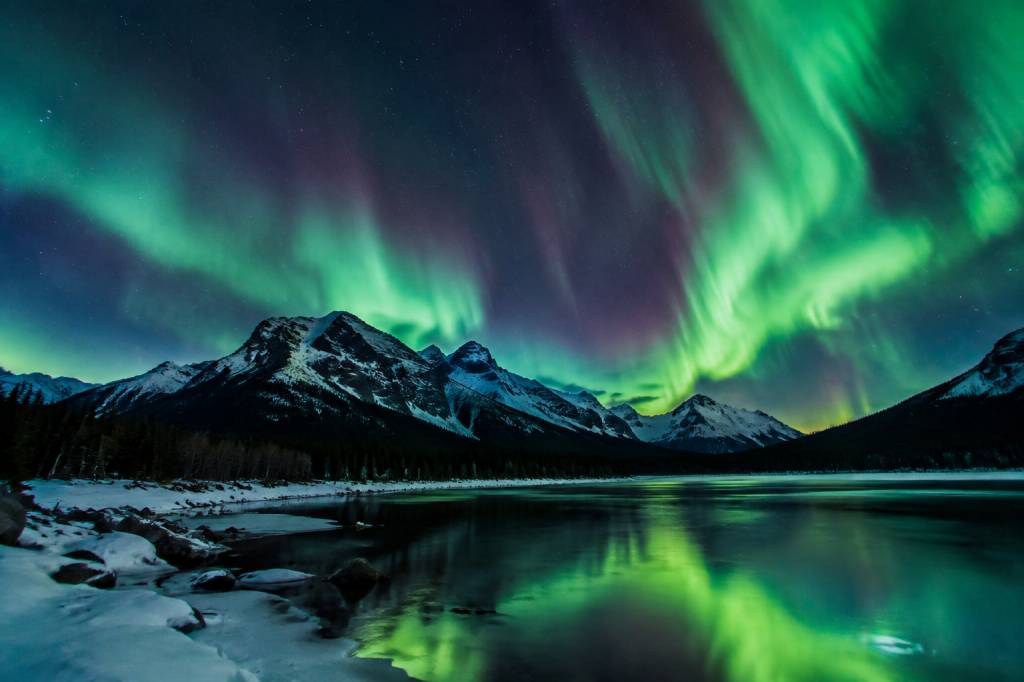
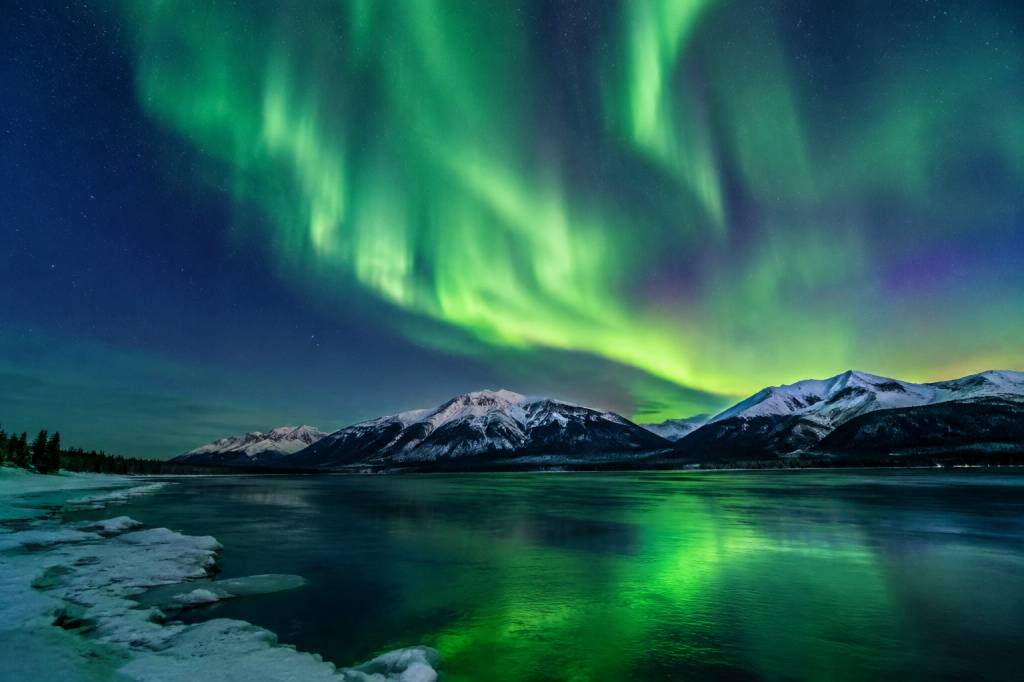
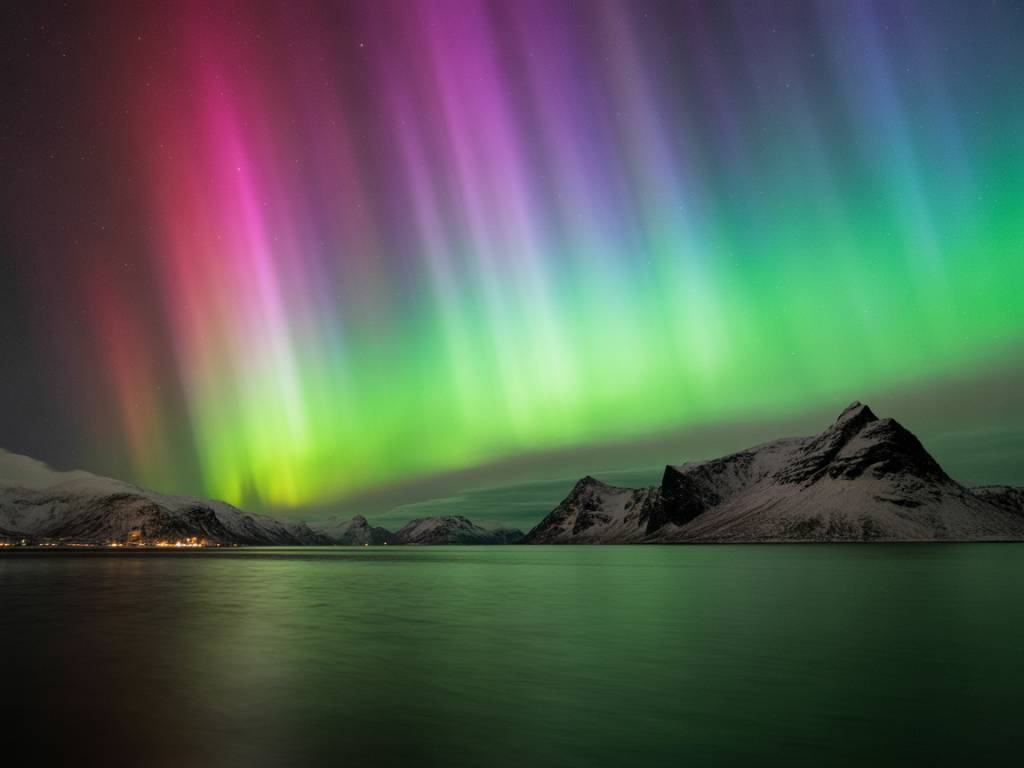
Remember that camera colours may look more vivid than the aurora did to your eyes. That is normal: a camera sensor can collect light over several seconds, while your eyes are looking at the scene in real time. A pale glow is still a real sighting, even if it does not match the dramatic images on travel websites.
A simple evening plan
Start by checking cloud cover and aurora activity before dinner. Choose one main viewing spot and one safe alternative, then confirm access and travel time. If the forecast shows a clear interval, aim to be ready before it begins rather than rushing out after the sky has already changed.
At the location, give your eyes time to adapt and scan a broad section of sky, especially toward the north. Keep your phone dim, stay aware of your surroundings and check the forecast again only occasionally. If clouds move in, wait briefly only if conditions are comfortable and the forecast suggests a gap may pass. Otherwise, return to shelter and reassess.
Most importantly, manage expectations. Rovaniemi offers a genuine chance to see the northern lights, but no city forecast can guarantee a display on a particular night. A clear sky, darkness and useful solar activity improve your odds; patience and a flexible plan help you make the most of them. And if the lights do appear, take a moment to look before reaching for the camera. The sky does not need a perfect photograph to make the night worthwhile.